A new estimate that China may already have 500 J-20 ‘Mighty Dragon’ stealth fighters has revived concerns about the widening technological gap between the Chinese and Indian air forces. If true, the figure is a significant increase over previous estimates and underlines China’s rapid progress in advanced military aviation, even as India waits for its first indigenous stealth fighter.
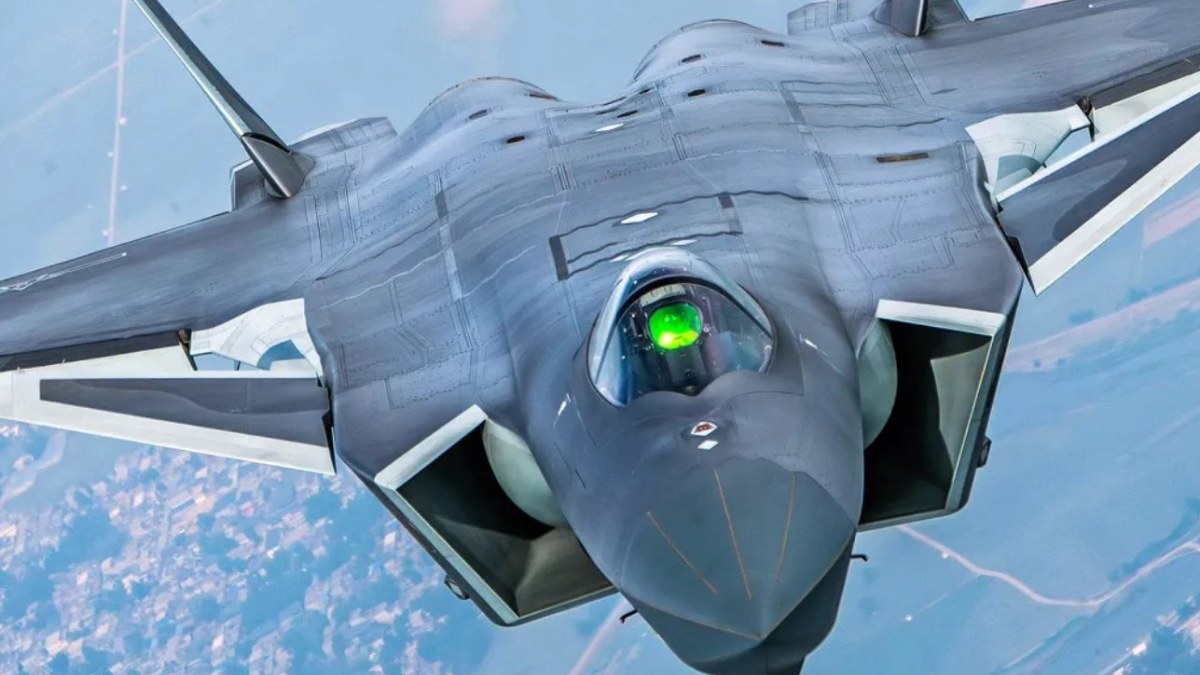
The estimate is by China military aviation researcher Andreas Rupprecht for the US defence publication The War Zone. China could have increased production of J-20s to levels not only that of previous estimates but would also be faster than the US for the development of fifth-generation fighter aircraft.
The development has strategic implications for India.
Why the J-20 Matters
The J-20 Mighty Dragon is China’s first fifth-generation stealth fighter and one of the most advanced combat aircraft of the PLAAF. The aircraft is designed to penetrate heavily defended airspace and remain difficult for enemy radar systems to catch.
Stealth aircraft are often deployed in the early stages of a war. They are tasked to neutralise enemy air defense systems, engage hostile fighters and strike strategic targets before the rest of the air force enters the contested airspace.
Over the last few years, reports also suggested that some J-20 squadrons have been deployed in western China, including areas close to the India-China border, adding another dimension to New Delhi's security calculations.
India's Stealth Fighter Challenge
While China has operational fifth-generation fighters in growing numbers, India currently has no operational stealth combat aircraft.
The long-term answer to this is the Advanced Medium Combat Aircraft (AMCA) programme of the Indian Air Force. The indigenous fifth-generation fighter is expected to be stealth with advanced avionics and modern weapons integration. But despite the progress in the programme, the aircraft is still years away from being operated.
Defence analysts believe the AMCA could take almost a decade before it will be fully operational, and India will not have a homegrown stealth fighter at a time when China is rapidly building its own fleet of stealth fighters as well.
The situation has led to discussions on whether India should purchase an interim stealth platform like Russia’s Su-57, but analysts differ on the stealth capabilities, operational performance, and long-term value of such an entity.
India has also expressed interest in future sixth-generation fighter programmes like Europe's Future Combat Air System (FCAS), but these projects are still in the developmental stage and are unlikely to bring the solution to this problem anytime soon.
Numbers Are Only Part of the Story.
Military analysts say that air supremacy cannot be measured only by stealth fighters.
India has been investing in advanced radar systems, integrated air defence networks, electronic warfare capabilities and sensor technologies to detect and counter low-observable aircraft. These systems could reduce some of the operational advantages of stealth platforms.
The Indian Air Force also operates modern fighters such as the Rafale, Su-30MKI, Mirage 2000 and upgraded MiG-29 aircraft, supported by advanced missile systems and network-centric warfare capabilities.
However, the absence of a dedicated stealth fighter is an area of capability gap that has become more critical with the fast growth of neighbouring air forces.
A Growing Strategic Concern
The debate over India's stealth fighter capability extends to more than military hardware. Many defence experts say that decades of delayed procurement decisions, slow indigenous development and limited domestic production capacity have contributed to the present situation.
As China has been expanding its aerospace industry and investing heavily in next-generation combat aircraft, India is under pressure to speed up technological development in aerospace and defense industry.
The report of 500 operational J-20 fighters has not been officially confirmed by Chinese authorities and independent verification is difficult. Still, even if the actual number is lower, the estimate reflects the pace at which China's military aviation capabilities are evolving.
For India, the question is no longer whether stealth fighters are necessary. Instead, it is now about how fast the country can bridge the capability gap through indigenous programmes, strategic partnerships and fast defence modernisation.
With the changing regional security landscape, strengthening India’s air combat capabilities is still likely to be the national defence’s top priority in the coming years.