Andy Burnham, the long-serving Mayor of Greater Manchester and one of the Labour Party’s most recognizable political figures, will become Prime Minister of the United Kingdom after winning the Labour leadership race. He will be formally appointed on Friday as Labour leader and will take on Keir Starmer as Prime Minister when Labour starts working again at Westminster next Monday.
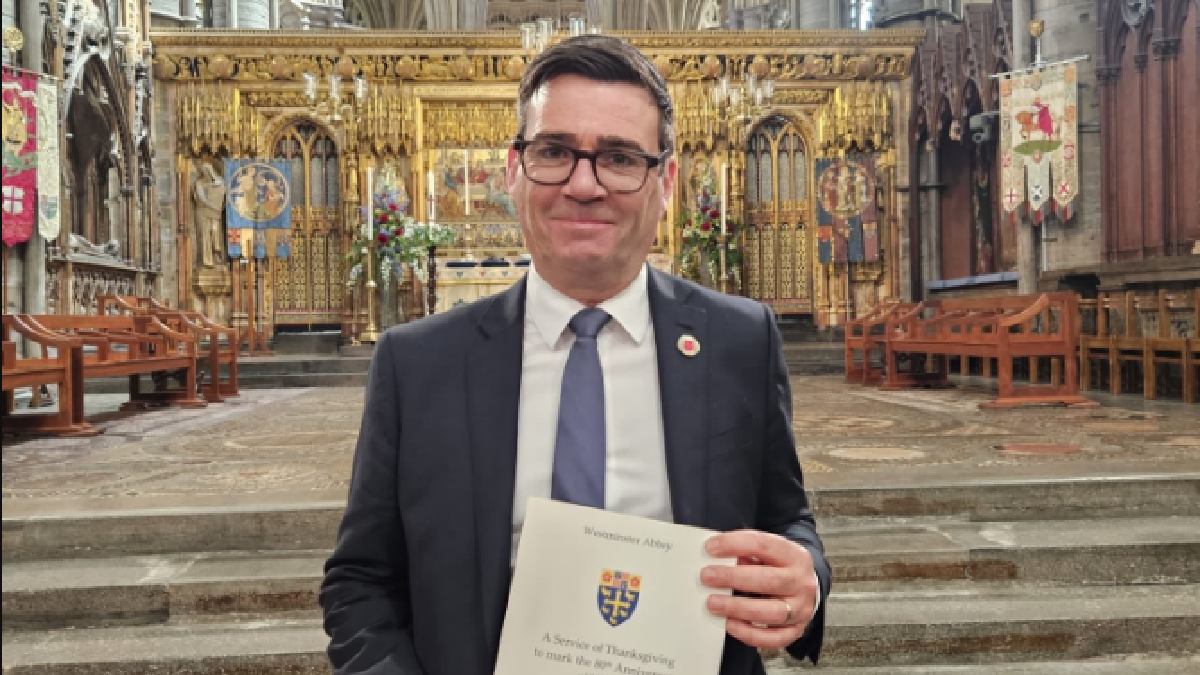
Burnham’s elevation to Britain’s highest political position follows nearly a decade as Greater Manchester’s mayor, where he became a strong advocate for regional development, public services and local autonomy. Once considered a former cabinet minister whose leadership ambitions had faded, Burnham has managed to reinvent himself as one of Labour’s most popular public figures.
From Westminster Minister to Regional Leader
Burnham’s political journey has been anything but conventional.
He served as the Member of Parliament for Leigh from 2001 until 2017 and held a number of senior cabinet positions in former Labour prime ministers Tony Blair and Gordon Brown, including Health Secretary and Culture Secretary.
Despite his ministerial experience, Burnham failed to win the Labour leadership twice and lost in the 2010 and 2015 leadership contests. He chose to leave Westminster and contest the newly created position of Mayor of Greater Manchester in 2017.
That decision changed his political career.
For the next nine years Burnham won three consecutive mayoral elections and became known for championing Greater Manchester’s interests, earning the nickname “King of the North”.
Covid Leadership Raised National Profile
Burnham's national standing was high in the Covid-19 pandemic.
He openly challenged then Prime Minister Boris Johnson over financial support for northern England during regional lockdowns, saying communities outside London were required to be given equal treatment.
In his refusal to back down during the dispute he gained national profile and cemented his image as a politician who would battle back against the central government in defence of local people.
His reputation as an advocate for greater regional power and devolution also increased as a result of that episode.
Champion of 'Manchesterism'
As mayor Burnham promoted a governing philosophy that has come to be known as Manchesterism.
The approach is a business-friendly model, marrying investment in public transport, affordable housing, healthcare and economic development.
Burnham has called the model “business-friendly socialism,” arguing that economic growth and social justice should go hand in hand.
His administration extended Manchester’s public transport network, made changes in housing and healthcare and fought inequality across the region.
Working-Class Roots
Born in 1970 in Aintree near Liverpool, Burnham grew up in a working-class family and has often talked about feeling like an outsider after attending the University of Cambridge where he studied English.
He has described experiencing “imposter syndrome” during his university years because of his background.
Burnham is a lifelong Everton Football Club supporter, and is very much associated with northern England and often speaks about his own regional identity.
He is married to his Dutch-born wife and the couple have three children.
Hillsborough Campaign
One of Burnham’s political career defining moments was when he became Culture Secretary in 2009.
When he was at a memorial event on the 20th anniversary of the Hillsborough disaster, he was confronted by the emotional demands of victims' families.
The experience led him to campaign for a new investigation into the tragedy and ultimately reopened public attention to one of Britain’s most controversial sporting disasters.
Labour's New Direction
Burnham has frequently called for Labour to adopt a more progressive and socially focused agenda.
He openly criticised Keir Starmer on welfare reforms and the state of internal party leadership and he warned that Labour risked losing touch with its core supporters.
While Starmer’s allies were said to have tried to block Burnham’s return to Parliament earlier in the year, the political landscape changed dramatically after poor local election results for Labour.
Burnham returned to Westminster after winning a parliamentary by-election before comfortably winning the Labour leadership.
Challenges Ahead
As Prime Minister Burnham is charged with rebuilding Labour’s electoral base and responding to the growing popularity of Nigel Farage’s Reform UK, which has consistently led several national opinion polls.
His government will also inherit challenges: economic growth, public services, housing crisis and healthcare reforms.
Burnham said voters want a different approach to politics, with real solutions to real problems and not political point-scoring.
He has managed to be called to Number 10, though, in one of the greatest political comebacks in recent British history. After years of reinventing himself as a regional leader, Andy Burnham now has the job of rebuilding public confidence in Labour while also influencing the UK’s political future.