Reliance Jio is in the process of expanding satellite-based connectivity and is going to launch 1,600 Low Earth Orbit (LEO) satellites that can carry up to 5 terabits per second (Tbps) of network capacity. The ambitious project will help to expand broadband access in India and mobile satellite service access in rural areas in India and in underdeveloped regions where conventional terrestrial networks are not yet fully available.
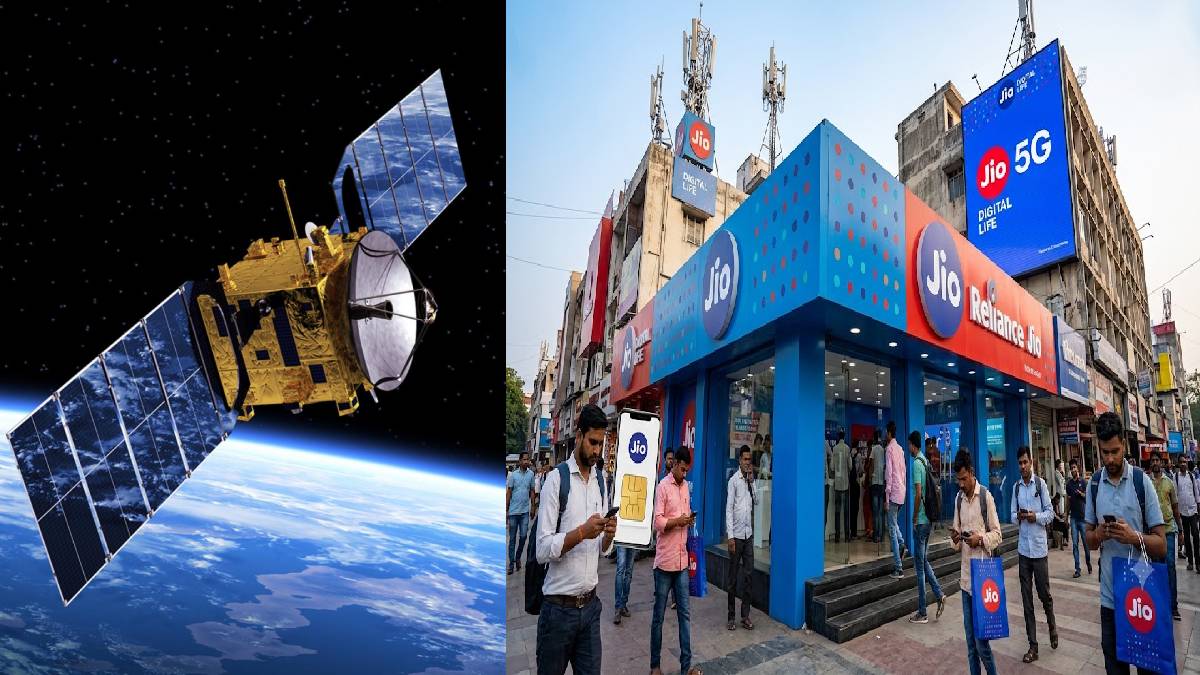
Jio also plans to build 20 to 22 ground stations across the country. These will be the main link between the satellite constellation and terrestrial communication networks, and will provide high-speed internet and satellite mobile communication.
The planned LEO satellite network is one of the most daring private investments in India's fast-growing satellite communications industry. Unlike the traditional geostationary satellites that orbit about 36,000 kilometers above the Earth, LEO satellites are at much lower altitudes, around 500 - 2,000 kilometers. This is because of the lower latency, faster response times, and better performance for applications such as video streaming, cloud computing, online gaming, remote education, telemedicine, and enterprise communications.
Jio's proposed constellation is designed to support broadband internet services and mobile satellite connectivity, expanding digital access to rural communities, mountainous regions, islands, and other locations where fiber-optic or mobile tower infrastructure may be difficult or uneconomical to deploy.
The 5 Tbps network capacity would allow the system to serve millions of users and provide the network with growing demand for data-hungry digital services. As India's internet consumption continues to rise, satellite communications would complement existing fiber and 4G/5G networks, not replace them.

The project also fits with the Government of India's intention to achieve universal digital connectivity through Digital India. A bigger satellite broadband will bridge the digital divide by bringing reliable internet access to schools, healthcare facilities, government offices, businesses, and homes that are currently underserved.
Industry analysts say India’s satellite communications industry is entering a new phase of rapid growth. With the growing need for reliable connectivity, along with regulatory changes and technological advancements, the sector is attracting increasing interest from both domestic and international companies looking to create next-generation broadband services through advanced satellite constellations.
In addition to consumer broadband, satellite networks are expected to be key in disaster management, maritime communications, aviation, defense, agriculture, mining, logistics, and industrial operations. Being able to remain connected to the Internet in the most challenging circumstances, they are a crucial element of current communications infrastructure.
Jio's planned deployment also shows the convergence between telecommunications and space technology. As India's digital economy expands, the integrated terrestrial and satellite networks are expected to provide more resilient and comprehensive nationwide connectivity.
The plan will require regulatory approval, spectrum allocation, and coordination with related government bodies before commercial deployment. The scale of a constellation of this size would likely be rolled out in phases, with satellite launches and ground infrastructure being developed progressively, say industry experts.
If implemented successfully, Jio’s satellite initiative could considerably improve India’s digital infrastructure, broadband availability and the country’s position in the dynamic global satellite communications market. The project will be transformational for millions of people and will make India a leading digital and technology-driven economy as a result.