A robot race in China has shown the world just how fast humanoid technology is developing. Robots that could not walk without falling are now running long distances, getting into races, and being able to do things that it seemed impossible to be able to do just a few years ago.
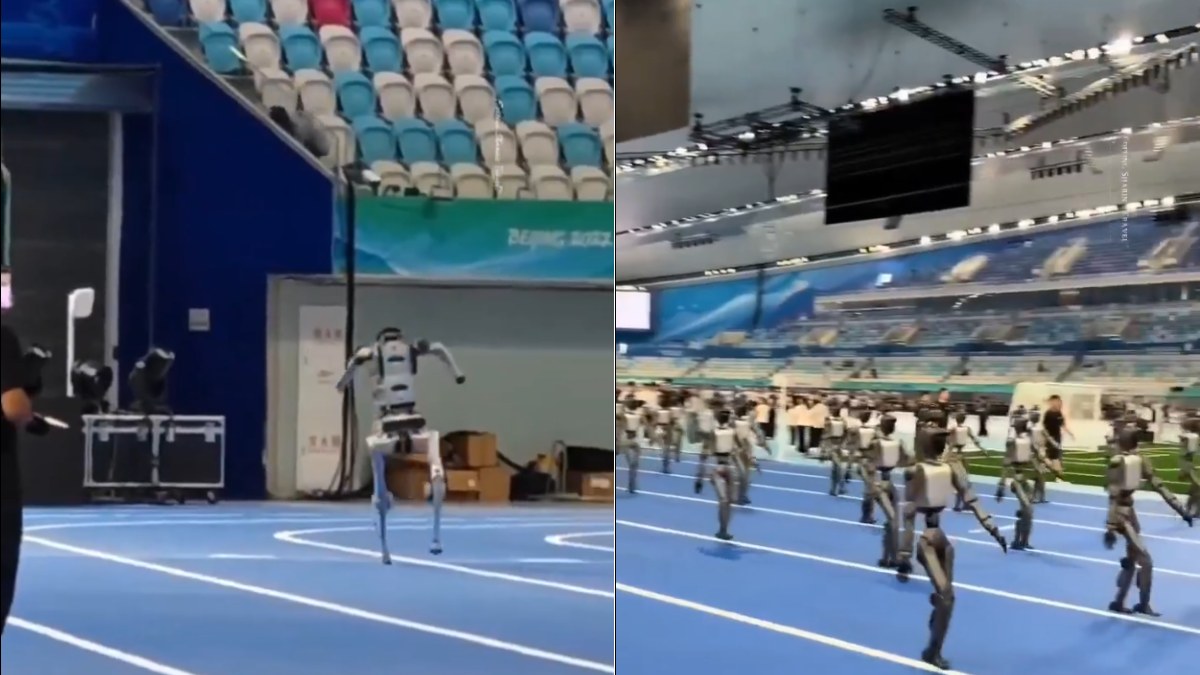
In April 2026, Beijing hosted its second humanoid robot half marathon. More than 100 teams participated with more than 300 robots participating. The robots ran on a 21.0975 km course alongside thousands of human runners, but in separate lanes for safety.
One of the biggest moments was when a humanoid robot named Lightning, developed by Chinese smartphone company Honor, finished the race in just 50 minutes and 26 seconds. That was faster than the men's human half marathon world record of 57 minutes and 20 seconds at the time.
The result was quickly noticed around the world. Videos of humanoid robots running down the streets of Beijing made the event look like something from a science fiction movie.
But are robots about to take over the planet?
Not really.
And the race was good but it also showed that humanoid robots still have many limitations. Robots Are Much Faster And They Are Not Ready to Replace Humans
The Beijing race was intended as a test of robotics technology. It was not just about getting the fastest robot. Engineers wanted to see how well the machines could handle movement, balance, navigation, battery use and long periods of activity.
Some robots did really well. Some struggled. Some fell during the race and others needed help from humans. Some robots were remote controlled as well as being fully autonomous from the start and had their own time to run. More than 40 percent of the robots were autonomous in the event.
This is a vital detail not often picked up on when videos of the race go viral.
A robot running very fast for a short time does not mean it can think and work like a human. Only running is one part of what makes a machine useful in the real world.
A robot that works in a factory, hospital or home needs to understand its surroundings, make decisions, handle unexpected situations and perform different tasks safely. It also needs enough battery power to work for long periods.
China is now paying more attention to these issues. The second World Humanoid Robot Games will be held in Beijing in August 2026, and robots will be tried in housekeeping, firefighting, retail work and other practical tasks. Some competitions are happening in the real world in factories, hotels and model homes and not just in the traditional competitions.
That is a much bigger test than simply running a race
The development is still significant because the progress has been very fast. At the first Beijing humanoid robot half marathon in 2025, the winning robot took 2 hours, 40 minutes and 42 seconds to finish the race. A year later, the winning autonomous robot did the same in less than an hour.
That improvement illustrates how rapidly engineers are developing better motors, batteries, sensors, software and artificial intelligence systems.
Should people be worried about a robot takeover?
It's mostly science fiction that robots are going to destroy the Earth. There is currently no evidence that the robot race means an event capable of destroying the planet has begun.
But there are real reasons to look at the development of humanoid robots.
The greatest threat for humanity isn’t robots. It’s how they will change life as we know it and work.
There are companies around the world developing humanoid robots for factories, warehouses, hotels and other workplaces. Robots eventually can be used to do dangerous or repetitive jobs that humans don’t want to do.
They could also be useful in disaster response, elderly care and household work. Viewers and researchers at the Beijing race discussed possible applications for robots in the everyday world and in dangerous working environments.
At the same time, capable robots could disrupt some jobs. If a machine becomes cheaper and reliable enough to do some repetitive tasks, companies may choose automation instead of hiring more workers.
That doesn’t mean every job will disappear, of course. In fact, robotics could create new jobs in engineering, programming, maintenance, design and robot training.
China is clearly investing heavily in this technology. As a result, the country is among the leading humanoid robotics hubs in the world with startups like Unitree and other organizations developing machines that can walk, run, dance and do other things.
The current race is therefore better understood as a technology race rather than the beginning of a robot war against humanity.
The machines are getting more advanced but they are still far from the intelligent, independent robots in movies.
What happened in Beijing is a warning, however, that the future is coming faster than most people anticipated. A year ago, humanoid robots were unable to run a long race. Now some are able to cover more than 21 kilometres at a remarkable pace.
The question is no longer if humanoid robots can move like humans. It is how useful, affordable and independent they can be.
And that is where the next chapter of the robot race is likely to begin.