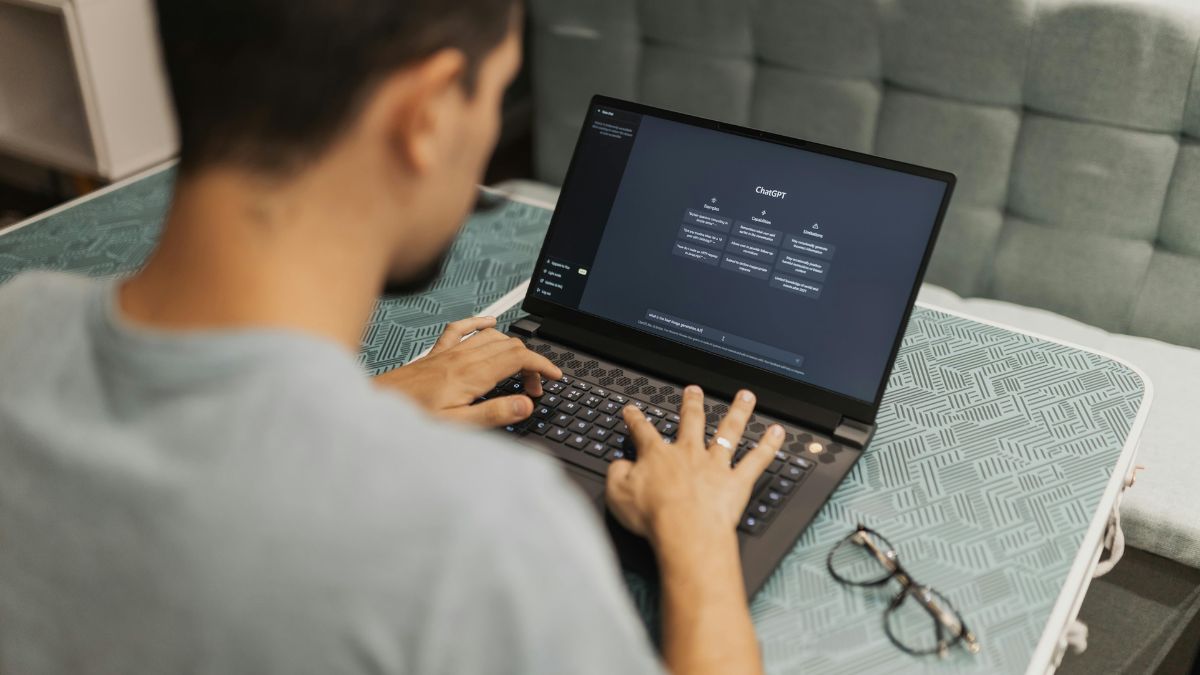
OpenAI's new ChatGPT feature has received attention for a reason that has little to do with artificial intelligence itself. The company has developed Computer History for its macOS desktop app, and for that purpose, it can recall the activity done in certain apps and websites. OpenAI claims that it will make ChatGPT more useful as it is able to understand what the user has been working on previously, but there are privacy concerns and surveillance concerns.

ChatGPT essentially has a new kind of contextual memory. Instead of just remembering a conversation’s details, Computer History can build a history of activities on a Mac using a timeline of what users did using the computer history software. That could be mouse clicks, typing, keyboard shortcuts, switching between applications, and information that can be viewed with macOS accessibility features. The history can be used by ChatGPT to know what the user was doing before the conversation even started.
That capability has naturally raised the question of how much information an AI assistant can observe. In demonstrations and reports about the feature, ChatGPT can use activity history to identify documents a person just worked on and which applications they used and provide summaries of their work. It can even help determine if a particular document or piece of information was shared through services such as Slack, depending on the applications and websites included by the user.
The concern is obvious for users. A computer is often where people are doing virtually everything in their digital lives. Work documents, private conversations, browsing, financial information, personal projects, and financial information all flow through that machine. Letting an AI system access interaction events across all the applications to work with now is therefore a vast expansion of the contextual information it could potentially use.
However, describing Computer History as a system that continuously records everything on the screen would be misleading. OpenAI says the feature does not capture screenshots, screen recordings, microphone input, or system audio. Instead, it focuses on interaction and contextual information from applications and websites that the user has approved. That is a departure from screenshot-based approaches such as Microsoft's earlier Recall system.

The other important difference is that Computer History is an opt-in feature; users must actively enable it rather than disable it after activation. Users can specify which apps and websites are allowed to contribute information. The feature can be paused, turned off, and used with exclusions, and individual history entries can also be deleted.
OpenAI also has protections for private browsing. Activity from incognito or private browser tabs is automatically excluded, according to information provided about the feature. Users can also remove applications or websites that they do not want to be part of their computer history. These controls are meant to allow people more control over the information ChatGPT can use to build its memories.
The feature is mainly about productivity. A user could ask ChatGPT what they were working on earlier in the day, locate a document they recently saw, or get a summary of recent activities without having to describe every step in detail. It can also recognize repeated workflows and perhaps help users turn those routines into reusable automations or skills.
Even with these safeguards, privacy advocates and users are likely to question when the convenience of access is worth the extra effort. The sensitivity of the information that can be inferred from seemingly ordinary computer interactions is a big part of the debate. With the information one has about which application someone opened, what document they read, or what communication platform they used can tell far more about their activities than a list of applications could.
There is also an important clarification regarding claims that Computer History is being introduced specifically to "sharpen" or train OpenAI's AI models. Currently, the feature is primarily used to build contextual memories for ChatGPT and Codex instead of just turning all activity collected into training data. The feature temporarily processes activity events to generate memories that can be later used to provide more personalized assistance.
But the launch marks another step toward AI assistants that are aware of what users are doing beyond the chat window. Traditional chatbots wait for users to provide information. Computer History is moving toward an assistant that can understand a user’s broader digital workflow and use that context when responding.
The shift could be helpful for people who work across a variety of apps, but privacy settings are also very important in this context. Those who allow the feature are going to have to be careful about what applications and websites are included and should be especially careful about services that contain highly sensitive information (private communications, financial accounts, password-management tools, and confidential work systems).
For now, Computer History is available on macOS for supported ChatGPT plans, but it varies by region and account type. OpenAI’s approach is clearly based on user consent and configurable controls, but the larger debate is unlikely to disappear. As AI assistants become able to monitor more of the digital activities of users, the question will become not just what AI can remember but also what it should be allowed to remember.