China has reportedly developed a new hypersonic weapons capability that could dramatically expand the distance from which its military can threaten high-value aircraft.
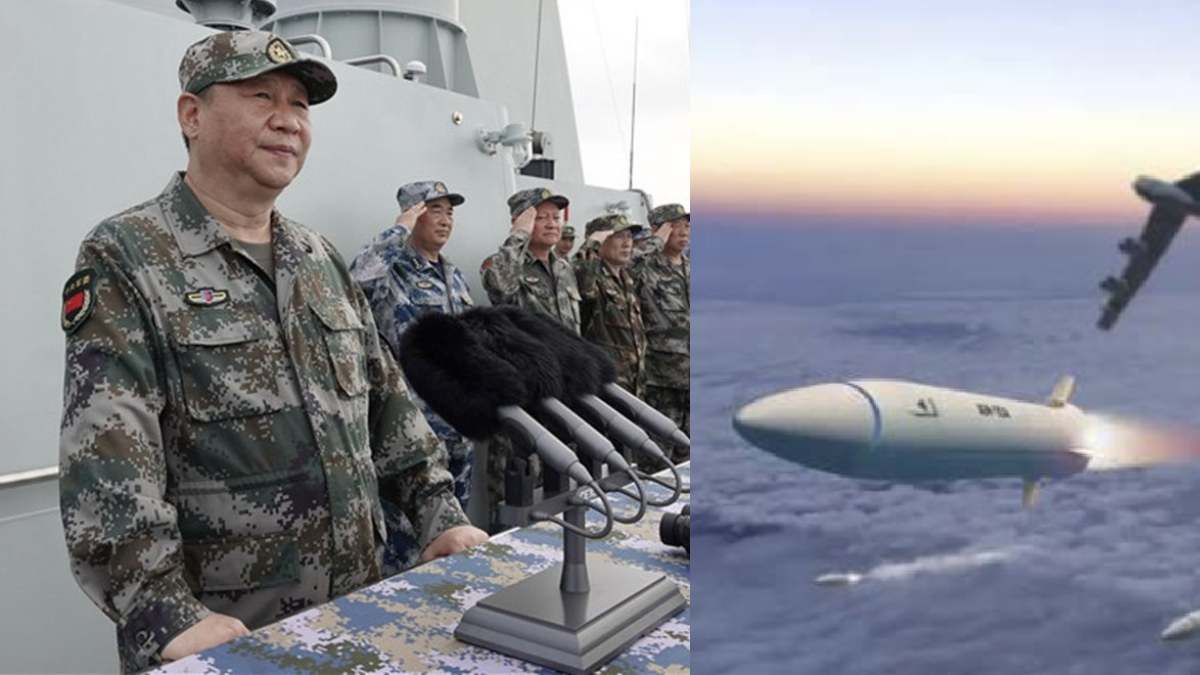
Bloomberg reported on 24 August that Chinese hypersonic glide vehicles have been developed to launch air-to-air weapons against targets thousands of kilometres away.
The reported development is an important step in the way hypersonic technology could be used. Rather than relying on conventional fighter aircraft to hit enemy planes, China could use hypersonic platforms to engage aircraft far from the battlefield.
How the New Capability Could Work
Hypersonic weapons generally travel at least Mach 5, making them much faster than conventional missiles. Their ability to manoeuvre and follow less predictable flight paths can make detection and interception more difficult.
The new Chinese system has hypersonic glide vehicles that can carry air-to-air weapons. That could give the People’s Liberation Army a way to target aircraft that usually remain well behind the front lines.
These are likely targets of command-and-control aircraft, surveillance platforms, tankers and other support aircraft. These aircraft are vital for fighter jets as they coordinate operations, provide intelligence and keep fighter jets engaged for longer periods of time.
Why This Matters
The greatest concern is not necessarily the destruction of fighter jets. Instead, the ability could force an opponent to move valuable support aircraft further away from contested areas.
That could impact the effectiveness of an entire air campaign. Aircraft like airborne early-warning and control platforms rely on operating at very long distances from the battlefield.
A credible long-range threat would have the potential to make it more difficult for commanders to place these assets.
China is already expanding its hypersonic missile portfolio. For example, its YJ-20 is a hypersonic anti-ship missile capable of hitting large naval targets and has been reported to have an estimated range of up to around 1,500 kilometres.
China has also developed the CJ-1000, a long-range hypersonic cruise missile with scramjet propulsion, highlighting Beijing’s broader investment in high-speed, long-range weapons.
A New Challenge for Air Forces
The reported air-to-air capability could introduce a new challenge for the United States and its allies in the Indo-Pacific.
Support aircraft might need to operate further from potential combat zones, reducing their sensors and communications capabilities.
However, we don’t yet know much about the reported system. What is publicly available does not give a precise range, launch platforms, guidance technology or operational status.
But the development highlights the rapidly changing nature of modern warfare. If hypersonic platforms can reliably threaten aircraft thousands of kilometres away, we have to change our assumptions about operating distances.