But as the pandemic landscape is evolving in 2026, a new subvariant of Omicron known as the “Cicada” variant (BA.3.2) is already being highlighted by global health organizations. First identified in late 2024 but only recently discovered to be widespread in the United States and Europe, this variant has a large number of mutations 70-75 changes in its spike protein.
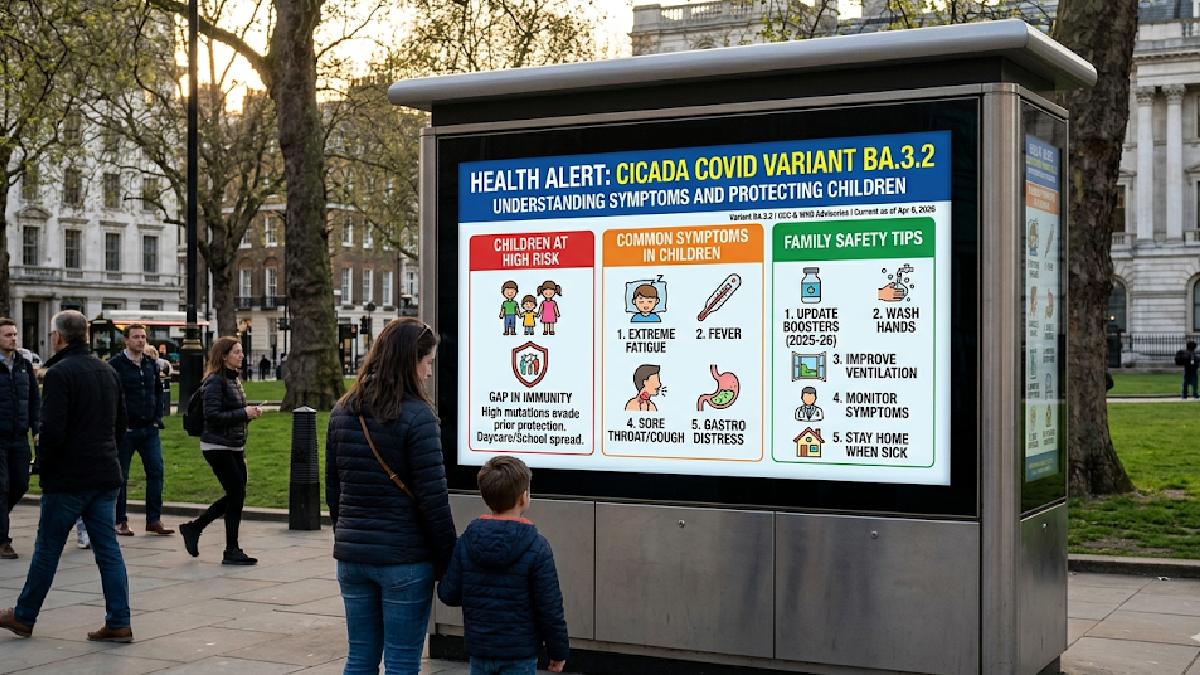
Indeed, the World Health Organization (WHO) has referred to it as a “variant under monitoring,” and recent data suggest that children may be more vulnerable to this strain.
Why are Children at High Risk?
Health experts, including CDC researchers, say that the Cicada variant is more common in pediatric samples than in previous Omicron waves. There are reasons for that:
- Immune Evasion: Because of the number of mutations, the virus can partially escape antibodies from older vaccines or previous infections.
- Lower Basal Immunity: Many younger children have had fewer vaccine doses or less exposure to earlier variants than adults, leaving them with a “gap” in their immune memory.
Schools and daycare facilities naturally are places where highly contagious respiratory viruses are spread quickly.
The symptoms of the Cicada Variant
The symptoms of BA.3.2 are similar to those of a number of other Omicron subvariants, but medical professionals have reported some common signs in children:

- Extreme fatigue: It is the most commonly reported symptom. Children may be unusually lethargic or sleep longer than normal.
- Fever and Chills: sudden onset of high temperature.
- Respiratory Problems: Sore throat and nasal congestion.
- Muscle Aches: general body pain or “growing pains.”
- Gastrointestinal distress: Nausea, vomiting or a reduced appetite are also common in pediatric cases.
Safety Tips for Families
Although there is no evidence so far that Cicada variants lead to a more severe disease than the previous strains, prevention is the most effective means to safeguard our most vulnerable family members.
- Keep the family updated on Boosters: Check on current COVID-19 vaccine formulations (2025-2026) for your family that are the best protection against serious illness.
- Hand hygiene: Tell children to wash their hands for at least 20 seconds after school or outdoor play.
- Improve Ventilation: Keep windows open and use air purifiers in shared indoor spaces.
- Monitor for Fatigue: If a child starts to show signs of extreme fatigue or “brain fog,” contact a pediatrician quickly and early on.
- Stay Home When Sick: If there are even mild respiratory symptoms, keep kids home from school.