A powerful 7.4-magnitude earthquake struck western Colombia on Monday, August 10, killing at least 132 people and injuring more than 570 others as buildings collapsed, residents fled the streets, and emergency teams launched large-scale rescue operations.
The earthquake, Colombia’s Geological Service described as the country’s strongest earthquake in the 21st century, caused widespread destruction in several communities. Hundreds of homes and public buildings were destroyed, and rescue teams combed collapsed buildings for survivors.
The death toll can more than double in areas worst affected by the powerful earthquake and where emergency workers and towns that have been hardest hit by it are still sorting through the rubble.
Hundreds Of Buildings Damaged
According to President Abelardo De La Espriella, at least 1,575 homes, 18 health centres and 52 schools were damaged by the earthquake. At least 61 buildings were reported to have completely collapsed.
The extent of destruction forced residents to leave their homes as a result of damaged structures and searchers who may have been trapped under the rubble.
The government declared a state of emergency in order to speed up the mobilisation of resources, the financial assistance provided and coordination of relief efforts in the affected areas.
“We aren’t going to leave people alone,” President De La Espriella said, saying the government would help people affected by the disaster.
Emergency teams have come to the rescue in search and rescue operations and are working on the front line through unstable structures and rubble to search for survivors.
Dramatic Videos of Buildings Collapsing
The videos of the earthquake's intensity and the panic that followed were circulating online.
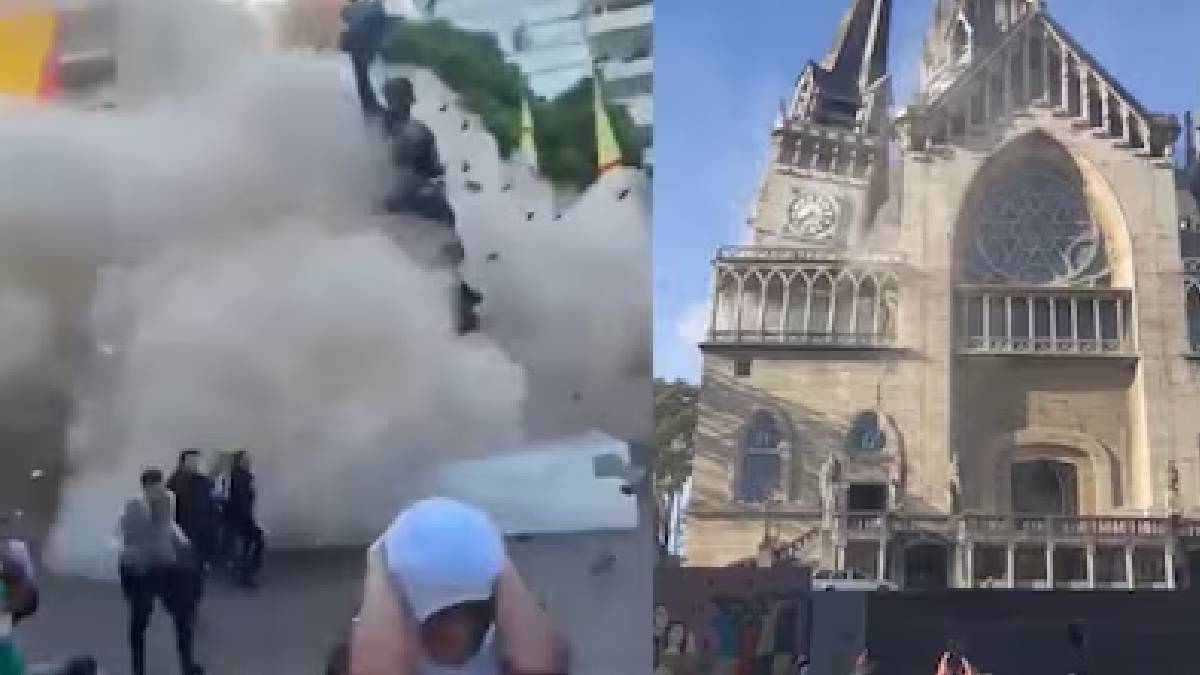
One video shared widely seemed to show a large multi-storey building collapse in seconds as people ran away from the building. Clouds of dust rose into the air as the building fell apart.
Another video circulating on social media purported to show part of a cathedral in Manizales collapsing. The dramatic footage showed people watching in fear as the historic structure came down.
Other footage showed rescue workers searching through debris for survivors. One video stated that rescuers had retrieved a very young baby from the rubble.
The authenticity and exactness of individual social media videos may need independent verification, but the footage has clearly shown the extent of the destruction and the fear of people living in the affected areas.
Epicentre In Chocó Region
The epicentre of the earthquake is near San José del Palmar, a population of about 4,800 in Colombia’s Chocó region, which lies about 400 kilometres west of Bogotá.
The United States Geological Survey reported the earthquake at a depth of 107 kilometres.
Colombia is located in a seismically active zone, and earthquakes are not uncommon in parts of the country. Smaller earthquakes, locally known as “temblores,” frequently occur in central and western areas.
However, earthquakes above magnitude 6 are relatively rare, and the magnitude 7.4 earthquake was particularly significant.
Colombia rescuers DIG OUT MONTHS-OLD BABY from BUILDING RUBBLE after 7.4 earthquake https://t.co/bo29pen6PM pic.twitter.com/vW1xXlt0Wj
— RT (@RT_com) August 10, 2026
Rescue Operations Underway
After the earthquake, emergency teams started searching for survivors at damaged buildings. With unstable structures, rescue operations can become more difficult as unstable structures pose greater risk to personnel.
Authorities need to conduct detailed assessments of buildings, roads, bridges and essential infrastructure to determine the extent of the damage.
Hospitals and health centres in affected areas are also dealing with injured residents, while emergency services work to ensure that medical assistance reaches communities cut off or affected by infrastructure damage.
The reported damage to 18 health centres and 52 schools only adds to the humanitarian burden, meaning authorities are in a position to deal with immediate injuries and displacement but also to restore essential public services.
JUST IN: At least 111 killed, 87 injured after 7.4 M earthquake in Colombia; 1,575 homes damaged — President de la Espriella pic.twitter.com/xgf8bgdPgj
— Rapid Report (@RapidReport2025) August 10, 2026
State Of Emergency Declared
The declaration of a state of emergency is supposed to give the Colombian government a quicker response to the disaster.
Emergency resources can support rescue efforts, shelter temporary residents, provide critical supplies, and repair critical infrastructure.
For thousands of homes that have been damaged, the immediate priority is probably to find safe shelter, while structural inspections determine which buildings can still be inhabited.
Death Toll Could Rise
With the rescue operation in progress, officials have warned that the full impact of the earthquake might not be known yet.
The current number of at least 111 deaths and approximately 570 injuries could change as authorities gain access to areas that remain difficult to reach and complete assessments of damaged structures.
The search for survivors remains the priority, particularly in areas that have collapsed completely.
The earthquake has also raised concerns about the vulnerability of older structures to major seismic events. Once the emergency phase ends, authorities are expected to assess structural damage and examine whether additional measures are needed to strengthen buildings and improve disaster preparedness.
For now, rescue teams continue to work through the devastation in western Colombia, while residents have come together and look for relatives and friends.
A 7.4-magnitude earthquake has left communities with a huge humanitarian and recovery process. The rescue operations will be crucial in the next 24 hours, with dozens of buildings destroyed, hundreds of people injured, and more residents trapped under rubble.