The Acting Minister for Refugees and Repatriation, Mawlawi Abdul Kabir of Afghanistan, has praised India for its warm hospitality from the Indian government during his visit and has expressed his gratitude for the Indian government's warm welcome, which he said is heartfelt and respectful.
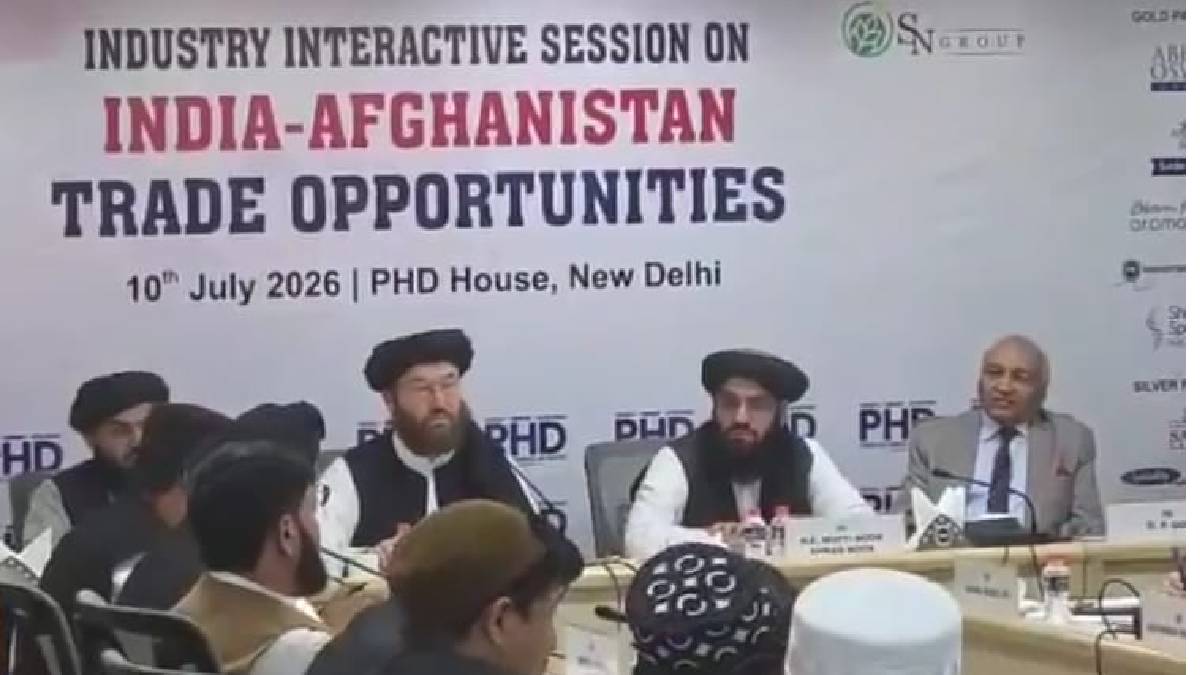
“Our DNA is one and we can feel the love of Afghanistan and India,” said Mawlawi Abdul Kabir, Afghanistan’s Acting Minister for Refugees and Repatriation.
The visit comes as India has been gradually expanding its engagement with Afghanistan after the Taliban returned to power in 2021. New Delhi has not officially acknowledged the Taliban-led government but has kept up humanitarian assistance, infrastructure support, and dialogue on issues of regional stability and the welfare of the Afghan people.
Abdul Kabir expressed gratitude in his talks with Indian officials for the respect and hospitality extended to him. He said the warm welcome reflected India's long-standing friendship with the Afghan people, not merely a diplomatic gesture. India, he said, also provided continued humanitarian assistance to the Afghan people through food aid, medical assistance, and development projects that have helped Afghan society over the years.
India has invested heavily in Afghanistan over the last two decades, with more than $3 billion in development assistance. Projects like the Afghan Parliament building, the Salma Dam (Afghan-India Friendship Dam), road infrastructure, schools, and healthcare facilities have strengthened bilateral relations and earned India widespread goodwill among Afghans.
Experts say the visit is indicative of a gradual warming of cooperation between New Delhi and Kabul in practical terms. India has emphasized that its primary interest is in the well-being of the Afghan people and that Afghan territory is not used for activities that threaten regional security.
So humanitarian cooperation has continued despite the absence of formal diplomatic recognition.
The Minister's mention of the shared “DNA” struck many as an acknowledgment of centuries-old cultural ties, trade routes, educational alliances, and people-to-people connections between India and Afghanistan.
🇦🇫🤝🇮🇳
— Aftikhar Ahmad Amini (@Aftikhar_A2) July 10, 2026
Afghanistan's Minister of Agriculture, Ataullah Omari, received a formal welcome in New Delhi from India's Agriculture Minister, Shivraj Singh Chouhan.
Senior Afghan diplomats Ahmad Noor and Shuaib Wakil also attended the meeting, reflecting continued diplomatic… pic.twitter.com/qHE0vygxRi
From ancient civilizations to the Mughal era to today's diplomatic relations, the two countries have a close historical relationship.
The visit also comes amid rising geopolitical interest in Afghanistan, with regional powers seeking greater involvement to promote stability and economic cooperation. India’s measured approach balancing humanitarian concerns with strategic interests has drawn attention from international observers.
Even though formal recognition of the Taliban government is unlikely in the near future, continued dialogue and humanitarian cooperation may allow for better cooperation on healthcare, education, trade, infrastructure, and so on.
India's support is still key as Afghanistan faces economic and humanitarian challenges. Abdul Kabir’s gratitude towards India and the shared bond between the two countries is an indication of a relationship that has survived political turbulence and uncertainty.
His declaration that “DNA is one” may have been symbolic, but it is a marker of the long-standing friendship and cultural connection that still permeates India-Afghanistan relations even in the midst of difficult times.