The Democratic Republic of Congo (DRC) is experiencing an epidemic of Ebola, with 1,830 confirmed infections and 648 deaths in the country, according to health authorities there. As the number of cases continues to rise, the World Health Organization (WHO) has warned that the true magnitude of the outbreak is probably much worse than the official figures.
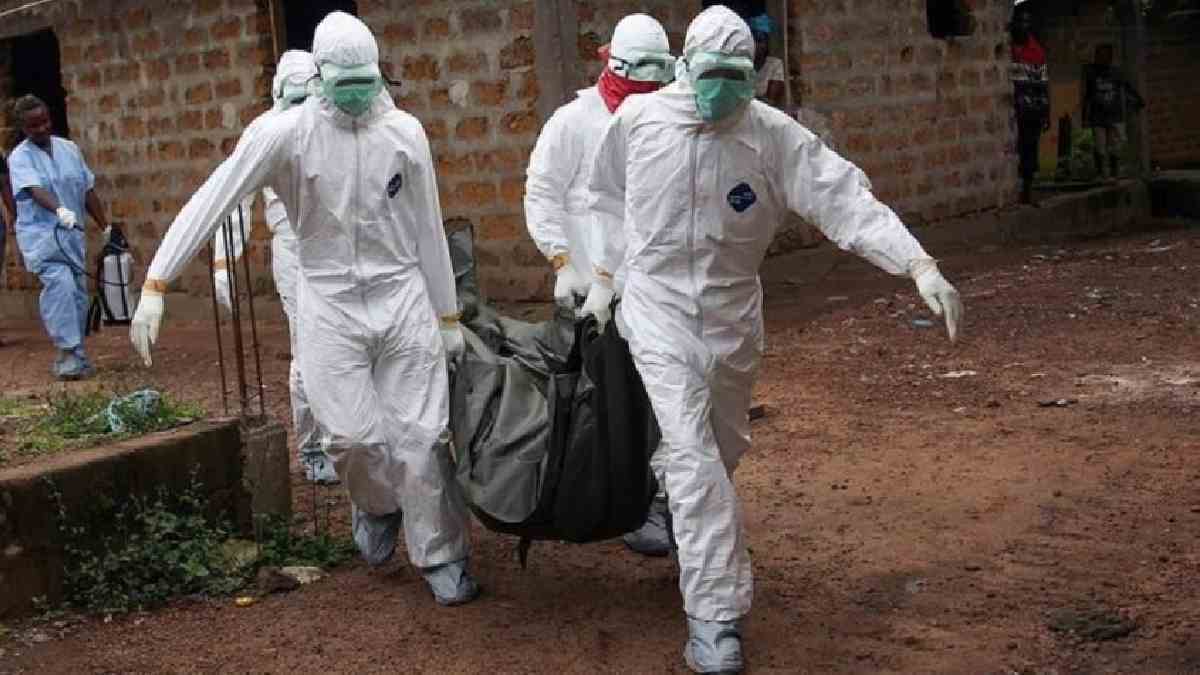
According to WHO modelling, there is a possibility that the true number of infections may be two to four times higher than what is currently reported, suggesting that there is widespread community transmission and undetected cases in affected areas.
Many of these are going undetected; the WHO warns that many cases are still not being detected.
Health officials say the biggest concern is that roughly four out of every five new patients in the most affected areas in the country have no known epidemiological connection to previously identified cases.
The pattern indicates that the virus is spreading silently within communities; contact tracing and outbreak containment are much more difficult.
Most infected individuals are still unidentified because of a delay in diagnosis, poor medical care access, and insecure landscapes in the affected areas, experts say.
Ituri Province Remains the Epicentre
According to the Congolese health authorities, around 90% of confirmed Ebola cases have been reported in Ituri Province, particularly in:
- Bunia, Rwampara,
- Mongbwalu,
- Nyakunde
But the virus has also spread to North Kivu, South Kivu, and Tshopo provinces, raising concerns about regional transmission.
Health officials are also investigating suspected cases in previously unaffected areas.
Rare Bundibugyo Ebola Strain Complicates Response
The current outbreak is caused by the Bundibugyo species of the Ebola virus, a relatively rare strain.
Unlike the more common Zaire Ebola virus, there is currently no approved vaccine or licensed treatment specifically for the Bundibugyo strain.
That has made disease control more difficult and put patients at greater risk of being more reliant on supportive medical care and experimental therapies to control it.
How the Outbreak is Worsening
Health authorities have identified several factors for the rapid spread of the virus:
Many patients delay going to medical care because early signs may seem mild. Infected people are usually treated at home before diagnosis. Armed conflict and insecurity continue to restrict access to healthcare. Large-scale population displacement is increasing transmission at a time with declining funding in surveillance and emergency response. Misinformation and public distrust have led to resistance to health measures and attacks on healthcare workers.
These problems have complicated how quickly new infections can be identified and isolated from others.
Emergency Response Underway
To enhance surveillance, WHO and Congolese health authorities are training about 21,000 community health workers to identify suspected Ebola cases, report infections promptly, and refer patients to treatment.
Researchers also launched clinical trials in eastern Congo to test for treatments for the Bundibugyo strain.
The therapies currently being studied include:
Remdesivir, MBP134 antibody therapy, and a combination of both treatments
Scientists hope these trials will help improve survival rates and guide future outbreak responses.
Public Health Emergency
The outbreak was officially declared in mid-May 2026, and the World Health Organization has classified it as a Public Health Emergency of International Concern (PHEIC) due to the risk of regional spread.
The Africa Centres for Disease Control and Prevention (Africa CDC) has described it as the fastest-growing Ebola outbreak currently affecting the continent.
Public health experts warn that without more effective surveillance, better funding, greater security, and community cooperation, the outbreak has the potential to become one of the largest and most severe Ebola crises in recent history.
Although WHO currently considers the global risk to be low, it is up to neighbouring countries to strengthen border screening, disease surveillance, and preparedness measures to prevent cross-border transmission, according to authorities.