The weather patterns around the world have been increasingly unpredictable with several regions experiencing extreme heat, heavy rainfall, sudden floods and prolonged dry spells.
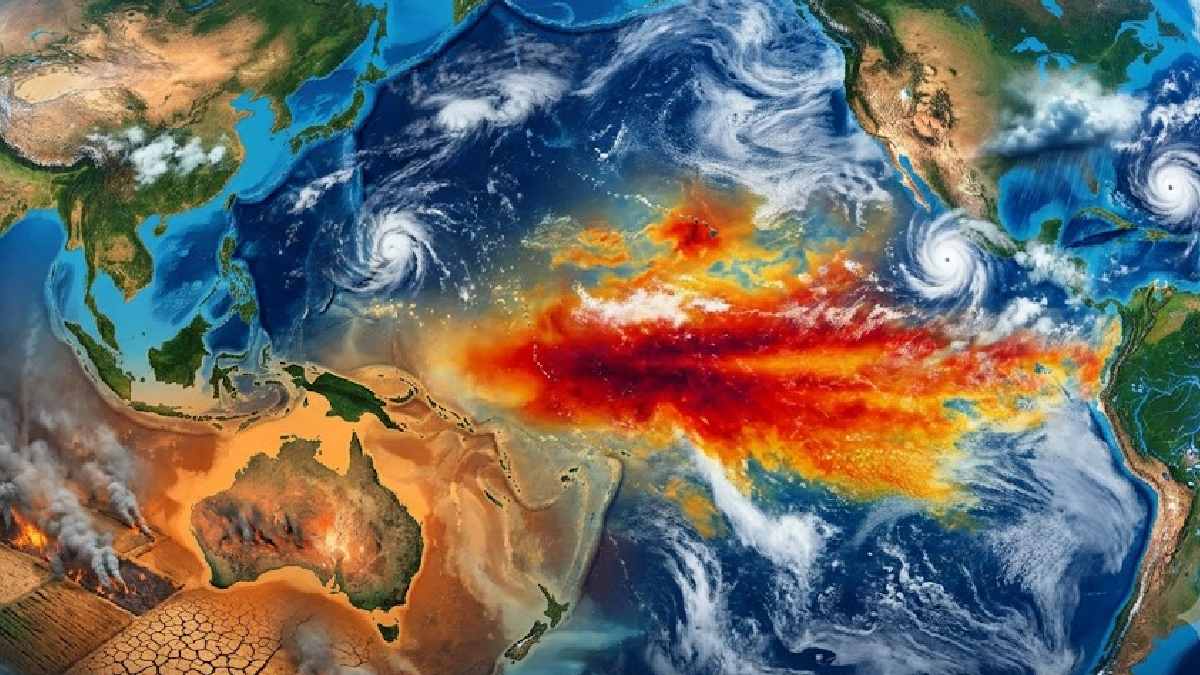
As 2026 progresses, more attention is being put on the possibility of a strong El Niño event and its impact on global weather conditions. Some reports have referred to the expected event as a “Godzilla El Niño” because of its potential intensity.
But such terminology is not an official scientific classification, and the event’s eventual strength and consequences will be dependent as climate and ocean conditions change.
El Niño is a natural climate phenomenon that leads to unusually warm sea-surface temperatures in the central and eastern tropical Pacific Ocean and can influence weather and rainfall in all parts of the world.
A strong El Niño can have a wide impact on countries from Asia, Africa to the Americas.
A strong El Niño could lead to particularly bad weather conditions in the last months of 2026 and early 2027.
The case of scenario described in the source material is that the phenomenon could get stronger towards the end of the year and probably persist into February 2027.
If it is strong enough, it could cause strange temperature and rainfall conditions in some parts of the world.
One of the major questions for India is how a strong El Niño could affect the country’s weather and agricultural conditions.
El Niño events have historically been associated with changes in the Indian summer monsoon, but it is not an absolute one and other climate factors are also affected by India’s rainfall.
Weak and irregular monsoon seasons will be difficult for farmers who depend on seasonal rainfall for crop production and this is especially true in areas that depend on seasonal rainfall.
But rain is not the only issue. Water availability is another issue. Poor rainfall over a long period of time can put pressure on reservoirs, groundwater supplies and irrigation systems.
If the dry conditions persist in the drought-stricken areas of vulnerable sectors, farming production could be at greater risk of stress as well, as well as food supply and rural incomes.
The impact of El Niño will not be universal to the whole world at the same time. Some regions may experience drought and high temperatures and some of them may experience exceptional rainfall and flooding.
This polarization of impact is what is at the heart of the impact of large-scale climate phenomena like El Niño.
Weather patterns of the atmosphere change as a result of atmospheric circulation can make global conditions very different and extreme.
The possibility of unusual winter temperatures is also being studied. A strong El Niño may also have a very strong effect on the winter weather pattern in different parts of India, and its connection with other atmospheric systems might also affect the winter temperature and the frequency or intensity of cold wave weather patterns.
But it would be premature to say that India will experience no significant winter cold because of El Niño simply because it has to strengthen. The weather can be affected by a number of factors and the seasonal forecast can change as new data are made.
Scientists are especially interested in ocean temperatures because they provide an important signal of El Niño development.
The commonly observed Niño 3.4 region is one of the indicators for the state of the tropical Pacific. If sea surface temperatures in this region are still much warmer than average, the atmospheric conditions are likely to change as El Niño approaches.
The ocean heat below the surface is also important. Subsurface warm water can affect sea surface temperatures and can contribute to the development or strengthening of an El Niño event.
So to understand the evolution of the phenomenon, researchers must monitor both surface and subsurface ocean temperatures.
Another major factor that complicates the situation is human-driven climate change. El Niño itself is a natural climate cycle, but it comes against a backdrop of long-term global warming due to greenhouse gas emissions.
Higher baseline temperatures could mean that an El Niño event could take place in an already warmer world and that global temperature records can be challenged.
It is natural climate variability and long-term warming that have combined for the 2023-24 El Niño period that showed how natural climate variability and long-term warming could be a double whammy.
Global temperatures were at record-high levels at the time of the El Niño and it caused record heat in many parts of the world. Scientists have stressed that climate change is the cause of the long-term rise in global temperatures, and El Niño can temporarily magnify that change.
If a strong El Niño develops towards the end of 2026, many regions will therefore face greater risk due to extreme heat, drought, wildfires, heavy rainfall or flooding.
The exact effects will vary from country to country and region to region. Forecasts issued several months in advance carry uncertainty, and the strength, timing and duration of El Niño can change from one time to the next.
For India, the upcoming months are important to monitor rainfall, reservoir levels, water supply, temperatures and agricultural conditions.
Government agencies, farmers and local communities in vulnerable regions should be prepared for more than one weather event rather than a single weather situation to be anticipated.
The World Meteorological Organization and national weather agencies like the India Meteorological Department continuously monitor large-scale climate indicators to update seasonal forecasts. Their analyses are more reliable than sensational labels of the phenomenon.
While the phrase “Godzilla El Niño” may be catchy, what is really important is the actual strength of the event and how it interacts with India’s monsoon, winter systems and broader climate.
A strong El Niño is therefore one of the most important climate developments that we should monitor. From agriculture and water resources to public health and disaster preparedness, unusual weather can have wide-ranging consequences.
Climate change is continuing to raise global temperatures and governments and communities will be in an even more urgent need to prepare for more frequent or severe climate extremes.
For now the key message is caution rather than panic. El Niño forecasts can change as ocean and atmospheric conditions change.
Monitoring until the end of 2026 and into early 2027 will give a clearer picture of whether the expected event reaches extreme levels and what its actual impact on India and the rest of the world will be.