The automotive industry is moving beyond diesel and petrol-based vehicles and hydrogen is one of the technologies that are being pursued for long-distance, low-emission mobility.
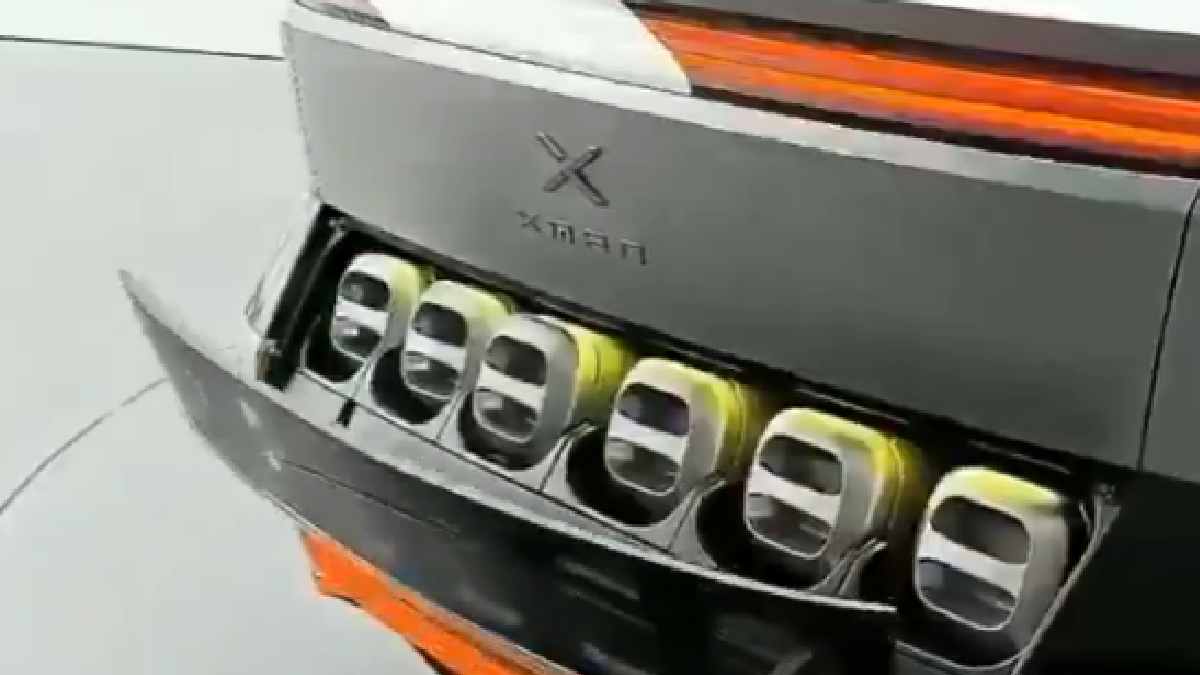
For instance, we have the so-called NAMX HUV, a hydrogen fuelled car developed by French company NAMX as part of a collaboration with the Italian design house Pininfarina.
One of the biggest features of the NAMX HUV is its claimed driving range of up to ‘1,500 kilometres’. If it is achieved in real-world scenarios, that would put the vehicle among the more ambitious hydrogen mobility concepts, especially for drivers who want long-distance capability without frequent refuelling stops.
The HUV also brings in an unusual approach to hydrogen storage. The vehicle has been built around replaceable hydrogen capsules, rather than a fixed hydrogen tank.
This will allow us to make hydrogen refuelling more convenient since depleted capsules can be replaced instead of the entire vehicle stopping by a refuelling station for a long time.
NAMX has highlighted a refuelling time of around five minutes, and so the HUV could be able to quickly get back on the road compared to battery-electric vehicles.
Fast refuelling is one of the main benefits of hydrogen-powered mobility, especially for long-distance driving and commercial applications where vehicle downtime can be costly.
The design is also a major part of its appeal. Working with Pininfarina, a company with a long history in automotive design, NAMX has tried to marry futuristic look and practicality in an SUV.
The HUV concept has been positioned as a premium hydrogen vehicle rather than a renewable energy experiment.
The NAMX HUV is a hydrogen-powered car developed by the French company NAMX in collaboration with Pininfarina, featuring a refueling time of just 5 minutes and an autonomy range of 1,500 km, using replaceable hydrogen capsules for its fuel source. pic.twitter.com/tuDBY7M8Sy
— Massimo (@Rainmaker1973) September 3, 2026
Hydrogen fuel-cell vehicles produce electricity through an electrochemical reaction with hydrogen and oxygen, with water as the most abundant tailpipe emission.
This makes the technology a potentially attractive environmental profile when the hydrogen itself is produced using low-carbon energy.
Hence hydrogen mobility still faces significant challenges in many areas of the world. In many parts of the world, hydrogen refuelling infrastructure is still scarce and hydrogen production, transportation and storage is quite complex and expensive.
The environmental benefits are also very much dependent on how hydrogen is produced.
So the NAMX HUV is not just another futuristic car concept.
The long promised range, quick refuelling and replaceable hydrogen capsules represent how manufacturers are trying to turn hydrogen vehicles into more practical vehicles.
If we want to move from a very ambitious idea to widespread commercial use, the HUV will need to be ready for production to proceed on a scale that will depend on the production readiness of the HUV and infrastructure, costs and customer market.
The vehicle, at this stage, is perhaps the most striking example of how hydrogen technology could change how long-distance mobility will look like in the future with hydrogen technology.