As part of the open-source ecosystem and the global developer community, Google will open-source its entire 3D emoji collection, making the assets freely available for developers, designers, artists, educators, and content producers. This would foster creativity and innovation as anyone can use Google's professionally designed emoji assets in any digital project and design and develop it into something that works.
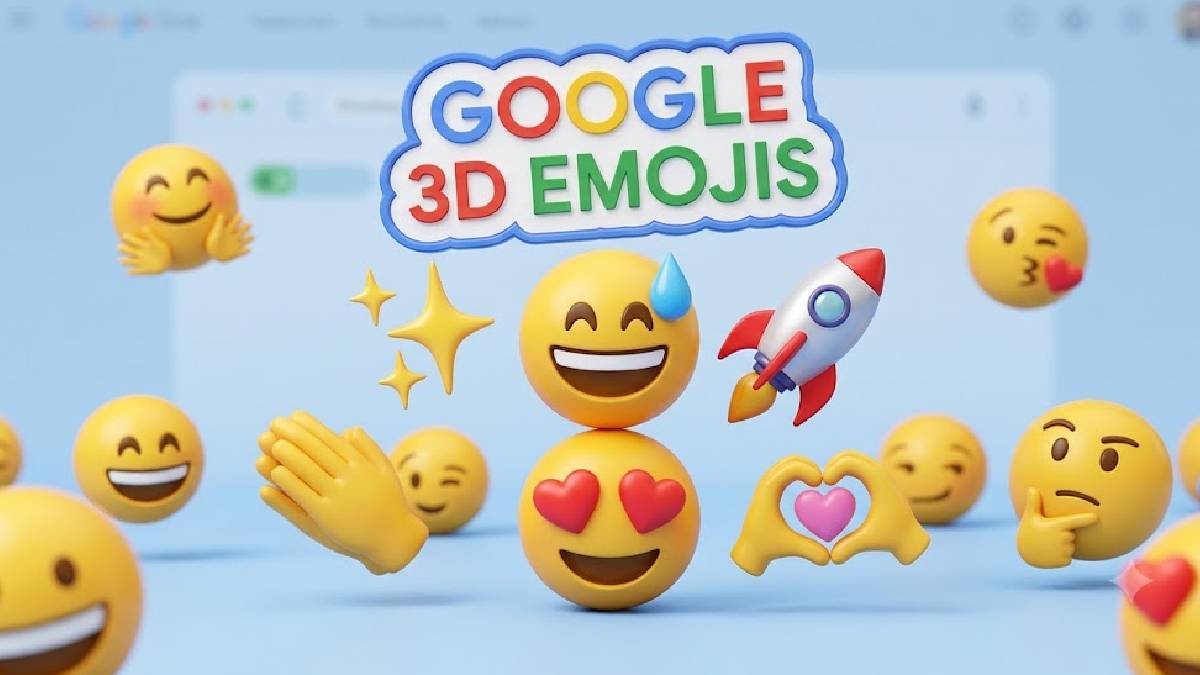
Emojis have become a universal language of digital communication and are the common language for people to express emotions, reactions to things, and ideas in messaging apps, social media, emails, and online collaboration tools. The use of 2D emojis in general is still popular, but 3D emojis, because of how much better they are in terms of visuals and visual effects, have become all the more popular. Google’s decision to release these assets as open source makes it possible for people to have top-quality creative resources at their disposal.
Developers and Designers: A Boost.
The recently open-sourced 3D emoji collection will provide developers with ready-to-use visual assets that can be integrated into mobile applications, websites, games, messaging platforms, productivity software, and virtual experiences. Rather than designing expressive icons from scratch, developers can use Google’s professionally made emoji models as a foundation for their own projects.
Due to the open-source nature of the assets, creators can design the colors, facial expressions, animations, textures, and styles of their products to match the design language of their products. This flexibility allows businesses and independent developers alike to create distinct digital experiences with a similar brand identity and to do so without compromising the brand identity.
The availability of these assets is expected to be particularly valuable for startups, indie developers, students, and small creative teams that may have limited budgets for custom graphic design.
Supporting the Creative Community
Google’s 3D emojis are expected to find applications in a wide range of creative industries beyond software development, from software development to education and even to marketing. Graphic designers, digital artists, educators, marketers, video creators, and social media users can use them in presentations, educational materials, advertising campaigns, promotional videos, animations, and online content.
The open-source approach also fosters experimentation. Artists can remix the original designs, create entirely new visual styles, or create animated versions for games, virtual worlds, or augmented reality (AR) applications. Collaboration such as this can lead to an acceleration of the development process so that new creative possibilities are realized in a very short time with the help of the global community.
Expanding the Open-Source Ecosystem
Google has been one of the world’s most active contributors to open-source technologies for years now. Android, Chromium, Kubernetes, TensorFlow, and other tools have been part of the company’s commitment to open-source software development.
With this philosophy of visual assets, Google is helping to broaden the scope of open-source collaboration. Community contributions might include more emoji, richer accessibility, multilingual support, better file formats, and better compatibility with various development platforms.
A collaborative model allows creative assets to evolve continuously while remaining freely accessible to developers worldwide.
How is 3D emoji important?
As digital experiences become more immersive, expressive visual elements are becoming increasingly important. Today’s applications are increasingly adopting 3D graphics, augmented reality, virtual reality, artificial intelligence, and spatial computing technologies. High-quality 3D emojis can enhance user engagement by adding more emotion, which makes interactions more expressive and visually appealing.
The assets can be incorporated into:
- Mobile applications
- Web platforms
- Video games
- Messaging services
- Virtual reality (VR) environments
- Augmented reality (AR) experiences
- Educational software
- Productivity tools
- AI-powered virtual assistants
- Social media content and digital marketing campaigns
Visually rich emoji assets will help developers to create polished user experiences more efficiently, as users have more and more visual expectations.
Encouraging Innovation
Open-source resources mean development cost savings, collaboration, and innovation (which is not only much cheaper and faster). Developers can do the same thing in the projects, but rather than replicating the work of thousands of projects, they can build on those resources and create new features as well as new experiences with them.
Google’s initiative is part of the larger industry trend towards making creative tools more accessible. Through lowering entry barriers, the company is empowering independent developers and creators to compete with larger organizations and thus facilitating a more inclusive digital ecosystem.
Looking Ahead
Google's decision to open-source its 3D emoji collection (and release all of them in a single source) is a great example of collaboration, creativity, and open innovation. Google’s free 3D emoji app provides developers and creators with the tools to create new mobile apps, games, education, entertainment, digital marketing, and future technologies.
As the global developer community begins experimenting with these assets, the collection will continue to increase and develop as a result of community input and will have its own applications in digital communication and interactive design. The project is a continuation of Google’s support for open-source development and will shape the future of expressive, visually compelling digital experiences.