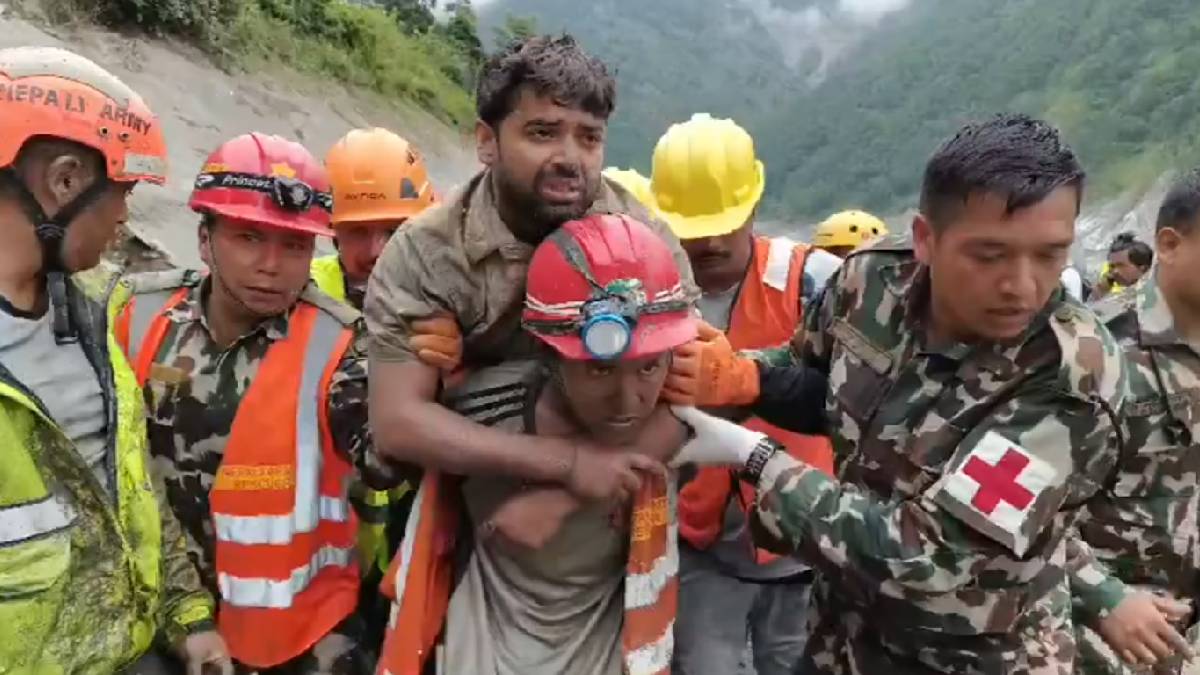
Rescue workers in Nepal have successfully rescued one person from inside a tunnel of the Trishuli 3A hydel project, in a major victory for the rescue effort. They rescued him from the tunnel area of the hydropower project where he was trapped in the tunnel.
The Trishuli 3A hydel project is one of Nepal’s key hydropower plants and is located along the Trishuli River corridor. The project is crucial for Nepal’s electricity generation capacity, and any impact on its infrastructure is expected to have a coordinated response as well as a response from rescue personnel, security agencies, and engineers to local authorities.
As far as we know, the rescue workers entered the tunnel and were able to find the trapped man. Once they got to the person, they managed to pull him out of the tunnel and bring him to safety. The successful rescue has helped the rescue operation, and we are still monitoring the situation.
Tunnel rescue is especially difficult because there can be limited access, poor visibility, unstable parts, debris, and limited ventilation in the tunnel, and workers and rescue workers have to deal with it. Specialized equipment and careful coordination are mandatory to avoid further risks in the rescue operation.
#WATCH | Nepal | Rescue workers rescue one person from inside the tunnel of the Trishuli 3A hydel project
— ANI (@ANI) September 4, 2026
Video source: Nepali Army pic.twitter.com/H73CLoPhL5
The Trishuli 3A hydel project is located in Nuwakot district and is part of Nepal’s larger effort to develop hydropower generation infrastructure. It has a generating capacity of 60 MW and is connected with Nepal’s national electricity system. It is in a mountainous region, and even the most difficult terrain for emergency management and infrastructure to operate is tricky.
Rescue efforts in the tunnels have to first establish safe access routes before trying to rescue people trapped in the tunnel. The communication between personnel inside and outside of the tunnel is also very important in these situations.
The rescue of one person is a positive development as teams continue work at the site. The nature of the rescue of the trapped person, the circumstances of the trapped person, and whether there are other people in the tunnel are still to be known as authorities give more information.
Emergency teams are likely to continue to examine the tunnel and surrounding areas to ensure that no other people are trapped. The structure of the affected section might also be examined by the authorities before routine activities can resume.
The incident has brought to the fore the safety measures for hydropower and underground infrastructure projects in Nepal. With hydropower being highly dependent on electricity generation, the safety of workers and emergency preparedness are key.
The rescue proved to me that trained rescue personnel are key in the case of complex underground structures and how to handle people trapped in them.
As rescue and assessment work continues in the Trishuli 3A hydel project, authorities will release more details on the incident and the status of the project later. For now, the rescue of one person is a hopeful development in the midst of the emergency response.