Artificial intelligence has made a new milestone when Huawei's AI system “Celia” and Xiaohongshu’s AI model scored 100% at the 2026 International Mathematical Olympiad (IMO) in Shanghai. AI systems are the first to achieve such a perfect score at one of the most demanding and difficult mathematics competitions.
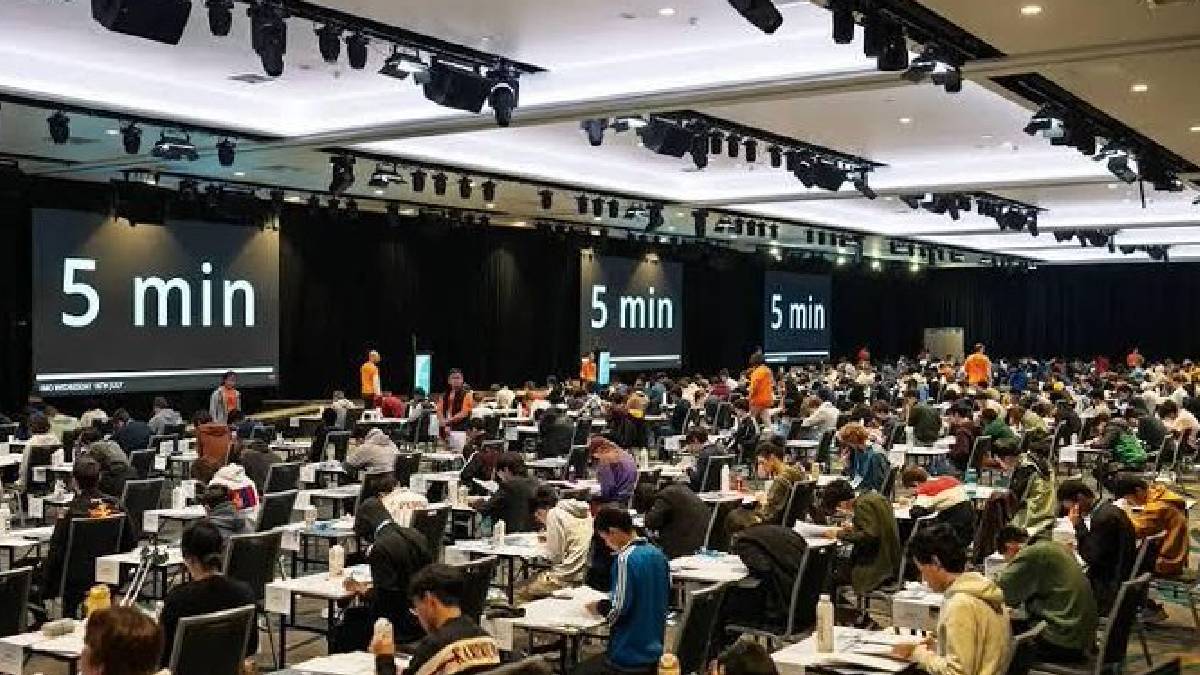
The International Mathematical Olympiad is a competition for high school students worldwide; it is the most important competition. Every year, the competition presents very complex questions that are hard to answer and that test logic, creativity, and proof. IMO questions are hard to answer and require creative thinking and skill to solve them, to measure sophisticated reasoning abilities.
The perfect scores achieved by Huawei's Celia and Xiaohongshu's AI model are a breakthrough in artificial intelligence. Such systems are not just memorized but can solve complicated math problems with multi-step reasoning and logical reasoning.
Researchers have long considered mathematical Olympiads one of the toughest problems for AI because the AI is harder to do because they are based on abstract reasoning rather than computation and information collection. The new achievement indicates that AI models are increasingly capable of tackling complex intellectual tasks that were once considered so much more of a human thing.
The breakthrough is a sign of rapid progress in AI research, particularly in large language models (at scale), symbolic reasoning and advanced mathematical problem solving. Developers are increasingly looking at AI systems that can reason through difficult problems step by step while maintaining logical consistency and accuracy.
The implications go far beyond competitive mathematics. AI systems capable of sophisticated reasoning will have an impact in science, engineering, software, finance, medicine, cybersecurity, and education. They could work with researchers to analyze complex data, solve technical difficulties in systems, and accelerate innovation in different fields of science, engineering, finance, medicine, cybersecurity, and education.
But the accomplishment also underscores a growing global race in artificial intelligence. Global tech companies are investing billions in building new AI models that can reason more deeply, have higher reliability, and eventually will be used elsewhere. Mathematical performance has become one of the primary benchmarks for measuring the accomplishments of these systems.
Even so, experts say that success in mathematical competitions does not mean that one has human-level general intelligence. Real-world decision-making requires context, emotional intelligence, ethical judgment and flexibility in various situations. But solving all the problems in an Olympiad-level competition confirms the pace of AI development.
Huawei’s Celia and Xiaohongshu’s AI model’s success will encourage further research on reasoning-based artificial intelligence and new applications in science and technology. It also illustrates the growing role of AI in addressing some of the most complex analytical problems that have ever been faced in the world.
As AI grows, results like these prove how quickly it is progressing from language understanding to more sophisticated logical reasoning. The perfect performance at the 2026 International Mathematical Olympiad will go down in history as a seminal moment in AI history and a glimpse of AI systems to come in the future.