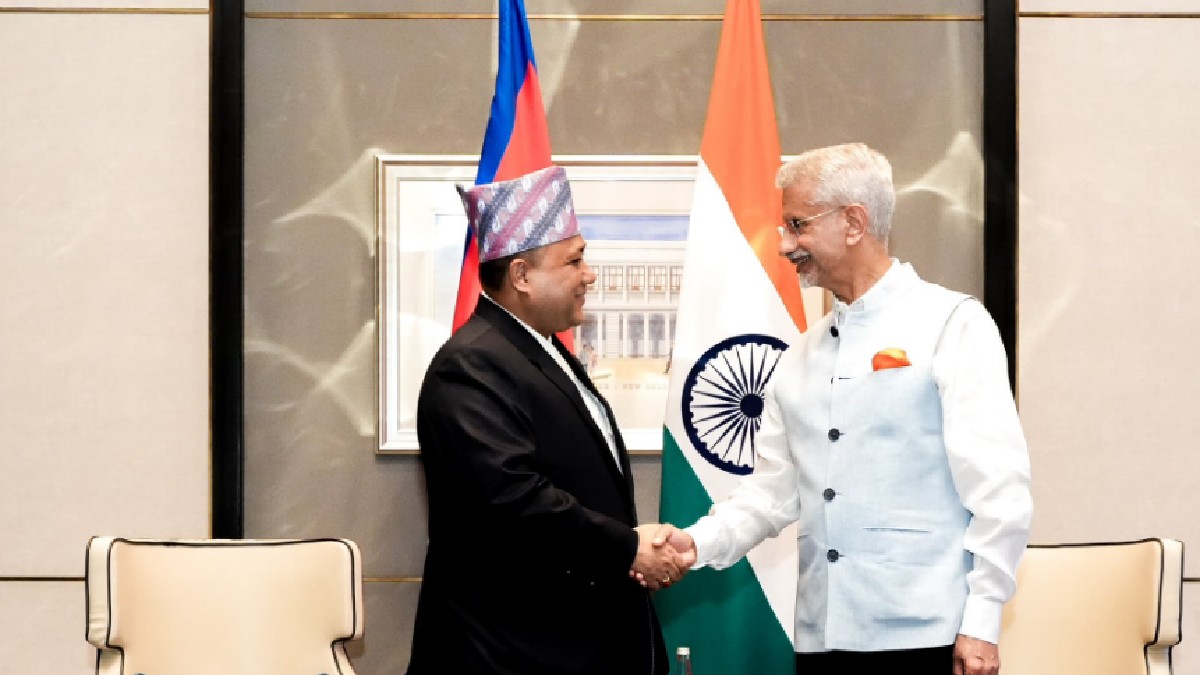
India and Japan are embarking on a new economic partnership with semiconductors, artificial intelligence, robotics and clean energy as key areas for collaboration. The current momentum is also fuelled by Union Minister for Commerce and Industry Piyush Goyal’s four-day visit to Japan, which brought together more than 200 Indian industry leaders and produced more than 250 business-to-business interactions in three Japanese cities.
The scale of the engagement underscores the growing importance of Japan as a strategic economic partner for India. Not only does a visit establish good government-to-government ties, but it also gives businesses, investors, and industry leaders from both countries the chance to directly engage.
More than 200 Indian business leaders were present for discussions on investment, manufacturing, technology collaborations, and supply chain cooperation. More than 250 B2B interactions showed companies were willing to pursue commercial opportunities in each other's markets.
This is particularly important because India is a global manufacturing and innovation hub in that regard.
Semiconductors at the Centre of the Partnership
Semiconductors will still be one of the central areas of India-Japan economic cooperation. The global semiconductor industry has become strategically significant in the wake of supply chain disruption and high competition between the major economies.
India has been working to establish a domestic semiconductor ecosystem with chip fabrication, packaging, testing and component manufacturing. In contrast, Japan has a lot of expertise in semiconductor materials, equipment, manufacturing technology and advanced electronics.
Greater cooperation between the two countries would therefore enable Japanese companies to be part of India’s expanding semiconductor industry and help Indian companies to get access to new technology and global supply chains.
For India, building a strong semiconductor industry is about more than manufacturing chips. It is closely related to the hopes for electronics production, electric vehicles, telecommunications equipment, artificial intelligence infrastructure and consumer technology.
AI and Robotics Hold New Opportunities
Artificial intelligence and robotics were also prominent areas of interest during the engagement.
Both India and Japan have very strong reasons to cooperate in these technologies. India has an advanced technology workforce, growing startup ecosystem and significant software capabilities, and Japan has decades of experience in industrial automation, robotics and precision manufacturing.
Combining these strengths would allow for new technology partnerships in the future and accelerate AI-powered industrial solutions.
Robotics is most important for manufacturing. As companies around the world work to increase productivity and reduce supply chain vulnerabilities, automated production systems are becoming more and more important as they all need to become more automated.
From Japanese knowledge on automation, Indian manufacturing facilities could benefit from Japanese expertise in automation, and Japanese companies could use India’s expanding manufacturing ecosystem as a base for regional and global production.
Clean Energy Becomes Another Pillar
Clean energy is another major opportunity for cooperation.
India’s rapidly growing economy is pushing up electricity demand and the country is at once pursuing goals for renewable energy and decarbonisation. Japan’s expertise in energy technology and advanced manufacturing can complement India’s large-scale deployment potential.
Cooperation could be in renewable energy, energy storage, hydrogen, electric mobility and energy-efficient industrial systems.
The combination of Japanese technologies with Indian scale could lead to projects that can serve domestic and international markets alike.
From Dialogue to Business Opportunities
One of the most important things about Goyal’s Japan trip was its focus on business engagement.
Government-level agreements can help to create the basis for economic cooperation, but sustained investment and trade growth ultimately depend on companies finding commercially viable opportunities.
The 250-plus B2B interactions are therefore a significant part of the visit. Such meetings can help businesses find potential partners, understand market needs, look for investment opportunities and start joint ventures.
And the involvement of more than 200 Indian industry leaders also sends a strong signal about the private sector's interest in strengthening India's economic relationship with Japan.
Japan can offer Indian companies access to advanced technologies, capital, manufacturing skills and global supply chains. For Japanese companies, India's large domestic market, expanding infrastructure and manufacturing ambitions provide huge long-term potential.
India Ready to Build at Scale
The broader message emerging from the engagement is that India wants to move beyond being a market for imported technology and become a major production and innovation centre.
India is working to develop capabilities at scale from semiconductor manufacturing and AI to robotics and clean energy.
Japan could play a key role in this transformation. Its industrial expertise, technological capabilities and established global companies make it a natural partner for India’s ambitions in advanced manufacturing.
The relationship has strategic importance beyond economics as well. India and Japan are key partners in the Indo-Pacific and cooperation in infrastructure, technology, supply chains, defence and economic security has deepened.
The latest business engagement adds another layer to that relationship by bringing the private sector more deeply into the partnership.
With 200-plus Indian industry leaders, 250-plus B2B interactions and engagement across three Japanese cities, Goyal's visit has highlighted the depth of commercial interest between the two economies.
The next challenge is to convert these discussions into real investments, manufacturing facilities, technology partnerships and long-term trade growth.
If that momentum continues, the India-Japan relationship may move from trade and investment relations to a more comprehensive model based on advanced technology, resilient supply chains, clean energy and large-scale manufacturing.
The message in India’s current engagement with Japan is clear: the two countries are not just trying to develop economic ties; they are also positioning themselves for the next generation of industries together.