Narendra Modi and Belgian Prime Minister Bart De Wever have agreed to put forward new momentum for defence and security cooperation between India and Belgium. Defense and security is a key pillar of the bilateral relationship and the two nations have agreed on a number of moves to improve military exchanges and training, he said.
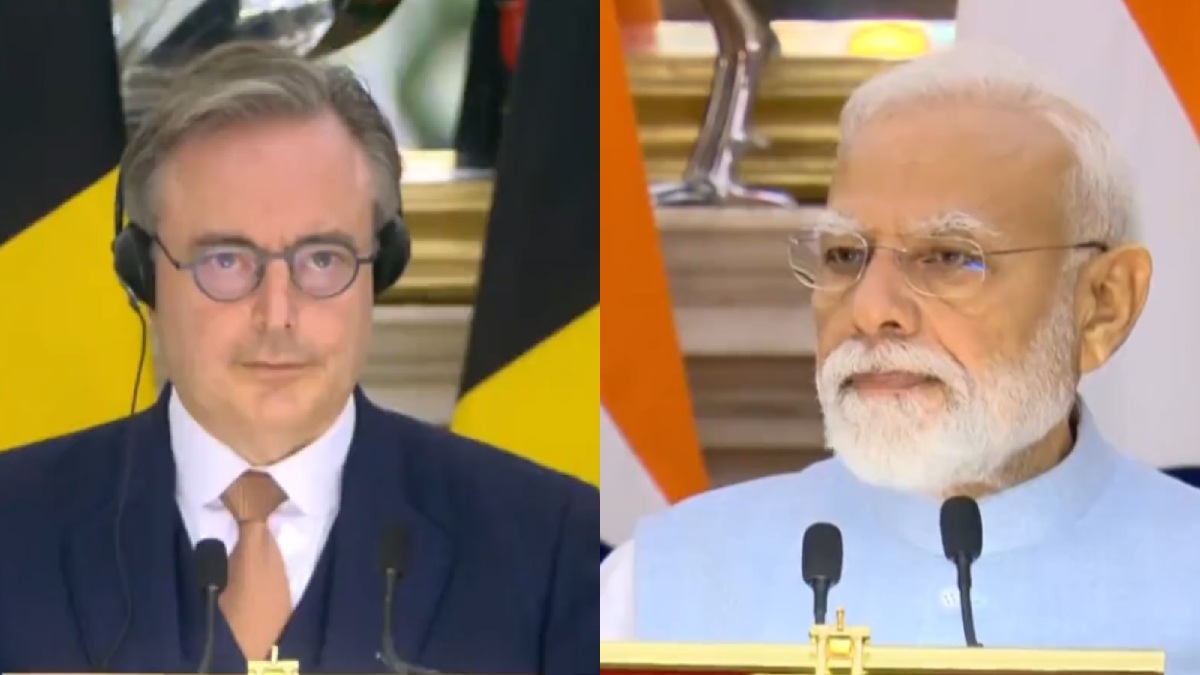
PM Modi said India and Belgium share a lot of common ground on democratic values, market-oriented economies and strong people-to-people ties. He characterized relations between India and Belgium as natural partners and said their relationship has grown considerably over the last decade.
The expansion of military exchanges and training will mean that the armed forces of both countries will be able to interact and share expertise more frequently. The two sides are also looking to enhance their defence industry relations with potential for defence co-development and co-production.
PM Modi also stressed the importance of sharing intelligence and cooperating with agencies to solve crimes. The security cooperation is part of India’s growing collaboration in strategic partnerships with European countries in defence manufacturing as well as intelligence and emerging technology.
The Prime Minister talked about already existing cooperation with modern defence equipment, such as with the Zorawar light tank. These are projects that are in sync with India’s growing focus on developing and producing advanced military platforms on the domestic level and also seeking international technological partners.
Defence Cooperation Expands Beyond Traditional Areas
India-Belgium relations have traditionally been one of trade, investment and people-to-people links but the partnership is growing into strategic areas. Defence, clean energy, critical minerals and semiconductors are now important areas of cooperation.
PM Modi recalled the historical connection between the two countries, particularly the contribution and sacrifice of Indian soldiers in Belgium during the First World War. He said this shared history is still very much relevant to the India and Belgium relationship.
The Prime Minister also spoke about India's economic performance even with continued geopolitical uncertainty. Conflicts in different parts of the world have created challenges for food, fuel and global supply chains, but India's economy is still gaining momentum, he said.
Modi said India experienced 7.8 per cent growth in the last quarter. He said India's economic performance has brought with it confidence and future opportunities for countries looking to expand their engagement with the world's fastest-growing major economies.
#WATCH | Delhi: Prime Minister Narendra Modi says, "Defence and security cooperation is a key pillar of our relationship. Today, we have agreed to enhance military exchanges and training cooperation between the two countries. Agreements reached between our governments and defence… pic.twitter.com/ifhue6qk0T
— ANI (@ANI) September 3, 2026
India-EU Trade Deal Opens New Opportunities
Economic cooperation was also a major topic of discussion. PM Modi referred to the Free Trade Agreement between India and the European Union and said that such an agreement would open up new opportunities in commercial relations between India and Belgium.
To increase bilateral investment, India has also established an Investment Fast-Track mechanism for Belgian companies as part of the initiative to scale up investment. The mechanism is also intended to help companies in India navigate the investment-related process, and to enable Belgian companies to expand their presence in India.
The two countries have also decided to make the India-Belgium Business Forum a regular platform. PM Modi said more coordination between financial, fintech and regulatory institutions will enhance economic engagement.
The two sides aim for a significant rise in bilateral trade over the next five years. Greater business-to-business interaction, investment facilitation and regulatory cooperation could play an important role in that regard.
Clean Energy and Critical Minerals
Clean energy is just one more aspect of the India-Belgium relationship. The two countries have signed a Memorandum of Understanding on renewable energy which PM Modi said would provide fresh momentum to cooperation on sustainability.
Both countries are expected to work more closely on the processing and recycling of critical minerals. These resources are key for electric vehicles, renewable energy systems, batteries and advanced electronics.
Reducing dependence on concentrated supply chains has become a major priority for economies around the world. Cooperation between India and Belgium in critical mineral processing and recycling may therefore have implications beyond bilateral trade.
Semiconductor Cooperation
Semiconductors are another area in which the two countries see potential for a more active collaboration. Belgium has a big base of semiconductor research and technology and India has a huge market, large manufacturing capacity, and a growing technology ecosystem.
PM Modi said India and Belgium will explore how to connect Belgium's IMEC Institute with India's semiconductor ecosystem. A partnership like this could be very helpful for research, innovation and the development of semiconductor capabilities in India.
As such, the proposed partnership illustrates how India-Belgium relations are going beyond economic cooperation into areas that are strategically important for future growth and technological resilience.
On the whole, PM Modi and Bart De Wever have discussed a broader India-Belgium partnership. Defence and military training will be at the heart of the relationship and cooperation in trade, clean energy, critical minerals and semiconductors can lead to longer-term engagement.
With both sides looking for better institutional and industry partnership more widely, the latest agreements could serve to create a more integrated strategic partnership between India and Belgium in the years ahead.