India and South Korea are seeking to remake their trade relationship as part of a CEPA upgrade focused on market access, investment, technology, supply chains and long-term economic resilience.
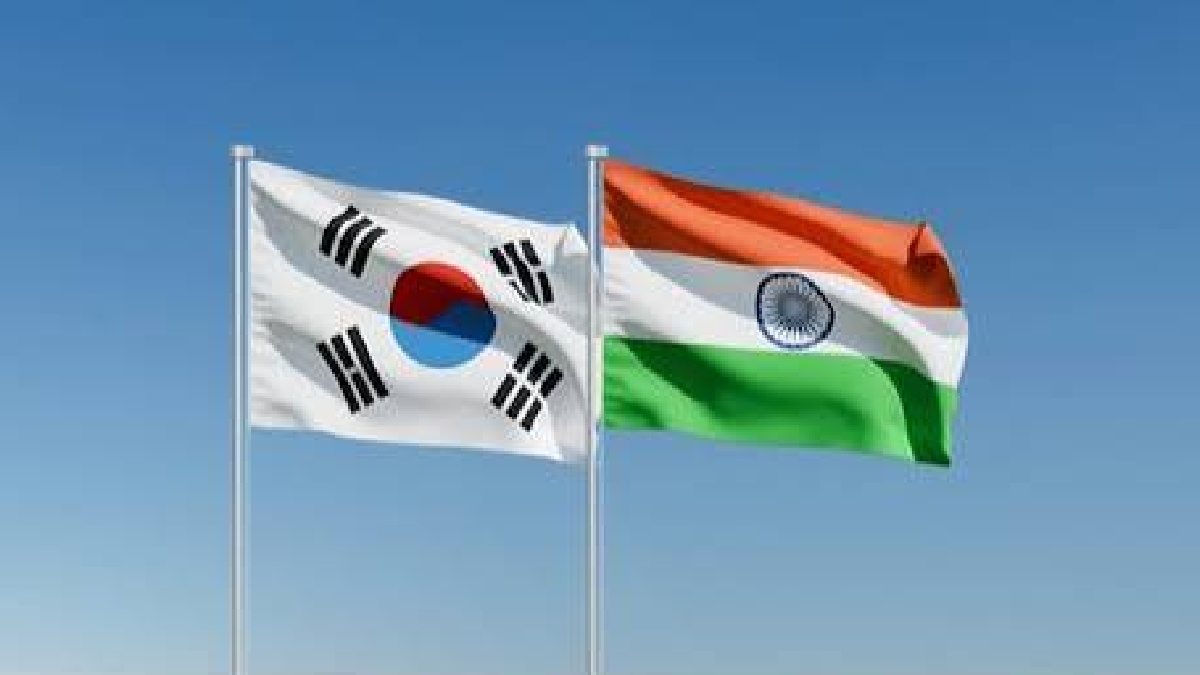
The India-South Korea Comprehensive Economic Partnership Agreement (CEPA) is reaching its critical stage as New Delhi and Seoul are determined to transform the current trade framework into a broader strategic economic partnership. The 13th round of upgrade negotiations, held in Seoul from August 19 to 21, 2026, reflected renewed political momentum and an expanded negotiating agenda covering goods, services, investment, rules of origin, non-tariff measures, digital trade, supply chain resilience and industrial cooperation.
The talks take place at a time when the Indo-Pacific economy is in a state of flux. Since the CEPA was enacted in 2003, global supply chains have been disrupted by geopolitical tension, technological rivalry and growing economic-security concerns. It’s in this context, for example, the proposed upgrade is not only being held up as a free trade project but also to form the institutional basis of a much larger collaboration between two major Asian economies.
Trade Deficit Remains At The Centre Of India’s Concerns
The largest challenge for the negotiations is the persistent imbalance in bilateral trade. India had a trade deficit of around $15.15 billion with South Korea in 2025 (with imports of about $21.16 billion and exports of about $6 billion).
For New Delhi, correcting this imbalance is a major priority for CEPA upgrade. India wants better access to a wide range of goods like steel, chemicals, agricultural and food products, engineering goods, pharmaceuticals, machinery and other manufactured goods.
But tariff cuts alone may not be enough. In the Korean market, Indian exporters still have to comply with technical standards, certification requirements, regulatory procedures and non-tariff measures. All of that adds up to a lot of costs and complexity to doing business for small Indian companies entering South Korea.
India is thus searching for commercially meaningful market access rather than just more concessions on paper. Greater transparency in regulations, simplified certification procedures and better recognition of standards could help Indian businesses reach Korean consumers, distribution networks and industrial supply chains.
South Korea has its own priorities. Korean companies are seeking greater access to India’s rapidly expanding economy, particularly in automobiles, components, machinery, electronics, steel, petrochemicals, advanced manufacturing, services, investment and digital trade.
This presents a fundamental negotiating challenge: Korea wants deeper access to India’s large market, while India wants to ensure that the benefits of the agreement are distributed more evenly.
Automobiles, Steel And Services Pose Difficult Questions
The automobile sector is likely to remain one of the most politically sensitive areas of the negotiations. Korean manufacturers have many capabilities and a strong presence in India, but New Delhi is wary of a broad liberalization since automobiles are closely linked with domestic manufacturing, employment, localization and technological development.
A compromise could be for phased tariff cuts, more precise quotas or different treatment of electric vehicles and components. Further market access and technology commitments might also help India to reap higher domestic economic returns.
Steel is another complicated issue. India wants to protect its domestic producers from excessive import competition and South Korean companies want predictable access to the Indian market. Tariffs, safeguards, quotas and rules of origin could therefore remain contentious throughout the negotiations.
Services are another opportunity. India has immense strengths in information technology, software, engineering, and professional services but its access to the Korean market has not been expanded. New Delhi is particularly interested in progress on Mode 4, which concerns the temporary movement of professionals across borders.
A greater emphasis on professional mobility could significantly increase the economic value of the upgraded CEPA. For India, services exports could help offset some of the structural imbalance in merchandise trade while allowing Korean companies to benefit from Indian technological and professional capabilities.
Rules Of Origin And Digital Trade Become Increasingly Important
Rules of origin are also key to the negotiations. Complicated requirements can increase compliance costs and discourage businesses from actually using preferential tariffs available under a trade agreement. Simplifying administrative procedures and making origin requirements more practical could therefore increase CEPA utilization without necessarily requiring major new tariff concessions.
Digital trade is also emerging as a critical area. The rapid development of artificial intelligence, cloud computing, semiconductor ecosystems, cross-border data flows and digitally delivered services have dramatically changed the nature of international commerce.
South Korea generally wants a predictable and open digital environment that can support technology companies and cross-border business. India, however, wants to retain regulatory flexibility in the digital space and emerging technologies.
The challenge will be to build more regulatory interoperability without compromising the legitimate policy objectives of either country. Cooperation with emerging technologies might be one of the most valuable elements of an improved agreement if both sides are willing to adopt pragmatic solutions.
Korea’s China Dependence Creates A Strategic Opening For India
The strategic significance of the CEPA upgrade goes well beyond trade statistics. South Korea is a global industrial and technological powerhouse with major strengths in semiconductors, automobiles, shipbuilding, steel, electronics, batteries, chemicals and advanced manufacturing.
But the economy is still heavily interconnected to global supply chains, including with much of its economic relationship with China. Increasing geopolitical tensions, technological restrictions, export restrictions and supply chain problems have led Seoul to diversify its economic relationship.
India can increasingly play an important role in this diversification strategy. Its large consumer market, expanding manufacturing base, growing services sector and long-term growth potential offer Korean companies a range of opportunities in a very wide variety of sectors.
Potential areas of cooperation include semiconductors, electronics, batteries, automobiles, shipbuilding, renewable energy, infrastructure, pharmaceuticals, advanced manufacturing and strategic technologies. More Korean investment in India could also change the bilateral relationship from one of merchandise trade to one of joint production and investment.
For India, more Korean engagement could help with industrial development, technology transfer and integration into resilient Indo-Pacific supply chains.
A More Flexible Approach Could Unlock The Negotiations
Both countries are going to need to move away from such rigid negotiating positions if they want to achieve their goal of completing the upgraded CEPA by the first half of 2027. Sensitive sectors need not necessarily be opened immediately or completely. Phased liberalization, transition periods, safeguards, quotas and targeted exclusions could allow both governments to protect their core domestic interests while creating space for wider commercial cooperation.
India could take more targeted concessions in the sectors that are strategically important to Korea as long as those concessions generate significant investment, technology transfer or manufacturing commitments in India. Seoul could also offer greater market access for Indian goods and services and remove the non-tariff barriers that have kept Indian exporters from developing.
The Industrial Cooperation Committee established following the April 2026 India–Korea summit could play a particularly important role in this process. The committee might be able to link the CEPA negotiations with cooperation in semiconductors, critical minerals, clean energy, shipbuilding, advanced manufacturing, and strategic technologies.
That would allow the agreement to evolve from a trade deal to a broader economic-security framework.
Road To 2027
The success of the CEPA upgrade will ultimately depend on whether India and South Korea can reconcile short-term commercial interests with their longer-term strategic priorities. The objective should not simply be to get the maximum number of concessions from the other side.
Rather, both governments need to identify areas where compromise can yield greater long-term economic and strategic returns. For India, this means protecting sensitive industries and securing genuine access to the Korean market. For South Korea, this means gaining greater access to India while investing in India and industrial cooperation which can contribute to India’s manufacturing ambitions.
If successful, a deal would open up a whole new world of opportunities in trade, investment, technology, energy, supply chains and advanced manufacturing. And it would also strengthen both countries’ economic resilience at a time when geopolitical competition is reshaping global commerce.
As the talks head towards 2027, the India–Korea CEPA upgrade is therefore a test of strategic economic diplomacy. If Delhi and Seoul can show sufficient flexibility and political vision, the agreement might go beyond rectifying current trade imbalances and become the foundation of a durable strategic economic partnership.
The next step in negotiations will be whether the two countries can translate their growing strategic convergence into concrete commercial opportunities. An ambitious but balanced CEPA upgrade could ultimately strengthen India’s position in Indo-Pacific supply chains and enable South Korea to expand its economic partnerships and become more resilient in an increasingly uncertain global economy.