Iran has proposed a seven-day plan which it hopes will see the Strait of Hormuz reopened and talks on its nuclear programme resumed, the Iranian Foreign Minister Syed Abbas Araghchi said. The proposal would be operational if certain conditions are met and it is aimed at the development of diplomacy in West Asia.
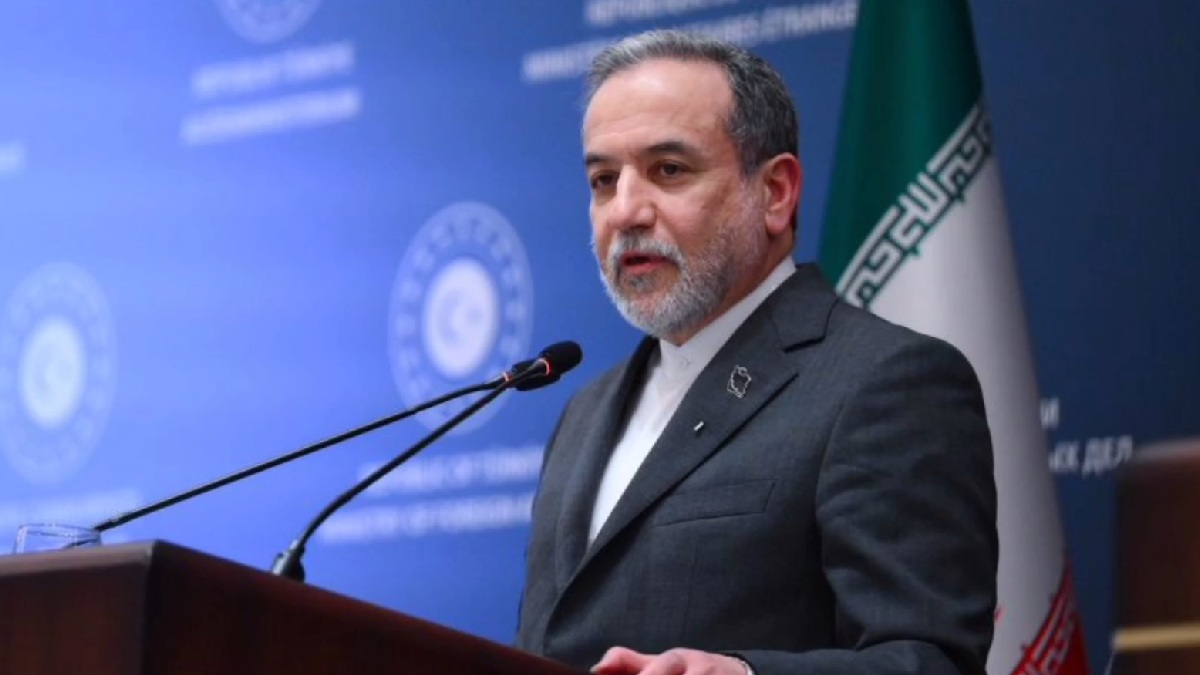
Araghchi made the remarks to reporters on the sidelines of the United Nations General Assembly, according to The New York Times. Iran has presented the proposal to the United States through intermediaries, he said, and it is similar to the memorandum of understanding reached between Washington and Tehran in June.
Iran Proposes Seven-Day Plan For Hormuz
Under the proposal presented by Araghchi, the Strait of Hormuz could be reopened at the end of the seventh day if certain conditions are met. Iran’s nuclear programme would also be restarted under the plan.
Araghchi said Iran had communicated the proposal to the United States through intermediaries. He also said reaching an agreement before the US midterm elections would be preferable, according to the report.
The Strait of Hormuz is a strategic waterway that connects the Persian Gulf to the Gulf of Oman and the Arabian Sea. Any disruption of shipping through the strait has far reaching implications for global energy markets since large volumes of oil and other energy supplies flow through it.
In this way, Iran is suggesting reopening the waterway as part of its nuclear programme and a broader diplomatic effort.
Tehran Says Conditions Must Be Met
In a meeting with German Foreign Minister Johann Wadephul, Araghchi said Iran had communicated what he called its “reasonable conditions and requirements” to the US for advancing diplomacy.
The Iranian foreign minister said regional security could only be restored if Tehran’s interventionist and aggressive actions against Iran were stopped.
Iran has said its nuclear programme is peaceful. Araghchi also maintained Tehran’s commitment to diplomacy and negotiations with the programme, and Iran’s position and its conduct during past negotiations should be taken into account.
The Iranian government has also accused the United States and Israel of military aggression against Iran. Such claims are Tehran’s position on the conflict, and remain contested by the parties.
Araghchi Criticises European Countries
Araghchi also criticised European countries, including Germany, on their approach to the conflict and international law.
He accused European governments of failing to adequately challenge what Tehran describes as US violations of international law and coercive actions.
The Iranian foreign minister further insisted that confidence in the United Nations could only be restored if countries applied the principles of the UN Charter and international law.
His comments came as world leaders and senior officials gathered in New York for the United Nations General Assembly, where diplomatic efforts around the West Asia conflict have remained a major issue.
Pezeshkian Blames Trump for Failed Agreement
Meanwhile, Iranian President Masoud Pezeshkian has also spoken out about the stalled diplomatic process. In an interview with Fox News, Pezeshkian blamed US President Donald Trump and the American side for the failure to implement what Tehran says was an agreement reached in June.
Pezeshkian claimed to have reached an agreement with the US president and said Iran is ready to move forward in the agreement with the US. He also accused the United States of abandoning dialogue and escalating the confrontation through military action.
Iranian officials have argued that diplomatic talks will still be possible if certain conditions are met. The U.S. position on the proposed seven-day plan and its specific conditions will play a big role in determining if the initiative can get off the ground.
Strait of Hormuz Remains Central To Negotiations
The Strait of Hormuz has emerged as a key element in Iran's latest proposal. Tehran's proposal links the reopening of the waterway to a larger diplomatic process that includes nuclear talks.
The strait is one of the world’s most important energy routes, so how it is regarded by governments, oil consumers and shipping companies is a great concern. A sustained disruption could affect energy supplies and transportation costs beyond the immediate region.
Iran's proposal might therefore have implications beyond nuclear talks, and the immediate conflict.
What Happens Next?
Iran’s seven-day proposal must be further discussed and further negotiations, including dialogue with intermediaries and clarification of the conditions Tehran has put forward.
Araghchi has emphasized that Iran remains committed to diplomacy over its nuclear programme, while Iranian President Pezeshkian has also said Tehran is prepared to return to negotiations.
Whether the proposal leads to a ceasefire, the reopening of the Strait of Hormuz and revival of nuclear talks will be a matter of the policy of the United States and other parties to it. At present, Tehran's proposal is another diplomatic effort to resolve the conflict and to keep the region in an increasingly prolonged conflict in which the future of regional safety and the vital shipping artery are at the heart of the negotiations.