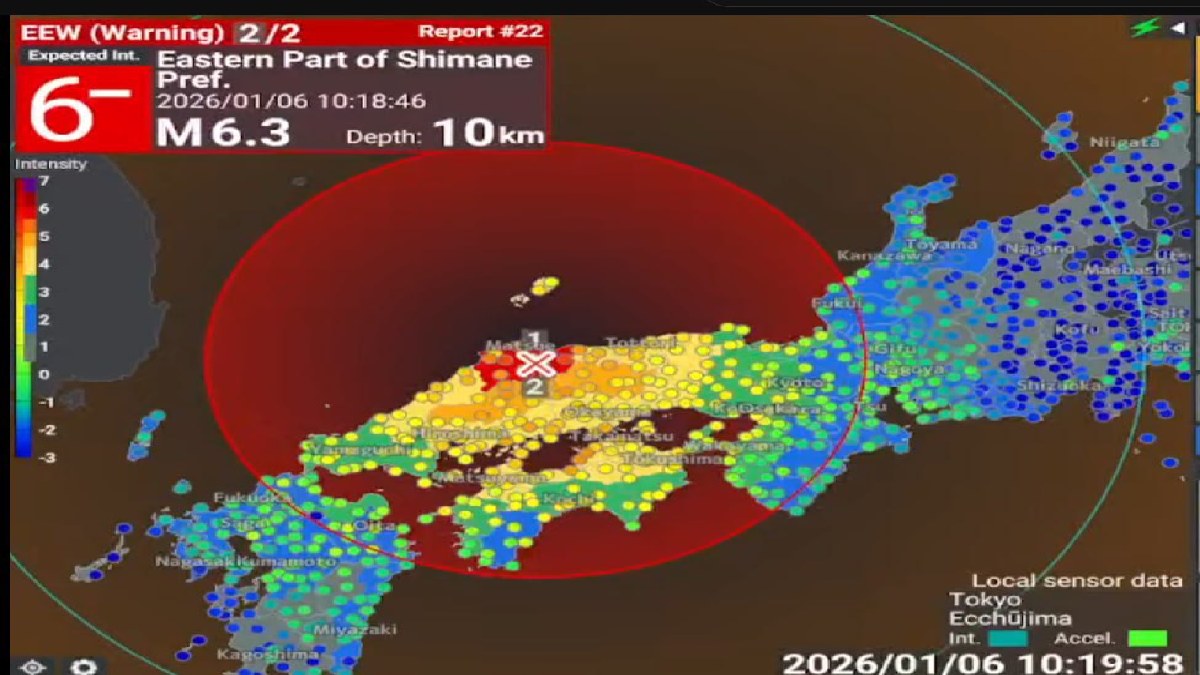
Northern Japan was rattled by a significant 6.7-magnitude earthquake on Friday, marking the second major seismic event in the region this week. The latest tremor comes just days after a powerful 7.5-magnitude quake struck, which injured at least 50 people.

Tsunami Advisory Issued
The Japan Meteorological Agency (JMA) swiftly issued a Tsunami Advisory for parts of the northern Pacific coastline. The JMA warns that tsunami waves of up to one metre (3 feet) could reach the affected shores.
It is important to note the distinction: a Tsunami Advisory is a lower-level alert than a Tsunami Warning. Under an advisory, residents are urged to stay away from the ocean but are not required to evacuate.
The earthquake measured 4 on Japan’s seismic intensity scale (which ranges from 1–7), indicating shaking that was weaker than the earlier, more powerful quake.
Details of the Quake
- Magnitude: 6.7 (per JMA and USGS)
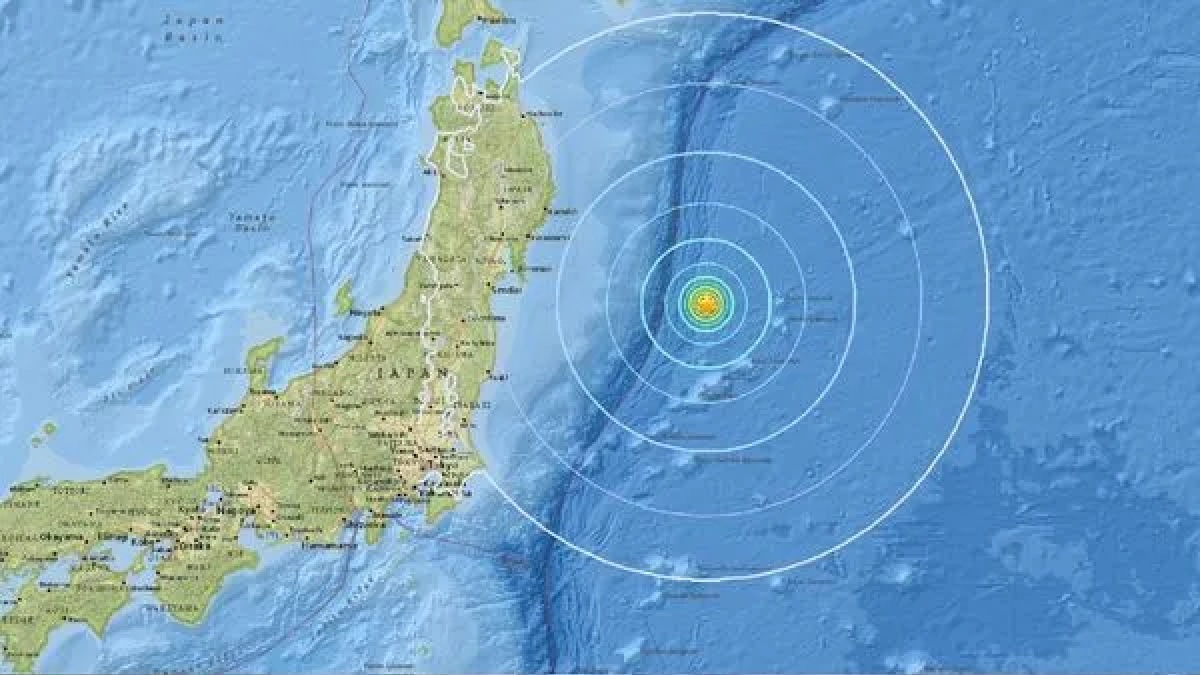
- Epicenter: Centred 130 kilometers (81 miles) from the city of Kuji in Iwate prefecture on the main island of Honshu (USGS data).
- Shaking Intensity: Measured 4 on Japan's 7-point scale.
Aftermath of Monday's 7.5M Quake
The Friday quake follows a major 7.5-magnitude earthquake earlier in the week off the coast of Aomori, the northernmost prefecture on Honshu island. That powerful tremor led to:
- Minor damage, including falling items, broken windows, and damaged roads.
- Injuries to at least 50 people.
- Initial tsunami waves reaching 70 centimetres.
Following the Monday event, the Japanese government had already advised residents, from Hokkaido to Chiba, to remain alert for an increased chance of another powerful earthquake within the week.
Why is Japan a Seismic Hotspot?
Japan is one of the world's most earthquake-prone nations, a fact directly linked to its precarious geographic position.
The country sits directly on the western edge of the Pacific "Ring of Fire," a 40,000-kilometre horseshoe-shaped zone known for intense seismic and volcanic activity. Critically, Japan is situated at the intersection of four major tectonic plates. The frequent movements and collisions of these plates cause about 1,500 tremors to be recorded in the country each year.
While most of these quakes are mild, the impact can be devastating depending on the depth of the quake and its proximity to densely populated areas.