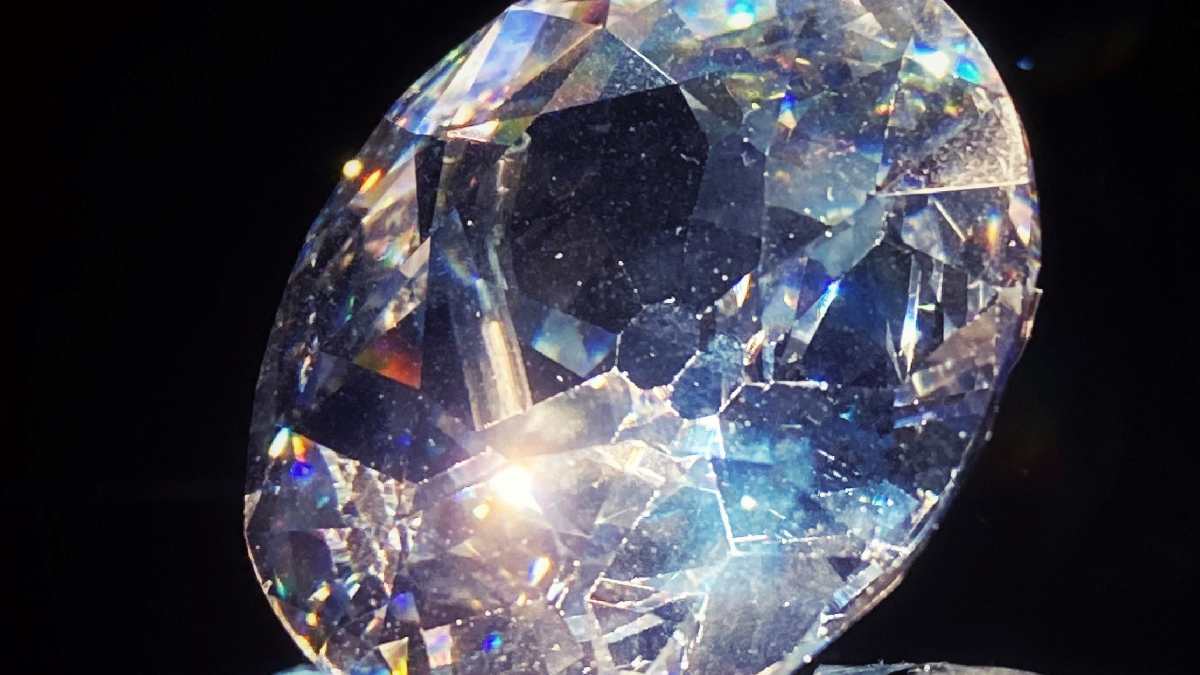
Koh-i-Noor is one of the world’s most celebrated diamonds; however it’s an image that hides a history of conquest, royal rivalry and colonial power. The name Koh-i-Noor (Mountain of Light) in Persian is named after the diamond (Koh-i-Noor Diamond) was given to it when it came into the possession of Persian ruler Nader Shah in 1739.
Where did the Koh-i-Noor originate
The exact origin of the Koh-i-Noor is not known. Historians and gem experts tend to associate it with the Golconda region of India, now known for producing the world's finest diamonds. But the truth is the mine and the date of discovery have never been established.
Some legends claim the diamond is thousands of years old and was mentioned in ancient Indian traditions. These stories cannot be linked to Koh-i-Noor nowadays. During the medieval and Mughal era its history becomes a bit clearer.
A very early reference comes from Mughal emperor Babur: his memoirs describe a famous diamond obtained after the defeat of the ruler of Gwalior in 1526. Some historians have identified that stone with the Koh-i-Noor, but the identification is still debated.
How did it reach Nader Shah
The diamond eventually became part of the Mughal treasury. In 1739, Persian ruler Nader Shah invaded Delhi and looted the Mughal treasury. The diamond was among the treasures taken from India.
According to the famous story Mughal emperor Muhammad Shah had hidden the diamond in his turban. Nader Shah learned about it and suggested that the two rulers exchange turbans as a gesture of friendship. When Nader Shah discovered the stone, he exclaimed “Koh-i-Noor,” giving the diamond the name by which it is now known.
The diamond then passed through Afghan rulers before reaching the Sikh ruler Maharaja Ranjit Singh, who obtained it in 1813. It was a symbol of sovereignty in the Sikh Empire.
Why was the Koh-i-Noor taken by the British
The most controversial chapter began after the Second Anglo-Sikh War. Britain defeated the Sikh Empire and annexed Punjab in 1849.
The Koh-i-Noor was formally surrendered to the British under the Treaty of Lahore on March 29, 1849. The agreement was that the diamond was to be presented to Queen Victoria. At the time, the Sikh ruler Duleep Singh was only 10 years old.
It is why describing the diamond as a “gift” is misleading. The British acquired it after military conquest and it was part of the terms imposed after the annexation of Punjab. The episode is still a matter of debate over colonial-era cultural property.
The diamond was transported to Britain and presented to Queen Victoria in 1850. The Royal Collection also records that the Koh-i-Noor was brought from the Treasury of Lahore and presented to Victoria.
What was the Koh-i-Noor worth
It is very hard to place a precise modern price on the Koh-i-Noor. In most cases it is considered priceless because its historical, cultural and political significance far exceeds the value of an ordinary diamond.
Before it was recut, the stone weighed about 186 carats. British jewellers recut it in 1852 in order to make it shine a bit more. The process reduced its weight considerably, and it was about 108.93 carats then, according to records.
Today, it is not realistically valued like a diamond that can be bought and sold on the open market. Its history and status as part of the British Crown Jewels make assigning a conventional market price inappropriate.
The Diamond Today
After reaching Britain the Koh-i-Noor was displayed at the Great Exhibition in 1851. Its appearance disappointed some visitors and the decision was taken to recut it. It was later part of the British Crown Jewels and placed in the crown worn by Queen Elizabeth The Queen Mother.
The Koh-i-Noor remains one of the world’s most controversial historic gemstones. From the Indian subcontinent to the British Crown is not all about a beautiful diamond; it is about empires, war, political power and colonial rule.
The dispute over who has the rightful claim to the diamond is still on the line and so the “Mountain of Light” is just as politically significant and historically fascinating as ever.