A personalised cancer vaccine developed by Moderna and Merck has shown promising results in a late-stage melanoma trial, fueling hopes that mRNA technology could be a bigger player in cancer treatment.
The companies announced positive Phase 3 results for intismeran autogene, an experimental personalised mRNA therapy, when paired with Merck’s immunotherapy Keytruda (pembrolizumab).
The Phase 3 INTerpath-001 trial involved 1,137 patients with completely removed stage IIB to IV melanoma. The study compared the patients who received the personalised vaccine with Keytruda to those treated with Keytruda alone. The combination met the trial’s objectives, leading to significant improvements in recurrence-free survival and distant metastasis-free survival.
How does the Personalised Vaccine work
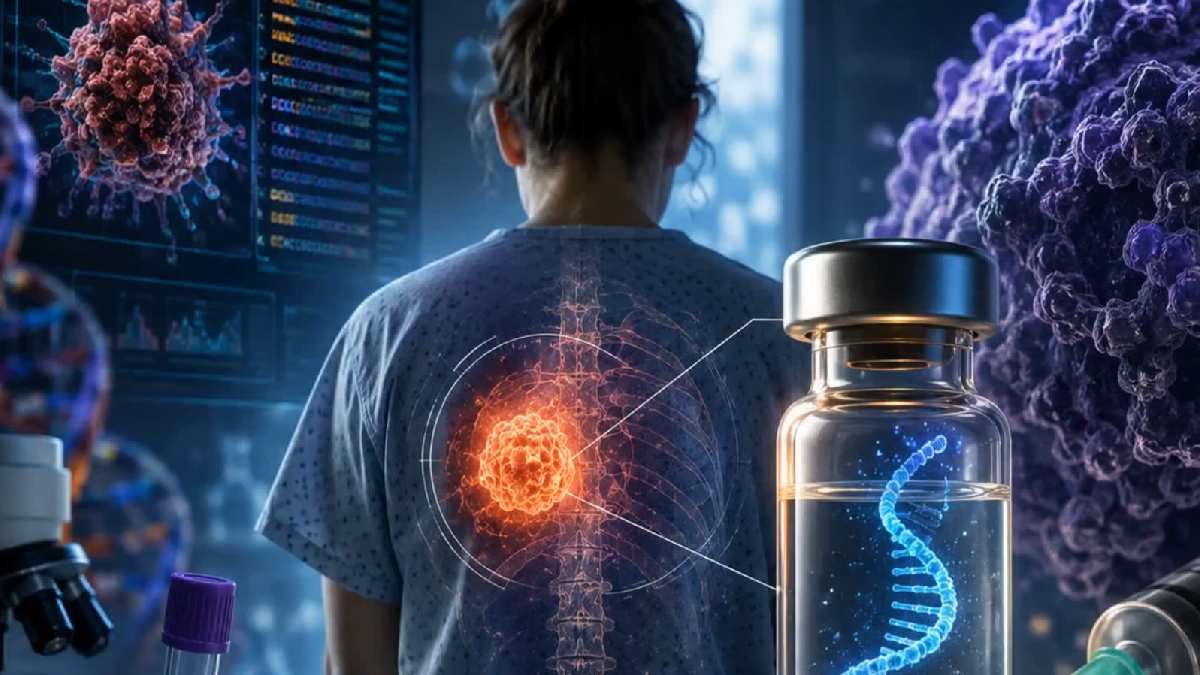
Unlike conventional vaccines to prevent infections, this treatment is intended to help the immune system recognize and attack cancer cells. The treatment is personalised with the information from each individual patient’s tumour so researchers can identify tumour-specific mutations and develop an mRNA treatment targeting those cancer cells.
The mRNA technology essentially provides instructions that help the immune system recognize cancer-specific markers. When combined with Keytruda, which helps to alleviate a major brake on immune responses, it will help to give the immune system a better chance to detect and attack cancer cells that remain in the body.
The concept builds on earlier Phase 2b research. Five-year follow-up data from the KEYNOTE-942/mRNA-4157 study showed that the combination reduced the risk of recurrence or death by 49% compared with Keytruda alone in patients with high-risk melanoma following surgery.
What has been the reason behind the latest trial
The latest results are significant as they are a successful late-stage test of a personalised mRNA cancer treatment. The results suggest that the technology might potentially move beyond infectious diseases and enter cancer care.
But the results should not be taken as proof that the vaccine can cure melanoma. The companies have released topline findings and more detailed clinical data are expected to be presented at a future medical meeting. So much more information, including survival and safety data, is necessary to assess the overall impact of the treatment.
Could this approach work against other cancers
That is one of the biggest questions surrounding the development. Moderna and Merck are already studying intismeran and related approaches for a number of tumour types such as lung, bladder and kidney cancers.
If future trials confirm similar benefits, personalised mRNA vaccines could prove to be an important addition to precision oncology. Instead of a universal treatment for every patient, doctors could potentially use tumour-specific information to design therapies tailored to each individual's cancer.
For now, the melanoma results are not a finished treatment revolution but a historical milestone. Regulatory discussions and further clinical data will determine whether the Merck-Moderna vaccine will ever reach patients. But the findings have raised hopes that personalized mRNA technology could change how tumors are treated in the future.