Moldovan President Maia Sandu has said her country wants to be a strategic gateway for Indian businesses looking to enter European markets, and she wants to see that India and Moldova work together more closely in education. It has become clear that relations between the two countries are not only growing, but also that there is also interest in going beyond diplomacy and to trade and investment and innovation, education collaboration and so on.
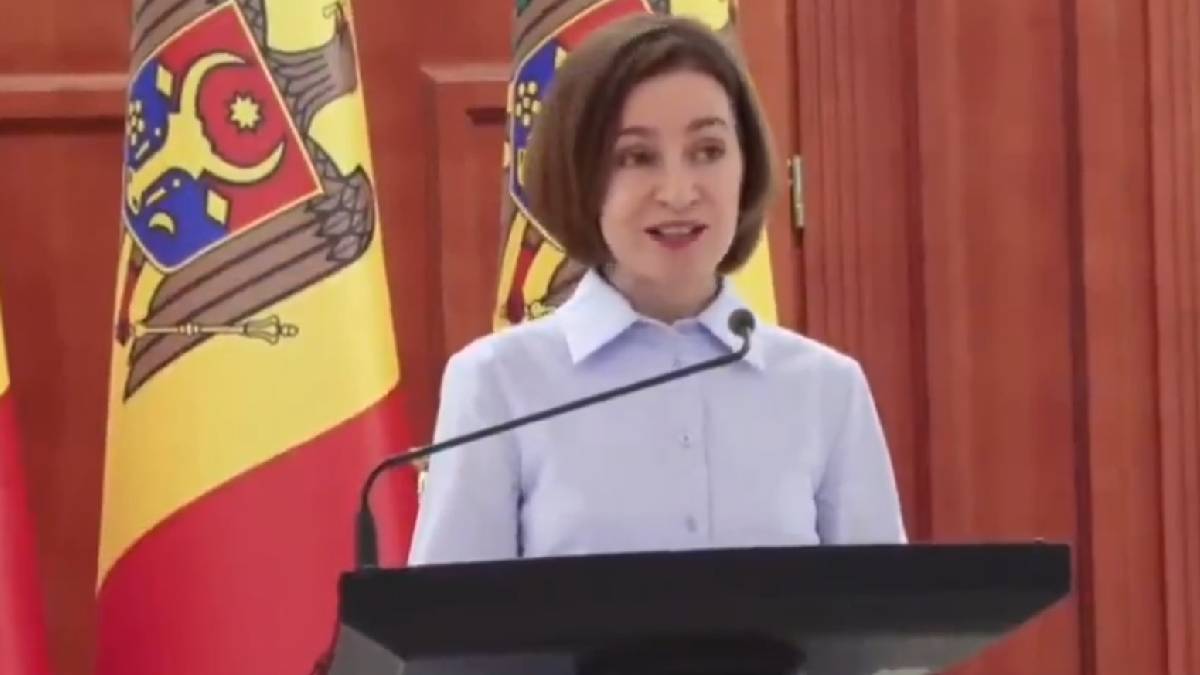
President Sandu said Moldova is a strategic region in Eastern Europe and its economic integration with European markets is the future of India–Moldova relations. She said it could be an attractive point of entry for Indian companies looking to build their presence in Europe when starting to enter the market and to have access to regional markets, and the opportunities in industries to be found there.
JUST IN: 🇮🇳🇲🇩 Moldovan President Maia Sandu says Moldova can serve as a gateway for Indian businesses entering Europe.
— Asia Nexus (@nexusasian) July 20, 2026
She also emphasized the importance of strengthening India–Moldova cooperation in education. pic.twitter.com/Q2Vrm4U1HL
For Indian businesses, Europe remains one of the world’s most important export destinations and investment regions. Moldova’s geography and economic connectivity are likely to make it attractive for manufacturing, logistics, information technology, pharmaceuticals, agriculture, renewable energy, and other sectors for companies that want to diversify their international operations as well.
The proposal comes at a time when India is growing its economic relationship with Europe, with trade, investment, and technology cooperation. Smaller European economies like Moldova are increasingly positioning themselves as investment destinations with low operating costs, skilled jobs and access to more regional markets.
President Sandu also stressed the importance of promoting educational cooperation between the two countries. The longer-term benefits of stronger academic partnerships, she said, would be to facilitate student exchanges, joint research projects, faculty collaboration, and institutional partnerships between universities in India and Moldova.
Education is now a very important pillar of international cooperation. Educational mobility, collaborative research, digital learning, and academic innovation are making countries better people-to-people and developing knowledgeable workforces with the potential to help accelerate future economic growth.
India, with one of the world’s largest higher education systems, has steadily expanded international academic partnerships with universities and research institutions throughout Europe. New opportunities for Indian students, researchers, and institutions of higher education may be created if Moldova can be a partner in the exchange of cultures and scientific collaboration.
More bilateral engagement would also help to promote cooperation in information technology, digital transformation, healthcare, agriculture, renewable energy, food processing, and startup innovation for the future, as well as in education. Both India’s rapidly growing technology ecosystem and Moldova’s efforts at modernizing its economy provide opportunities for mutually beneficial engagement.
India and Moldova trade is still modest compared to India's bigger European trading partners of India and the world economy. But both countries are interested in increasing commercial engagement for better business participation in terms of job opportunities, investment flow, and new areas of cooperation.
Indian companies have shown their capacity to compete internationally in sectors like pharmaceuticals and information technology, engineering, automotive components, textiles, renewable energy, etc. Focusing on new European markets through cooperation with countries like Moldova will allow companies to diversify exports while strengthening India’s global economic footprint.
Moldova’s economic development, job creation, technology transfer, and industrial modernization could be helped by Indian investment. This collaboration with Indian businesses could also help the country to continue to penetrate international value chains and to grow export-oriented industries.
This focus on education is connected with a general understanding that long-term bilateral relations are built not only on trade and investment but also on stronger cultural and academic ties. So there can be long-lasting connections between future generations in both countries in terms of exchange of students, language programs, and scholarships, along with research projects.
President Sandu’s comments also show the changing face of India-Europe relations: partnerships are increasingly expanding beyond commerce into innovation, sustainability, education, digital technologies, and advanced manufacturing. With India’s economic clout in the world on the rise, European countries are seeking new ways to interact with one of the world’s fastest-growing major economies.
If the discussions translate into a concrete initiative, India and Moldova would see expanded cooperation in the next few years. Greater trade, investment, educational exchanges, and business partnerships would not only strengthen bilateral relations but also create new opportunities for Indian enterprises looking to access European markets through strategic regional partnerships.
By framing Moldova as a gateway to Europe and promoting education cooperation, President Maia Sandu has set out a vision for a more extended and robust partnership with India— one that combines economic opportunity with knowledge exchange and long-term cooperation.