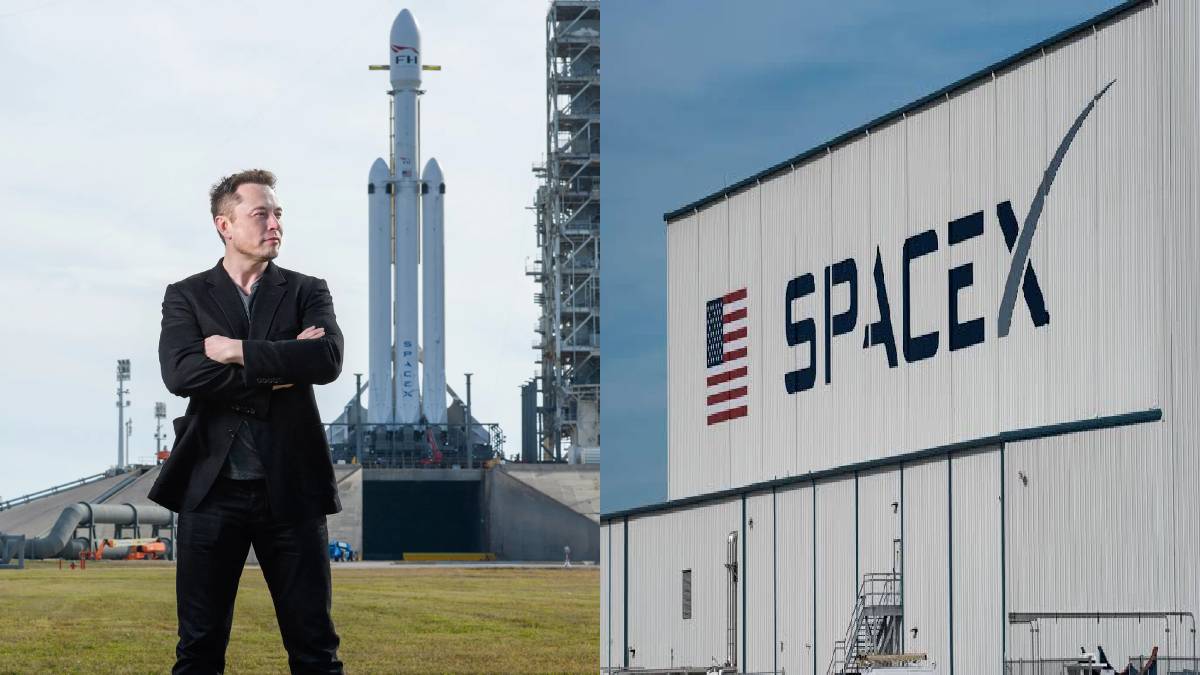
Over this past week, in a significant pivot that has rippled through the aerospace industry, Elon Musk said on Sunday, February 8, 2026, that SpaceX will shift its main focus to creating a “self-growing” city on the Moon. Whereas Mars had long served as Musk’s ultimate “backup drive” for humanity, the billionaire listed logistic advantages and a shorter 10-year timeline as making the Moon the frontstop for civilization-building in the near future.

The Strategic Turn: Why The Moon?
Musk took to X (formerly Twitter) to explain that Mars is an ongoing target, but on the Moon, there is a much faster way to make a permanent human presence.
Launch Frequency & Travel Time
The most persuasive reason for the change is what’s referred to as the “Launch Window.”
- Mars: Only if the planets align every 26 months can you travel, and the trip will take about six months.
- The Moon: SpaceX can launch to the Moon every 10 days, with a transit time of only 2 days.
“This means we can iterate much faster to build a Moon city than to build a city on Mars,” Musk wrote. “The primary concern is civilization’s future, and the Moon is faster.”
The "Self-Growing" Concept
Musk referred to the settlement as “self-growing,” a nod to In Situ Resource Utilization (ISRU). Using lunar regolith (soil) to 3D-print structures and extracting frozen water from craters for fuel and oxygen, the base will ultimately expand its footprint on its own, while relying very little on Earth.

The 10-Year Roadmap (2026–2036)
Having just signed a deal with Musk’s AI agency, xAI, to bring the two companies together for $1.25 trillion, the implementation of advanced robotics will be critical in this timeline.
- March 2027: SpaceX plans its initial uncrewed Starship landing on the Moon.
- 2028: Cargo missions will commence at $100 million per metric ton, with the first set of "Auda City" modules expected to come.
- The “Optimus” Factor: Musk teased Tesla’s Optimus robots would be the Moon’s “Von Neumann machines” — robots that could build infrastructure and even repair themselves before humans arrive.
Political and Economic Alignment
The move also brings SpaceX more in line with current American space policy. The administration’s Artemis initiative is again targeting a permanent lunar presence by 2028. In choosing the Moon above itself, SpaceX cements its position as a key government contractor, while serving as a “proof of concept” for its enormous valuation in prelude to a potential IPO for SpaceX this midyear.
What Happens to Mars?
Mars is not off the table, but is already on the “back burner.” Musk observed also that the Moon city would take less than 10 years to realize, but a self-sustaining Mars city is almost definitely 20+ years away. SpaceX is still planning to send an uncrewed mission on to the Red Planet, but for 2026, the focus is obviously at the lunar South Pole.