The Secretary of State, Marco Rubio, in a strong and unequivocal speech before the Senate Foreign Relations Committee, has told the U.S. Senate Foreign Relations Committee that Iran will receive no sanctions relief even if it opens the Strait of Hormuz. Any easing of economic pressure, he told the committee, is only possible if Tehran gives up its stockpile of highly enriched uranium and will not receive any sanctions relief if it allows the Strait of Hormuz to be reopened without a complete agreement.
"That's Not Been Offered".
Rubio dismissed any suggestion that reopening the vital oil shipping channel—blocked since the beginning of the US-Israeli conflict with Iran on February 28—would allow sanctions relief..
"Right now, everything that's been discussed with them is that any sanctions relief is condition-based," Rubio said. “It has to be in return for the reason why those sanctions were put in place in the first place, which is their nuclear program.”.
When asked directly whether the US would lift sanctions in exchange for Iran reopening the Strait of Hormuz, Rubio said: “That’s not been discussed. That’s not been offered.”.
The Nuclear Condition.
Rubio emphasized that Iran’s stockpile of highly enriched uranium remains the primary obstacle. He outlined a two-phase approach being pursued by the Trump administration..
"Phase 2 is they have to commit to very specific negotiations on the disposition of the highly enriched uranium that still is buried deep in a mountain somewhere," Rubio added. Tehran must agree to negotiate “severe and long-term limitations and/or cancellation of enrichment activity in their country,” he said..
However, Rubio admitted that nuclear talks would be “very technical” and might take months to conclude, requiring teams of experts to meet over a 30-to-90-day period. Strait of Hormuz Context.
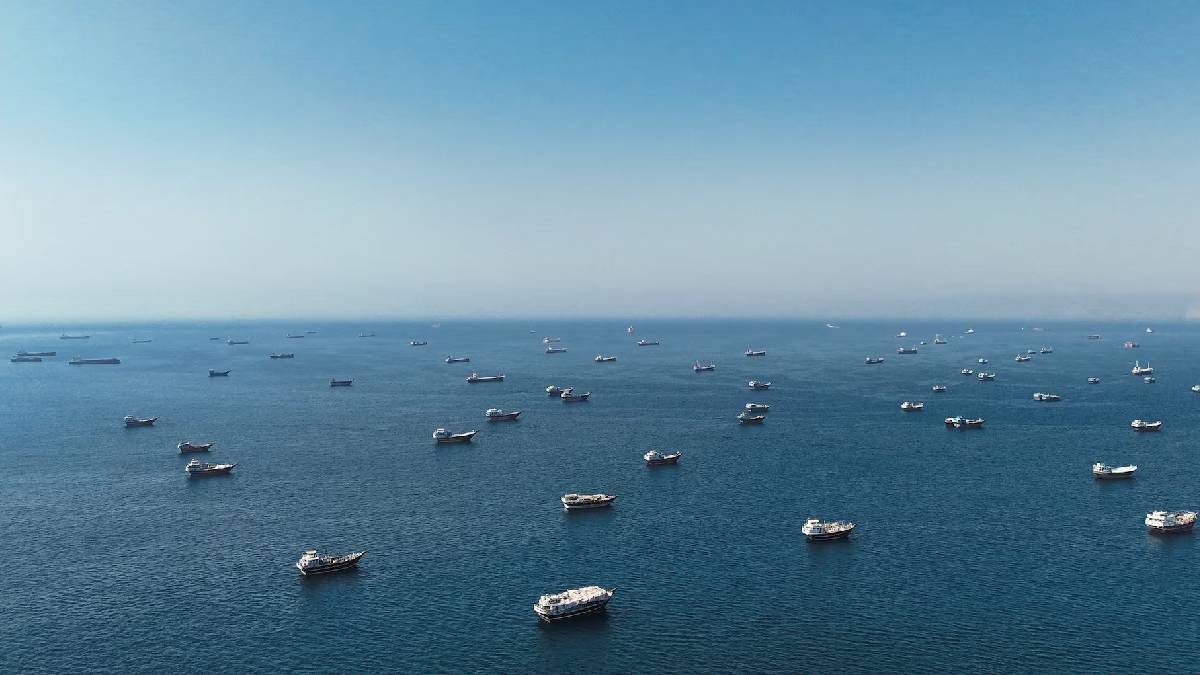
Iran closed the Strait of Hormuz, through which around 20 percent of the world's oil supply previously passed, after the outbreak of hostilities. While there has been a ceasefire since early April, the waterway has now been blocked, and it is making a big impact on world energy markets. Rubio described the US blockade of Iranian ports as a direct response to Tehran’s actions. “The only reason why there’s a US blockade is because Iran is firing on commercial ships,” he said, adding that “there wouldn’t have been a blockade if Iran had agreed to open the straits.”.
Path Forward.
But despite the tough stance, Rubio tempered optimism for a wider peace deal. "There is the prospect before us, which could happen today, it could happen tomorrow, it could happen next week," he said, noting that Iran has recently shown a greater willingness to discuss aspects of its nuclear program that it previously refused to even mention..
But the Secretary of State made clear that reopening the strait was just the first step. Any meaningful sanctions relief will only be achieved if Tehran agrees to give up its enriched uranium and abide by long-term bans in terms of any future enrichment activities.