Heavy rain has caused widespread flooding in northern and north-central Vietnam, inundating homes and causing transportation problems, and causing agriculture and life in many provinces to suffer.
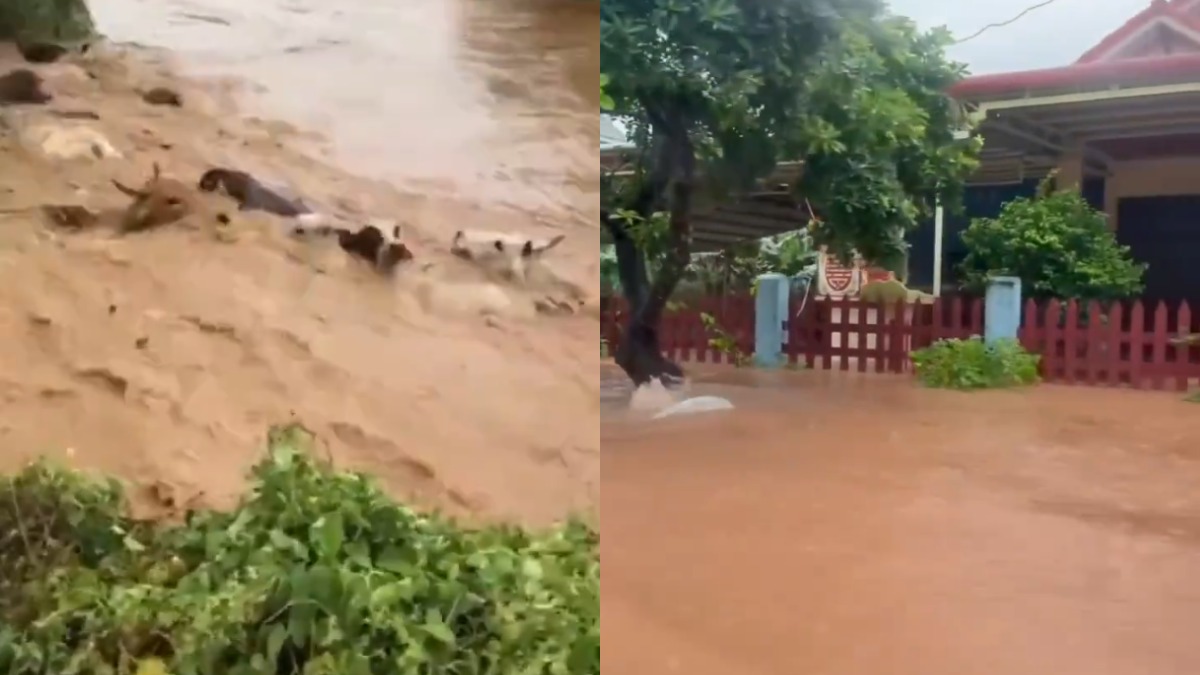
More than 2,000 homes had been submerged by Thursday, September 17, and more than 1,000 households were left isolated by floodwater and blocked roads. Some rivers also rose above dangerous levels as heavy rain continued across the region.
The flooding has affected areas such as Ninh Binh, Thanh Hoa, Nghe An, Phu Tho and Hanoi, especially in low-lying communities and transport routes.
Heavy Rain Inundates Homes And Roads
The disaster follows several days of heavy rainfall in northern and north-central Vietnam.
For Vietnam’s disaster management authorities, rainfall ranged from 200-400 mm in some local areas of the northern region and Thanh Hoa and Nghe An to over 500 mm in others from the morning of September 13 to the morning of September 17. Cẩm Liên 2 in Thanh Hoa recorded 585 mm and Tà Si Láng in Lao Cai 583 mm during that time.
On September 17, officials reported 2,291 flooded homes from Phu Tho, Hanoi, Ninh Binh, Thanh Hoa and Nghe An. More than 1,600 houses were also affected by road flooding and isolation.
Ninh Binh and Thanh Hoa have been among the worst-hit areas. Flooding has forced evacuations and made travel difficult in Thanh Hoa, and many roads have been flooded and blocked by landslides.
The situation has also affected Hanoi. Heavy overnight rain on September 16 and 17 caused widespread waterlogging, and some places received over 150 mm of rain. Long-distance roads were inundated by nearly a metre of water, the local report says.
Agriculture And Local Economy Hit.
Flooding has also done so much damage to agricultural land.
According to Vietnam’s disaster management authorities, 10,014 hectares of rice, crops and other agricultural land had been submerged or damaged as of September 17. Ninh Binh had 5,843 hectares, Thanh Hoa 2,157 hectares, Nghe An 1,287 hectares and Hanoi 727 hectares.
Severe flooding in Vietnam. Nature's wrath taking away farmers' livelihoods in seconds. ⚠️🌊
— ⚡kai⚡ (@Tuan502502) September 17, 2026
Mưa lớn kéo dài gây lũ quét cục bộ, tài sản bao năm tích góp bị dòng nước cuốn đi hết. Mong bà con vùng lũ luôn giữ an toàn và sớm vượt qua khó khăn này!
Stay safe everyone… pic.twitter.com/bCK1pLN7Cs
Livestock and poultry have also been affected. 195 livestock and 11,958 poultry had died or been swept away, with most losses occurring in Nghe An.
The flooding is disrupting economic activity outside agriculture. Roads are shut down or closed, businesses are closed, and commuters are stuck, unable to get to work.
Hanoi had several major roads flooded after heavy overnight rain. Water levels were 30 to 50 centimetres on many roads, and at least a metre of water has inundated some roads in Hanoi. There were long lines of traffic jams, and some drivers were forced to leave, turn back, or divert their way.
Schools were closed as the rescue operations were launched
Schools and emergency response have been affected as well.
Thanh Hoa authorities asked students to stay home as floodwater had made driving to school unsafe. High schools and universities in Hanoi closed or shifted classes online as roads became difficult to navigate.
The rising Bui River on the southwestern outskirts of Hanoi also posed a threat to nearby homes. Hundreds of soldiers were sent to help residents move belongings and prepare for possible flooding, state media reported.
Vietnam’s disaster-management authorities said emergency response teams had moved 732 households, or 2,975 people, to safe locations by the morning of September 17, with 452 households from Thanh Hoa, 252 from Phu Tho and 28 from Hanoi.
And infrastructure has been hit hard. 92 landslide locations were reported for roadways in Lao Cai, Phu Tho, Thanh Hoa and Nghe An. National highways were affected, and a section of the dyke system was also damaged in Ninh Binh, and 1.4 kilometres of the Bui River dyke and embankment system in Hanoi was overtopped.
More Rain Forecast As Flood Risk Continues.
The immediate risk remains more rainfall and increased river levels.
Forecasters have warned of continued rain in some parts of Vietnam, including potentially heavy rain in and around Ho Chi Minh City. Authorities have warned about possible flooding in low-lying areas and along waterways.
The latest flooding follows Vietnam’s series of severe storms and floods in 2025. Flooding and extreme weather are very common in Vietnam, making disaster preparedness and rapid evacuation especially important during periods of heavy rainfall.
So authorities monitor rivers, reinforce vulnerable infrastructure, divert traffic from flooded roads and move residents out of hard-hit areas. As more rain is forecast, Vietnam's northern and central regions will be on high alert as officials work to contain the impact on homes, agriculture, transport and local economic activity.