Pakistan has also ordered the closure of Qatari-based news channel Al Jazeera over coverage of protests in Pakistan-occupied Kashmir (PoK) and has raised questions about press freedom and media censorship in the region. According to officials in Pakistan, the international media channel is “yellow journalism” and presenting them in a wrong light.
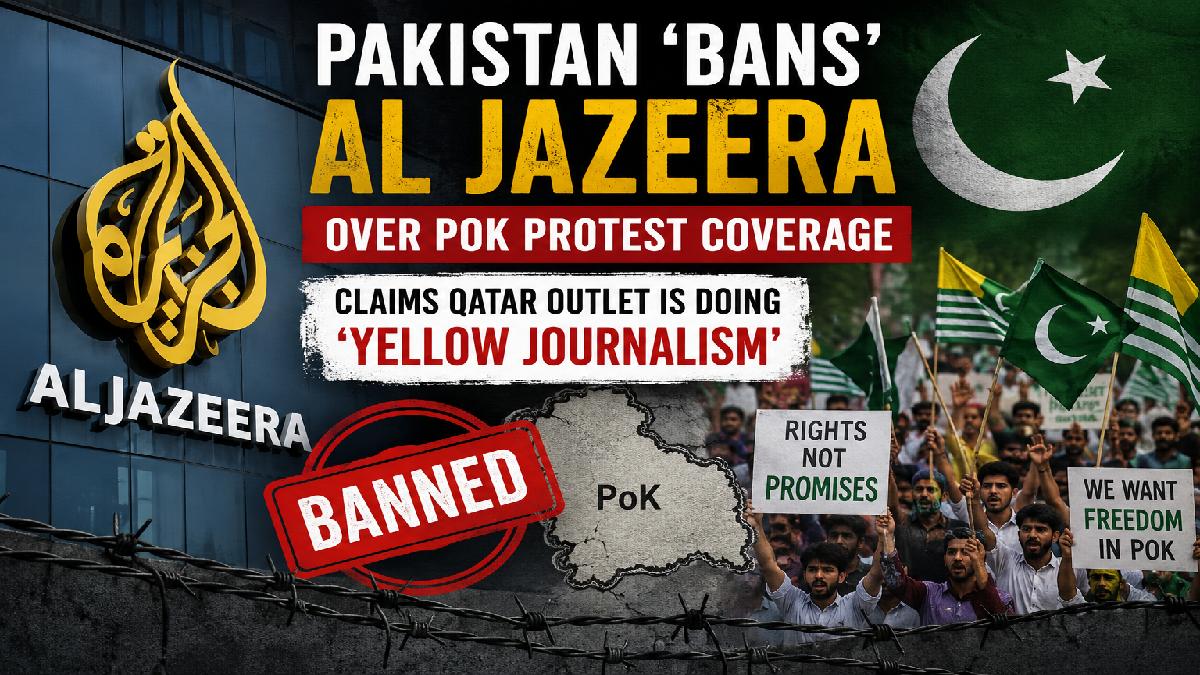
The dispute emerged as Al Jazeera reported demonstrations and public unrest in areas of Pakistan-occupied Kashmir, highlighting economic problems, governance problems, and demands for more political rights. The reports attracted widespread attention from South Asia and abroad, complicating residents’ lives in the area.
The Pakistani officials have subsequently criticised the network, saying it was biased and not fair. Al Jazeera has been accused of overstating the events and not being able to present the government's perspective, officials said.
The phrase “yellow journalism” used by Pakistani authorities in their criticism traditionally refers to sensationalist journalism characterised by dramatic headlines and emotional reporting over factual reporting. By using this term, officials showed that they felt the network's reporting was biased and aimed at generating controversy rather than objective journalism.
The reported restrictions have triggered concerns among media watchdog organisations and press freedom advocates. Some say the restrictions on international media can limit the public's access to diverse views and independent reporting. They argue that a free and open press is needed to enable transparency, accountability, and democratic governance.
Pakistan has been criticised by international organisations for media freedom and journalist safety. A few international press freedom indexes have highlighted the challenges faced by journalists working in Pakistan - legal pressure, security threats, and restrictions on reporting sensitive topics. The latest dispute involving Al Jazeera is likely to add to the ongoing discussion about the state of press freedom in Pakistan.
However, those in favour of the government argue that media have a duty to report from a factual point of view and not to incite tension. They maintain that if international media outlets are inaccurate, sovereign countries have the right to respond when they see foreign media outlets spreading misinformation and interfering in domestic affairs.
Kashmir still remains one of the most sensitive and contested parts of South Asia and has long been the subject of tension between India and Pakistan, with both sides claiming it in full and administering it in different sectors. Any report on Kashmir is often subjected to increased attention and strong responses from governments, political groups, and local people.
Al Jazeera has developed a worldwide reputation for covering conflicts, political unrest, and human rights issues in every region. Often, the network covers stories that are poorly covered by the local media. The coverage has had its share of blow-ups with governments all around the world, particularly when covering politically sensitive issues.
There are already national security and civil society groups talking about the conflict between freedom of the press and government intrusion, journalists and analysts say. Media experts say disagreements between governments and news organisations are not new, but restrictions on reporting can threaten transparency and public access to information.
Media freedom is in sharp contrast to the increasing pressure on journalists and news organisations globally. Governments in different countries have been accused of putting pressure on journalists and news organisations, but media organisations stand by the fact that they are investigating and reporting on issues of public interest.
Whether the dispute leads to a long-term stalemate between Pakistan and Al Jazeera remains to be seen. Yet again, the issue has highlighted the fact that governments, international media firms, and the public's right to freedom of expression on sensitive political issues are at odds.