Pakistan is looking to take advantage of Ukraine's field experience in drone warfare with the recent Operation Sindoor, as it is increasingly important to the military's use of UAS in modern warfare. There is no official agreement, but it is a fact that Islamabad is looking to learn from Ukraine's extensive experience with drones during its current struggle with Russia.
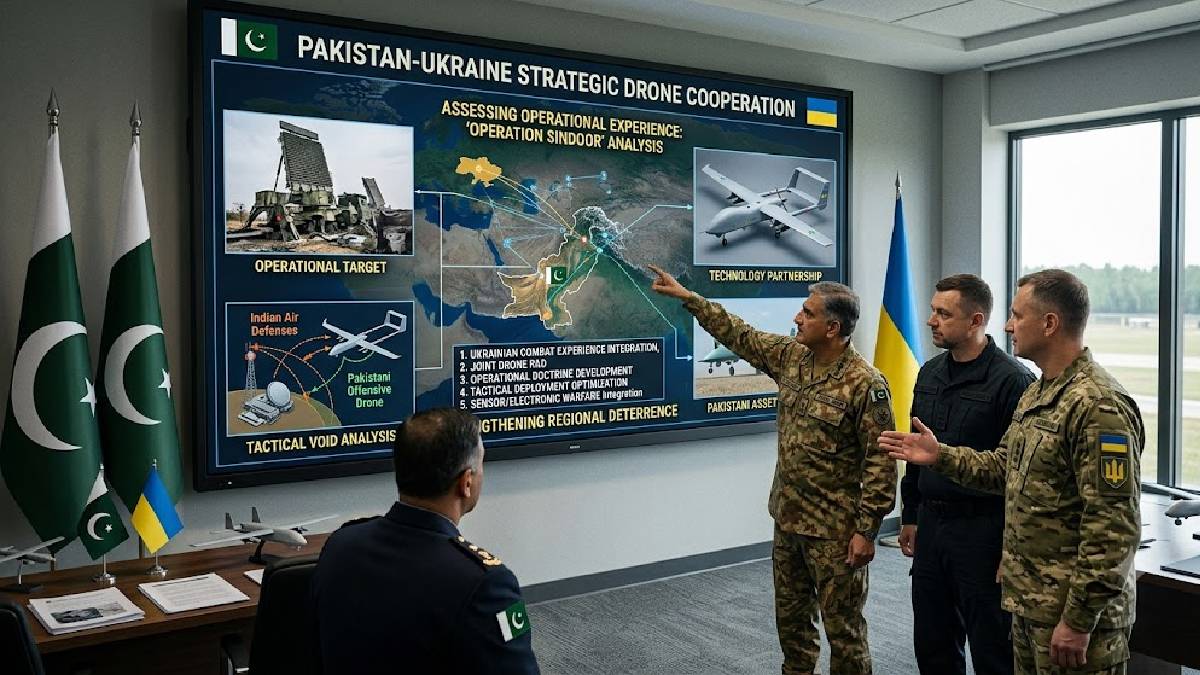
The reported move comes at a time when military planners around the world are reassessing the role of drones in national defence. In recent times, unmanned systems are no longer just an adjunct option, but are now the core for intelligence gathering, surveillance, reconnaissance, precision strikes, electronic warfare, and battlefield coordination.
Ukraine has become one of the world's most experienced military drone operators. Since the outbreak of the Russia-Ukraine conflict, both sides have deployed a wide array of unmanned aerial vehicles ranging from small reconnaissance drones to long-range strike platforms and loitering munitions. The conflict has driven the development of drone technology and autonomous navigation, battlefield communications, and electronic warfare, and therefore, Ukraine has become a prime source of operational knowledge.
According to reports, Pakistan would like to know if drones can be more integrated into military planning and operational doctrines. Possible areas of cooperation include pilot training, mission planning, swarm drone tactics, surveillance systems, electronic warfare integration and counter-drone technologies. But officials in either country have not publicly disclosed the details of any proposed collaboration.
The renewed focus on drone capabilities follows Operation Sindoor, in which advanced technologies were stressed as important in the security domain. In today's military environment, drones provide real-time intelligence, precision targeting, low-risk personnel, and battlefield awareness.

Pakistan has been investing in unmanned aerial systems for years, with imported and locally developed platforms for reconnaissance and security. International cooperation to enhance knowledge building could enable further development of its drone ecosystem and accelerate the development of more advanced indigenous capabilities.
The defence landscape around the world is evolving rapidly with the rise of artificial intelligence, autonomous systems, and advanced sensors as part of the military. In terms of the cost efficiency and operational flexibility of unmanned technologies, countries from Asia, Europe, and the Middle East are investing much more heavily in unmanned technologies, as well as the cost-effective and flexible nature of these compared with traditional manned systems.
Drone warfare has also expanded beyond attacking. Modern armies are investing heavily in defensive technologies such as radar-based drone detection, electronic jamming systems, directed-energy weapons, and integrated air defence networks to identify and neutralize hostile unmanned aircraft. The increasing drone-counter-drone competition is reshaping military procurement priorities worldwide.
The strengthening of drone capabilities for Pakistan could allow for border surveillance, maritime security, intelligence collection, and tactical military operations. However, future defence strategies will be based on integrated manned and unmanned platforms in increasingly digitized battlefield environments, analysts say.
Technology developments involving drones are closely watched by regional security experts because they are relevant in South Asia (with military planning and strategic calculations among neighbouring countries). In addition, defence modernization efforts by one country often encourage similar investments elsewhere, which in turn increases the technological rivalry in the region.
While the reports suggest that Pakistan is interested in Ukrainian expertise, the nature, timetable, or scope of any cooperation has not yet solidified. Defence analysts would stress that such developments should be viewed in the wider context of ongoing military modernization and complex geopolitical situations and not as an indication of any tangible agreement.
As unmanned systems continue to revolutionize warfare, the reported outreach demonstrates the rise of operational experience in informing future military capabilities. Whether it be training, sharing of technology and knowledge, or doctrinal knowledge, drone warfare is becoming a significant part of national defence planning in the 21st century.