Pakistan's internal political situation has once again attracted public attention as a report claimed that elements connected with the country's military-terrorism nexus are being used to counter critics of Army Chief General Asim Munir.
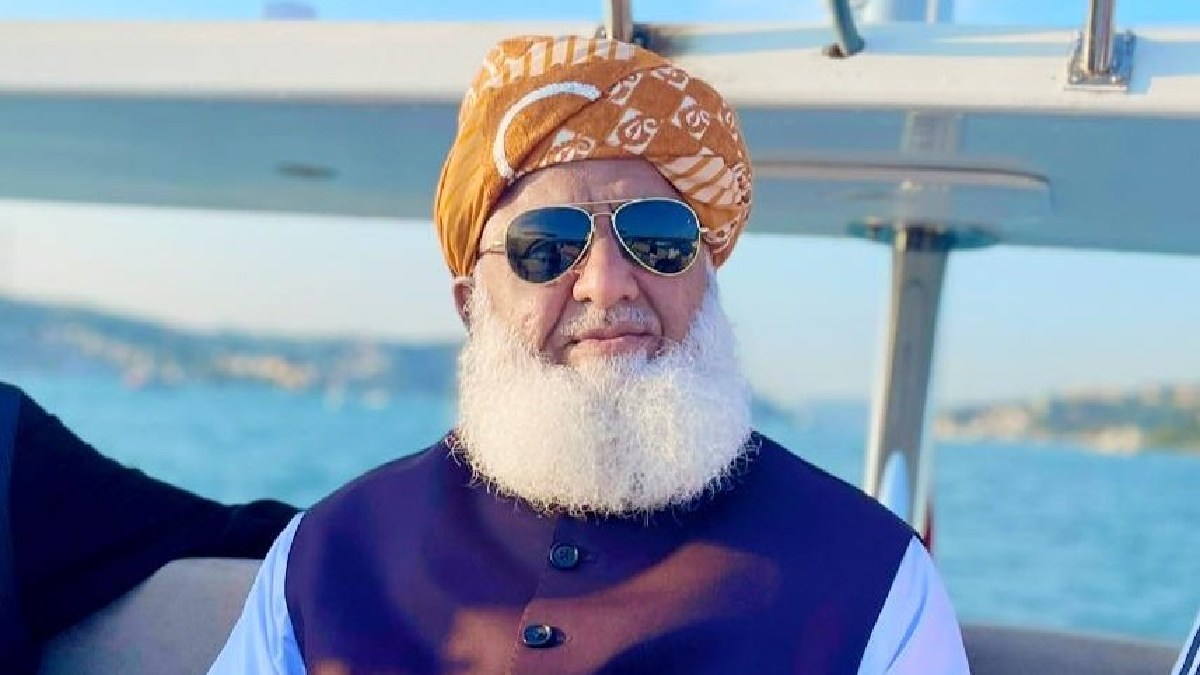
According to the report, the latest target is Jamiat Ulema-e-Islam-Fazl (JUI-F) chief Maulana Fazlur Rehman who has publicly challenged the military establishment’s growing role in Pakistan’s politics.
The report says some militant groups that have long been associated with Pakistan’s security establishment have intensified and mobilized to pressure or intimidate Rehman following his recent comments about General Munir.
While these claims have not been independently confirmed, they have reignited those fears about the relationship between military institutions of Pakistan and terrorist organizations.
Maulana Fazlur Rehman is one of Pakistan’s most influential religious and political leaders. The head of the JUI-F has been active in national politics for more than a decade.
He has held a close relationship with the military establishment in the past but political events have made him more and more distant from the powerful security establishment today.
General Asim Munir, who became Pakistan’s Chief of Army Staff in November 2022, is still an important figure in Pakistan's politics and security. His leadership has taken place at a time of political crisis, economic crisis, and increased tension between various political parties.
The report suggests that criticism of the military leadership is now seen as an existential threat to the establishment. But analysts say Pakistan's military has deep roots in civilian governance, even though it has repeatedly claimed that it is politically neutral.
It also renews concerns about Pakistan's handling of terrorist groups globally. Pakistan has long been accused of having links with militant groups and even of fighting terrorism from the start, as well as in regional conflicts, many global reports and intelligence assessments have gone on to say. But Islamabad rejects it all and argues that it has done extensive counterterrorism work in the past and will continue to do so.
Political observers say the reported targeting of Fazlur Rehman reflects wider divisions in Pakistan’s power structure. Political uncertainty is increasing as political uncertainty grows and the economic pressures continue to mount, and as political adversaries of civilian politicians and the military are also more and more visible.
At the time of writing, neither the Pakistan military nor JUI-F had publicly responded to the allegations raised in the report directly. The claims of the report were not verified by the military and the JUI-F.
Independent verification of the allegations is still not yet in full force and it is hard to draw conclusions based on the findings of the report, and it will be difficult to make an official answer now until more evidence is available.
The developments will be closely watched by regional and international observers given Pakistan's strategic position in South Asia and the ongoing problems of political stability, security, and counterterrorism.
If the allegations become more credible, they will make civil-military relations, democratic governance, and security institutions a major part of the political future of Pakistan.
So far, however, the claims are part of an evolving story. And in the present scenario, officials must be watching for official responses and more evidence to clarify things.