Narendra Modi and Australian Prime Minister Anthony Albanese held a high-level bilateral meeting in Melbourne and both nations reiterated the commitment to strengthening the strategic partnership between India and Australia.
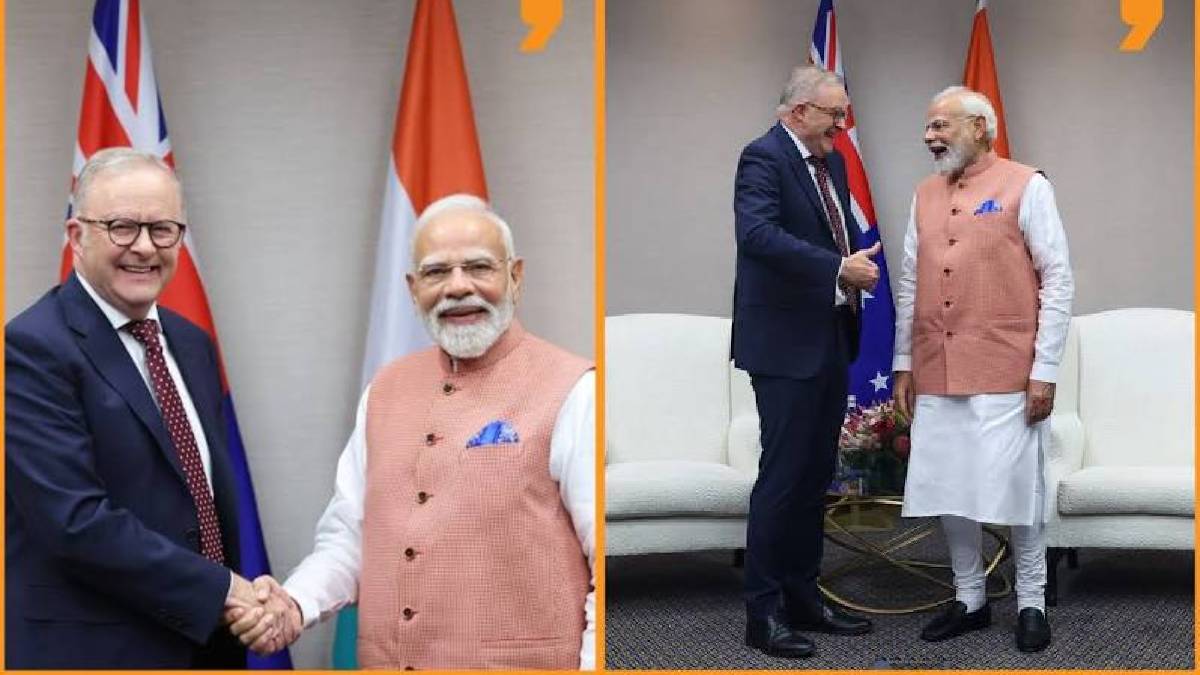
Talks on defence, critical minerals, clean energy, uranium exports and regional security in the Indo-Pacific are part of the continuing interest of India and Australia in this relationship.
The meeting is at the time when both countries are looking to deepen economic and security links as the geopolitical landscapes evolve.
India and Australia have steadily expanded their partnership over the last few years through the Comprehensive Strategic Partnership and increased defence cooperation.
The Melbourne talks are expected to build upon this progress by bringing fresh agreements and stronger commitments.
One of the key issues on the agenda was Australia's supply of uranium to India. As India increasingly relies on clean and sustainable energy, it remains critical to have a stable supply of uranium for its expanding civilian nuclear power programme.
Australia, with one of the world's largest uranium reserves, is a good partner of India to support their long-term energy security while adhering to international standards.
Defence cooperation also came up a lot in the talks. Both leaders looked at ways for the military to collaborate through joint exercises, intelligence sharing, maritime security initiatives and defence technology cooperation.
With growing concerns over stability in the Indo-Pacific region India and Australia are expected to enhance cooperation to ensure a free, open and rules-based maritime order.
Trade and investment were another major focus. The bilateral trade between the two countries has grown exponentially as a result of the implementation of the India-Australia Economic Cooperation and Trade Agreement (ECTA).
Both sides discussed the possibility for exports to grow or investment in education, digital technology, renewable energy, agriculture and minerals.
Key minerals like lithium and rare earth minerals have become more critical in recent years as nations transition to electric vehicles and clean technologies.
Australia, one of the world’s leading producers of these resources and an essential component of India’s manufacturing goals and clean energy targets, is expected to be a key player in support of these and India’s manufacturing strategy.
The leaders also discussed regional and global developments and reaffirmed their commitment to multilateral cooperation through forums like the Quad.
Peace, stability and economic resilience in the Indo-Pacific and the region as a whole is important and addressing security challenges is imperative, they said.
People-to-people links were also stressed in this meeting. Australia is also home to a huge Indian diaspora and thousands of Indian students, thus education and culture cooperation is also a part of the bilateral relationship.
Both the Indian community and the Indian people are a vital part of the relationship between the two countries, both leaders said.
The Melbourne meeting demonstrates how India and Australia are inching closer to one another.
With cooperation in defence, energy, trade, technology and regional security in place and with the increasing cooperation in the Indo-Pacific region and the common economic growth of a common people for the whole region, this partnership is more likely to play a larger role in the future of the Indo-Pacific region.