The political rift between Pakistan's federal leadership and the administration in Pakistan-occupied Kashmir (PoK) has intensified after PoK Prime Minister Faisal Mumtaz Rathore publicly criticized Pakistan Defence Minister Khawaja Asif for his controversial remarks on the Kashmiri identity of people living in Rawalakot.
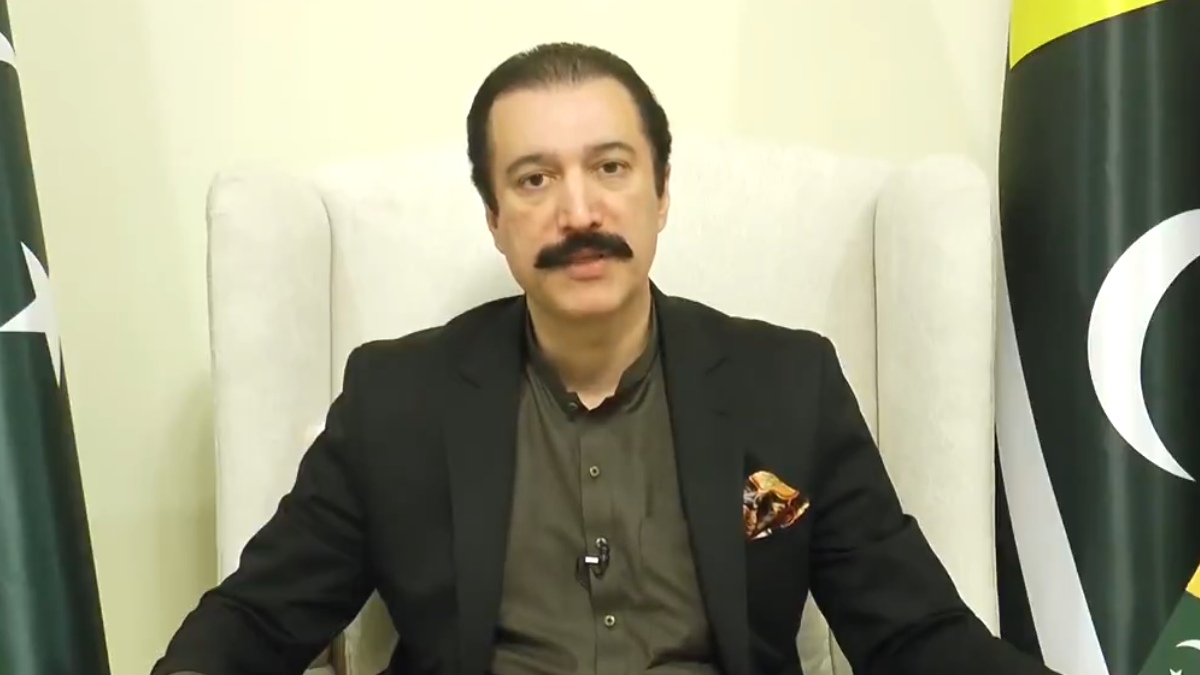
The exchange has triggered new political fights as senior leaders from PoK and Pakistan weigh in on it and the tension over Kashmir’s politics has risen.
Rathore Hits Back at Khawaja Asif
In a strongly worded post on X, Faisal Mumtaz Rathore rejected Asif's comments, saying the people of Jammu and Kashmir don't need anyone's approval to validate their identity.
"People of Jammu and Kashmir do not need validation of their identity from the Defence Minister of Pakistan or anybody else for that matter."
Rathore also accused the senior Pakistani minister of creating divisions instead of promoting unity, saying such statements only deepen political fault lines.
What Sparked the Controversy?
The row began after Khawaja Asif told a television interview that residents of Rawalakot and Mirpur in Pakistan-occupied Kashmir were "not proper Kashmiris."
The comment was immediately criticized across PoK, especially as Rawalakot has witnessed mass public protests in recent months.
The area has become a focal point for demonstrations led by the 'Joint Awami Action Committee', and residents are protesting against rising inflation, alleged human rights violations, and what they call the denial of constitutional rights by the Pakistani establishment.
People of Jammu and Kashmir do not need validation of their identity from Defence Minister of Pakistan @KhawajaMAsif or anybody else for that matter. Boomers such as him and their antics are creating divisions instead of bringing people closer.
— Faisal Mumtaz Rathore (@PMofAJK) June 26, 2026
After noticing backlash on his…
Asif Refuses to Apologize
Asif sought to clarify his remarks after criticism, saying that Kashmir's identity is formed by decades of struggle and sacrifice and not birthplace or official documents.
However, he stopped short of retracting his statement.
Instead, Asif criticized the governance of the PoK administration while defending his position. Rathore dismissed the explanation and accused the defence minister of trying to divert attention from his original comments.
"After seeing backlash on his faux pas, he is now covering up by finding faults in Jammu and Kashmir's governance," said Rathore.
The PoK Prime Minister also defended his government's performance and suggested Asif consult Pakistan's top leadership before questioning the administration.
"Sir, ask your higher-ups and they'll tell you how well we've governed."
Demand for a Public Apology
Rathore held that the controversy could only be resolved if the defence minister had directly addressed his original remarks. He called on Asif to apologize, arguing that turning the debate towards governance was an attempt to escape accountability.
"A more dignified act would be to address the elephant in the room and apologize for your original remarks instead of scapegoating our governance."
So Asif has remained defiant despite all the criticism.
"I will not apologise. There were no apologies yesterday, and there will be none today," the Pakistan Defence Minister said.
Bilawal Bhutto Also Criticizes Remarks
The controversy has also been criticized by Pakistan’s political establishment. In the National Assembly, Bilawal Bhutto-Zardari, PPP Chairman, urged Prime Minister Shehbaz Sharif to take care of Cabinet ministers and should have more caution in commenting on sensitive national matters.
"You control your ministers," Bilawal said and warned that irresponsible statements could lead to unnecessary confusion over Kashmir.
He also criticized Pakistan’s “hybrid regime” approach towards PoK, arguing that political issues should be resolved through dialogue rather than administrative measures.
Growing Political Tensions
The public exchange between Faisal Mumtaz Rathore and Khawaja Asif has highlighted growing differences between the PoK administration and Pakistan's federal leadership.
What started as a controversial TV comment has now become a political issue with senior government figures and opposition leaders. Asif refuses to withdraw his declaration and Rathore demands a public apology, the issue is still a source of debate on identity, governance, and political representation in Pakistan-occupied Kashmir.