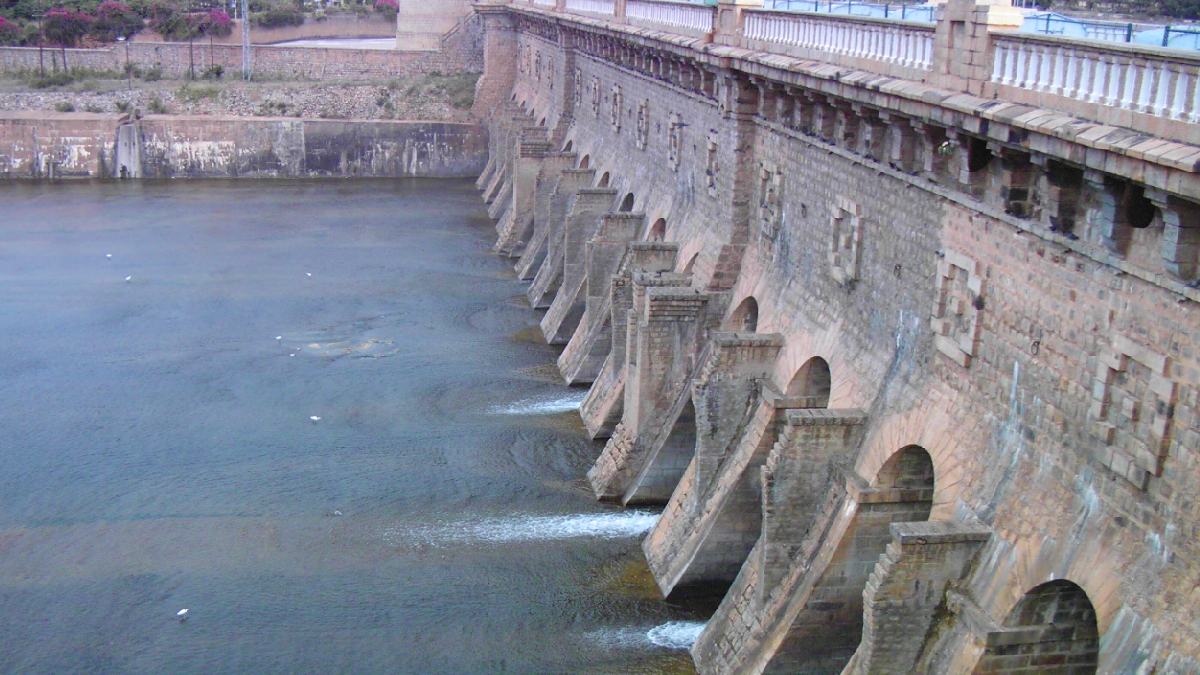
The long-running Cauvery water-sharing dispute between Karnataka and Tamil Nadu has intensified after the Cauvery Water Regulation Committee (CWRC) directed Karnataka to release 12,000 cusecs of water daily to Tamil Nadu for 15 days. The release is scheduled to start at 8 am on August 12 and will be measured at the inter-state Biligundlu gauge station.

The new direction is a significant increase from the committee’s earlier order which asked Karnataka to release 3,500 cusecs of water for 15 days. The decision was made after the CWRC reviewed submissions from both states, reservoir storage positions, Central Water Commission data and a seven-day inflow forecast for the Krishnaraja Sagar (KRS) and Kabini reservoirs.
While deciding the quantum of water to be released, the committee said it had taken a cautious approach because of uncertain weather conditions and the possibility of worsening El Niño conditions. It was therefore the reservoir levels and expected inflows that were an important factor in deciding the latest direction.
Karnataka strongly opposed any increase in the water release. The state told the committee that it was experiencing severe hydrological distress, with the combined inflows into its four Cauvery reservoirs at 77.746 TMC, about 47 per cent below the 30-year average. Karnataka also pointed out that inflows were falling sharply and argued that there was little scope to release more water.
The Karnataka government argued that the available water must be conserved for drinking water, for essential functions and agriculture. It also called on the CWRC to wait for the monsoon to be more clear before issuing any new release directions. The state’s position was also an indication of concerns for water security for farmers and communities in the Cauvery basin.
Tamil Nadu said otherwise before the committee. They sought a revision of the previous 3,500-cusecs direction, saying the quantity had not been calculated using a scientific distress-sharing formula. Tamil Nadu said Karnataka had accumulated 21.357 TMC and it was waiting for this as well as the state's pro-rata entitlement for the rest of August.
According to Tamil Nadu's demand, the combined amount of release would reach nearly 37 TMC by August end. But the state has maintained that sufficient Cauvery flows are required to meet its irrigation needs and to safeguard agricultural activities in the Cauvery delta.
The CWRC did, in spite of Karnataka’s opposition, order the state to maintain a flow of 12,000 cusecs at Biligundlu for the next 15 days from August 12. The order will add another layer to the politically troubled water dispute between the neighbouring states, with Karnataka repeatedly raising concerns about its own reservoirs and agricultural needs to be fed.
Following the announcement, Karnataka Deputy Chief Minister DK Shivakumar spoke to the officials who were speaking in a video conference on the CWRC direction. “After all the information on the CWRC direction, we will come to a decision after we have seen it in the light of the order and the present situation,” he said.
Shivakumar went on to stress the importance of peace and not taking unnecessary incidents into consideration. He told the Mandya deputy commissioner and superintendent of police to be on high alert and to provide law and order in the district. Mandya has long been one of the focal points of protests on the Cauvery issue because it is a city with a huge farming population and the river.
The Deputy Chief Minister also added that Karnataka had received rainfall and that water was available, but that the government couldn’t keep all the available water for a long time. Farmers would need to be informed about what’s happening and the government was taking measures to protect their interests, he said.
Shivakumar also instructed district authorities to immediately report any local developments or issues arising from the CWRC order. He said he would be very much aware of the situation and take into account the situation for the next step and gather information on the situation before deciding on the government’s next move.
The latest CWRC direction comes at a critical time for Karnataka and Tamil Nadu. For Karnataka, the problem is how to balance the interstate obligation and drinking water and agricultural needs in the state. For Tamil Nadu, having sufficient Cauvery flows is essential for irrigation and farming.
The next 15 days will be closely watched in Karnataka for its response to the CWRC order and reservoir levels, rainfall and inflows will be closely monitored. The Cauvery dispute has repeatedly triggered political tension and public protests in both states, so the focus of Karnataka leaders on law and order is also very significant.
The latest development once more highlights the difficulty of managing the Cauvery basin in times of uneven rainfall and competing water demands. If reservoir inflows are affected or weather conditions change, and both states fight for their claims to the river’s water, the situation will get worse.