BRICS nations are looking to link fast-payment systems and central bank digital currencies (CBDCs) to help connect fast-payment systems and CBDCs in order to make cross-border payments cheaper, faster, and more efficient as part of efforts to make cross-border payments cheaper, faster, and more efficient.
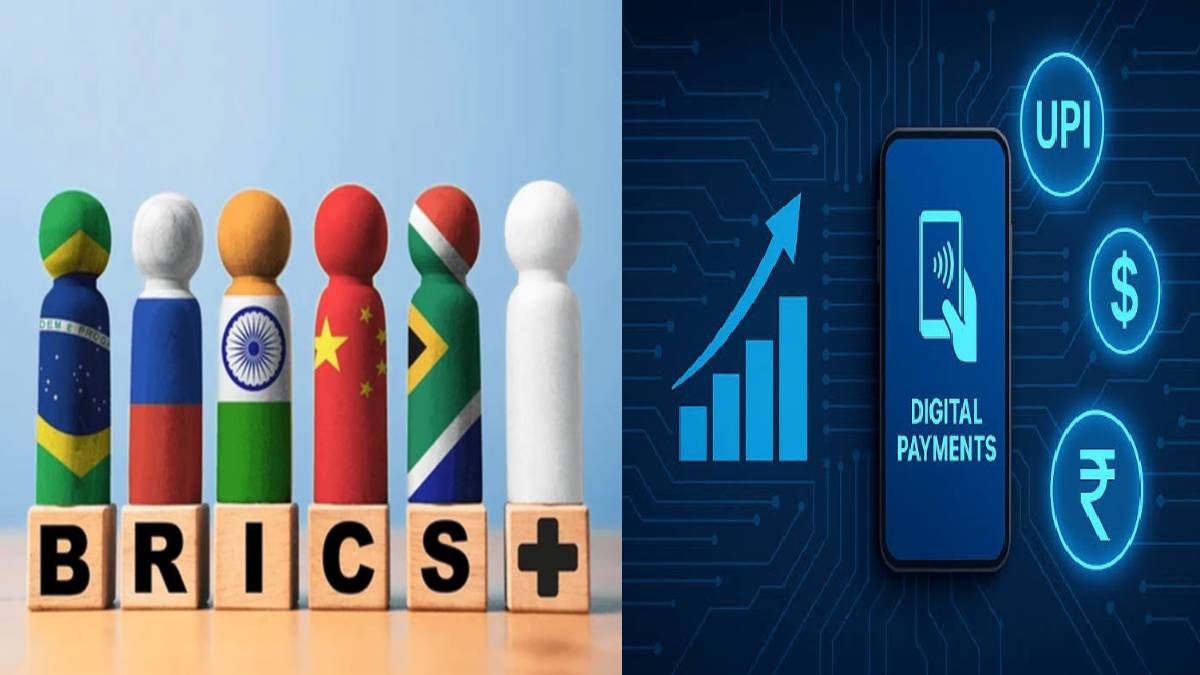
And the discussions could be a very important part of the evolution of international payments, especially as emerging economies look for alternatives to expensive and slow cross-border settlement mechanisms.
The proposed approach would enable a better integration of national payment systems with digital currencies issued by central banks. Rather than having the cross-border transactions pass through several intermediaries and correspondent banking channels, the digital payment infrastructure would enable countries to settle transactions in a more transparent manner.
For international trade companies, reducing the cost and time of payments could be very useful. The cost of cross-border transactions can involve cross-border bank transactions, currency conversions, compliance processes, and settlement layers, so that everything is added to the final cost of trade.
BRICS countries have also been discussing better financial cooperation and payment connectivity. The development of the grouping has also made it more important to construct payment infrastructure that is capable of facilitating transactions between a wider group of emerging economies in the group.
India has been an influential advocate for digital payment interoperability as it is through its Unified Payments Interface (UPI) that instant retail payments can be scaled locally and connected with international partners.
The broader idea behind the BRICS framework is to make things interoperable rather than just a single global payment network. Linking national fast-payment systems to CBDCs will allow participating countries to utilize their existing financial infrastructure and establish mechanisms for cross-border settlement.
CBDCs would play an especially important role in such a system. Unlike privately issued cryptocurrencies, a CBDC is a digital form of sovereign currency issued and backed by a central bank. Central banks can design CBDCs with specific settlement and compliance features that could be relevant for regulated cross-border transactions.
India's digital rupee, called e₹, is part of the country's broader experimentation with central bank digital currency technology. The Reserve Bank of India has been testing the digital rupee for retail and wholesale applications.
And so the potential BRICS initiative could open opportunities for participating countries to explore how their respective digital currencies and payment systems might interact.
However, developing such a system would involve considerable technical and regulatory challenges. Countries have different financial regulations, data-protection rules, currency controls and monetary policy approaches. To build a common framework, central banks, financial regulators and payment-system operators would need to work closely to do so.
Interoperability would also need to address issues such as exchange rates, settlement finality, cybersecurity, fraud prevention, sanctions compliance and consumer protection.
Despite these challenges, the economic incentives are strong. Faster and cheaper cross-border payments would help exporters, importers, small businesses, migrant workers and consumers making international transactions.
For businesses, lower transaction costs might make trade with BRICS partners more appealing. Small and medium-sized enterprises may find the opportunity best because payment fees and foreign exchange costs can account for a larger portion of the value of smaller international transactions.
The initiative could also strengthen the role of national digital-payment infrastructure in global commerce. India's experience with UPI has demonstrated how interoperable instant payments can transform domestic transactions, and international connectivity could extend some of those benefits to cross-border payments.
It is important to distinguish the discussions about payment interoperability from the creation of a single BRICS currency. A system linking fast payment networks and CBDCs would not necessarily mean that participating countries would abandon their national currencies.
Instead, the immediate objective would be to make existing currencies and payment infrastructure work more efficiently across borders.
As such, such developments could complement India’s overall effort to internationalise its digital payment infrastructure and to expand the use of the rupee in cross-border transactions.
If successful, the BRICS payment-connectivity framework would be a major step towards a more diverse global payments ecosystem.
The initiative is still dependent on negotiations, technical development and agreement among the participating countries. The final structure, the systems of the participating countries, and their implementation timeline are all subject to further discussions.
However, the direction is significant: BRICS countries are increasingly looking at digital financial infrastructure as a way to reduce dependence on costly traditional cross-border payment channels and make international trade more efficient.
As India's digital payments ecosystem has now become one of its greatest technological success stories, the emerging BRICS discussions could provide India with a new platform to demonstrate and improve its digital-payment capabilities on the global stage.