Climate scientists are closely watching the Atlantic Ocean as new observations suggest that a rare Atlantic Nina event might develop in the coming months.
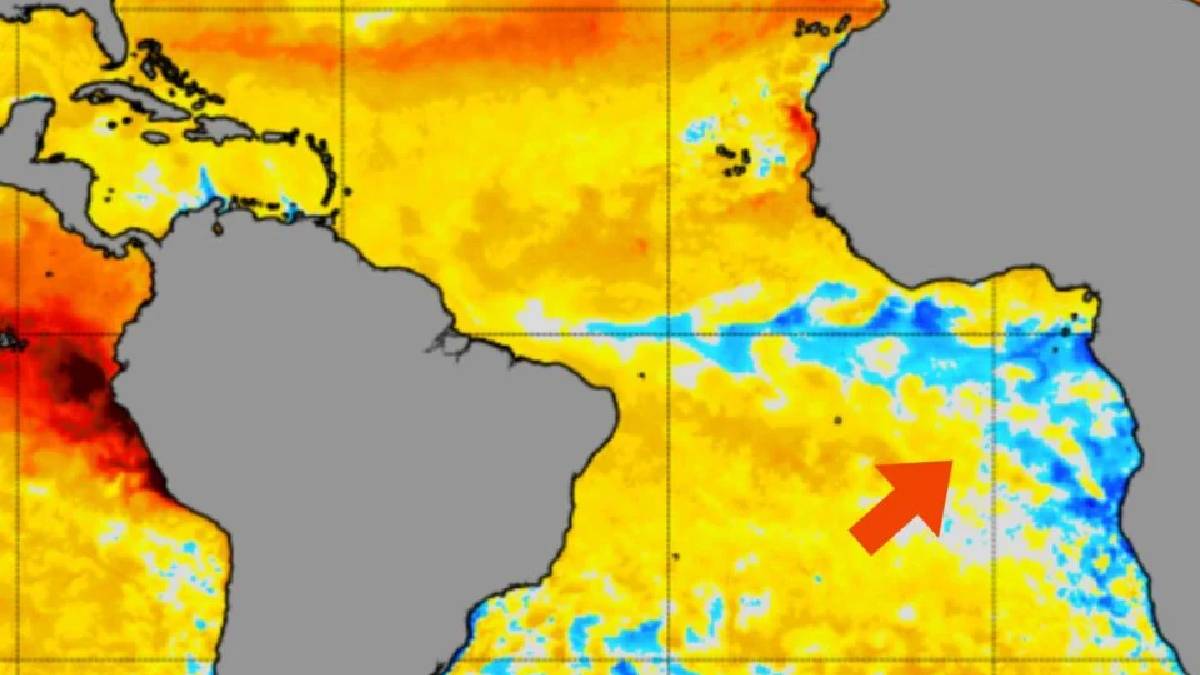
If confirmed, it will be just the fifth Atlantic Niña in nearly 40 years, and one of the rarest oceanic climate events on record.
Unlike the well-known Pacific La Nina, an Atlantic Nina occurs when sea surface temperatures in the equatorial Atlantic Ocean become cooler than normal. This phenomenon is much smaller in scale but can be very influential in terms of rainfall, tropical cyclone activity and global weather.
Researchers say the Atlantic Niña is likely to interact with climate conditions across the Pacific Ocean, where scientists are already looking for signs of another strong El Nino, often referred to as a Super El Nino when extreme.
Super El Nino typically results in warmer global temperatures, longer heatwaves, droughts in some regions and excessive rainfall in others. And if an Atlantic Niña develops alongside these changing Pacific conditions, the interaction between the two oceans could change weather patterns on several continents.
Why is Atlantic Nina so rare
Historical climate records show that only a few occasions have been recorded in the past four decades for Atlantic Niña events. Their rarity is due to the Atlantic Ocean's smaller size and different atmospheric circulation compared to the Pacific.
Scientists monitor sea surface temperatures and wind patterns with satellite data, ocean buoys and climate models. Although forecasting is still difficult, right now the cooling waters are strengthening in the eastern equatorial Atlantic.
Possible Global Impacts
Researchers are still not sure if forecasts will be accurate, but an Atlantic Niña might affect weather in some parts of the world.
West Africa rainfall patterns might change, affecting agriculture and water availability. Some parts of South America could see more or less precipitation change, and the Atlantic hurricane season will also see changes in storm development depending on ocean temperatures and atmospheric conditions that might affect the development of storms according to weather conditions for the Atlantic hurricane season.
For India, we expect the direct effects to be limited. However, global climate systems are interconnected and changes in the Atlantic and Pacific oceans can indirectly influence monsoon behaviour and seasonal rainfall.
The potential development of an Atlantic Nina is concerning as the planet is experiencing record-breaking temperatures caused by climate change. Warmer oceans provide more energy to weather systems, increasing the likelihood of extreme rainfall, stronger storms, and marine heatwaves.
Climate experts stress that no single ocean event determines global weather on its own. Instead, a combination of climate drivers El Nino, La Nina, Indian Ocean Dipole, Atlantic ocean patterns combine to determine seasonal weather systems.
Researchers will monitor ocean temperatures over the coming weeks and governments, farmers and disaster management agencies will closely follow updated forecasts. Even if the Atlantic Nina continues to be weak, how other climate systems interact with it can provide evidence of the global climate system becoming more complex and changing.
The months to come will be key in determining if this very rare Atlantic cooling event is indeed going to happen and how it will affect weather around the world.