Singapore is investigating offensive and racist comments against India and the Indian community online, and it is being made very clear that people who post inflammatory or illegal comments will be in trouble.
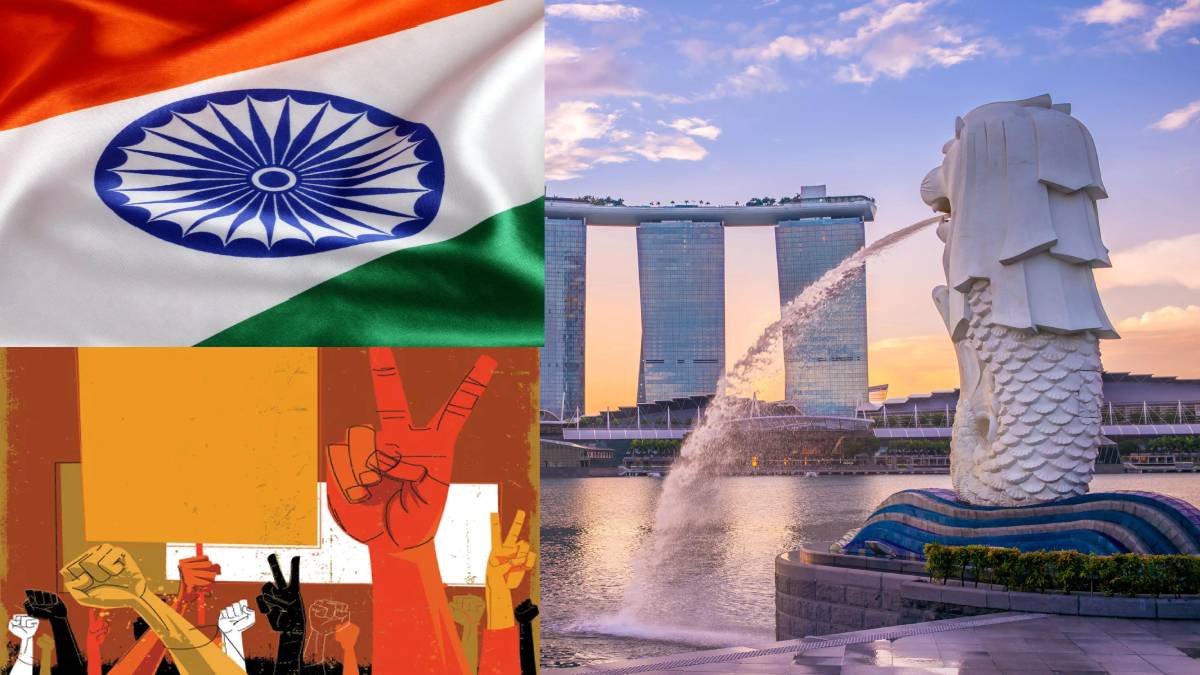
Singaporean authorities have repeatedly stressed that racial harmony is a key pillar of the country’s social stability. With Singapore home to a large and established Indian-based community, officials say online rhetoric against people based on their nationality or ethnicity can have consequences beyond the digital space.
We’ve heard senior Singapore government officials strongly condemn the recent anti-Indian comments circulating online. The Coordinating Minister for National Security, K. Shanmugam, called it unacceptable and said the government will investigate it. The government’s response reflects the fact that freedom of expression does not provide the protection that comes at the expense of the government’s position that speech that is racist, harassing, or inflammatory also does not come at the expense of social cohesion.
The controversy has also shown governments the increasing challenge of dealing with inflammatory content on social media. Anonymously posted comments can reach thousands or millions of people in less than a week, and the authorities or platforms do not have time to react.
Singapore has a very strict legal framework for dealing with harmful online content. Under current laws, authorities can ask platforms to take action against some types of unlawful or harmful material. The powers of federal officials have been used before for online narratives that are said to stir up tension between communities.
The latest investigation is especially important because it involves comments directed at Indians and India at a time when Singapore is also very well connected with India in terms of economic, diplomatic and people-to-people relations. Singapore has always regarded India as a key partner for trade, investment, technology, education and aviation.
Singapore's Indian community is also very much integrated into the multicultural society. Indians and people of Indian descent are also involved in Singapore's business, technology, professional, education, and cultural industries. Therefore, racist attacks against any community should not be normalized simply because they happen on social media.
But Prime Minister Lawrence Wong and other senior leaders have always stressed that equality of esteem among Singapore’s ethnic communities needs to be maintained more than ever. The government’s approach in this regard is consistent with Singapore’s long history of taking a firm stance towards racial and religious tension.
A warning to social media users who think anonymity shields them from accountability. When appropriate, investigators will seek the information that could help them in the investigation and prosecute those who made the posts. As far as the content of the posts and laws are concerned, people may be liable for their conduct.
At the same time, the Singapore government's response highlights the crucial distinction between legitimate criticism and racist abuse. People can debate political decisions, government policies, international events and bilateral relations, but targeting an entire ethnic or national community with abusive stereotypes is a different matter.
The episode comes at a time when online platforms have emerged as the major forces shaping public opinion about countries and communities. One inflammatory post can generate thousands of reactions and set off an avalanche of negative responses and a cycle in which provocative content is more popular than balanced discussion.
The Singapore investigation of the anti-India comments thus signals a wider picture of how the country is dealing with online activity: social media activity is not automatically beyond the law, particularly when it involves racial hatred or material that can cause harm to communities.
For India and the Indian community in Singapore, the government response is likely to be taken as a very strong signal that racist and xenophobic attacks will not simply be ignored. Singapore's authorities have made it clear that racial harmony requires responsible online behaviour as well as tough action if individuals cross legal lines.
As the investigation continues, the content of the posts will be reviewed to determine if any actual offence has been committed. Singapore’s tough stance on online speech and its determination to protect the multicultural social fabric could once again be underlined.