Texas, USA: SpaceX has postponed its next Starship test launch date and has even postponed another step in the development of what will be the world’s most powerful and fully reusable launch system. Engineers are now trying to complete final technical and system checks ahead of the next integrated flight test of the massive rocket.
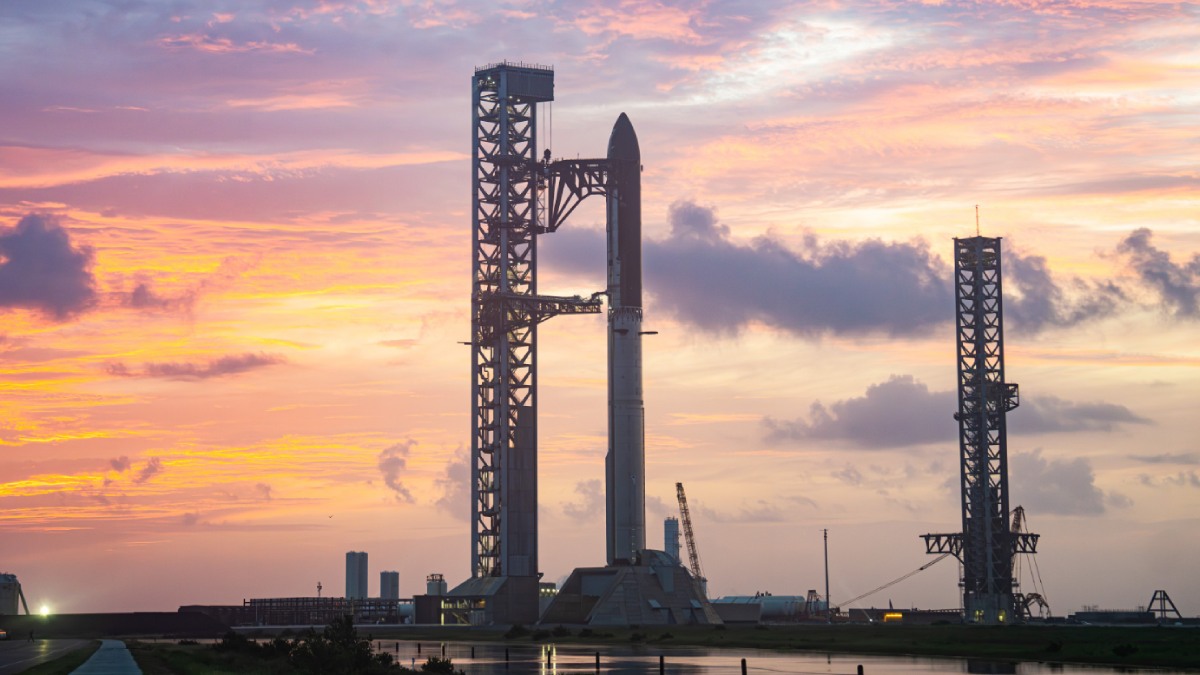
While launch delays are common in the aerospace industry, especially for experimental spacecraft, this latest delay has drawn attention because Starship is critical for space exploration and is essential for NASA’s Artemis lunar missions and SpaceX’s long-term plans to send humans to Mars.
Why was launch delayed?
SpaceX has said the launch was postponed to allow for further technical reviews to be performed to ensure that all vehicle systems are at their best both in terms of safety and performance before the launch.
Modern rocket launches are a series of many individual checks that involve propulsion systems, flight computers, communication equipment, structural integrity, fuel loading, and weather conditions. Even a small technical issue can cause a launch delay until engineers are confident that the mission can proceed safely.
Industry experts say that delays are common when a new launch vehicle is tested, especially if it is as technologically ambitious as Starship. Engineers would rather delay a launch than risk mission failure or damage to expensive hardware.
When will launch take place?
SpaceX has not yet announced a new launch date since the postponement. The company will reveal a new schedule once technical reviews are completed and regulatory clearances, weather conditions, and operational readiness are in line with the company's timetable.
As with the Starship tests before it, the window of launch will depend on different factors like vehicle readiness, launch pad conditions, airspace coordination, and approval from the relevant authorities.
Why is Starship worth it?
Starship represents SpaceX’s future of space transportation. It is roughly 120 meters tall and with its Super Heavy booster it will be fully reusable - a fact that could drastically reduce the cost of shipping cargo and people into space.
Unlike traditional rockets that dump most of their stages after launch, Starship will not only recover and reuse the boosters but also the spacecraft after the launch of a rocket. Starship aims to recover and reuse the booster and spacecraft and make space travel more affordable and sustainable.
The spacecraft has been designed for multiple missions and has been developed for:
- Transporting astronauts to the Moon
- Supporting NASA's Artemis program
- Sending satellites into orbit
- Conducting deep-space science missions
- Enabling future human settlements on Mars
- Delivering large cargo payloads worldwide
A Key Part of NASA's Artemis Program
NASA has selected a version of Starship as the Human Landing System (HLS) for the Artemis program, which aims to return astronauts to the Moon for the first time since the Apollo era.
The spacecraft is expected to ferry astronauts from lunar orbit to the Moon's surface and back, and so successful Starship development is essential for future lunar exploration.
Preparing for Mars
Perhaps the most ambitious goal for Starship is to support SpaceX founder Elon Musk in his vision of a permanent human presence on Mars.
The spacecraft is designed to carry large crews and substantial cargo across interplanetary distances. To accomplish this goal, we need to test propulsion systems, heat shields, orbital refueling technologies, life-support capabilities, and landing systems.
Lessons From every test flight.
Every Starship test, whether or not it achieves all mission objectives, gives engineers valuable data.
Previous test flights have helped SpaceX improve:
Engine performance Flight software Booster separation Heat shield durability Vehicle stability Controlled descent and landing systems
The company is iterative in its development strategy, so that every flight will contribute to the next version of the spacecraft better.
Impact on Commercial Spaceflight
Starship also has significant commercial potential. Its huge payload capacity could revolutionize satellite deployment, scientific research, commercial space stations, and even future space tourism.
If Starship is fully operational, launch costs can be dramatically reduced, and missions will be more frequent, benefiting governments, private companies, and research organizations worldwide in the future.
Although launch delays usually disappoint space enthusiasts, aerospace experts say caution is a must to work through the sophisticated launch system when tests are being prepared. Inspections and technical reviews of the whole system are essential so mission safety and long-term reliability are ensured.
Now targeting to launch Starship’s thirteenth flight test as early as Thursday, July 23 → https://t.co/Rp7VwBzpWx pic.twitter.com/Y0YNzfc5zk
— SpaceX (@SpaceX) July 19, 2026
As SpaceX iterates Starship with each test flight, it is getting closer to a kind of normal deep-space mission. Now in its eighth year of business with lunar exploration, commercial missions, and future Mars exploration, Starship remains one of the most closely watched spacecraft in modern aerospace.
The postponed launch may delay the next chapter by a few days or weeks, but it doesn’t diminish the significance of the program. Starship will be a huge step forward for SpaceX, NASA, and the wider space industry.