Ukraine has carried out another series of reported long-range drone strikes on Russian energy infrastructure, with oil refineries in Russia’s Krasnodar Krai and Perm Krai among the targets.
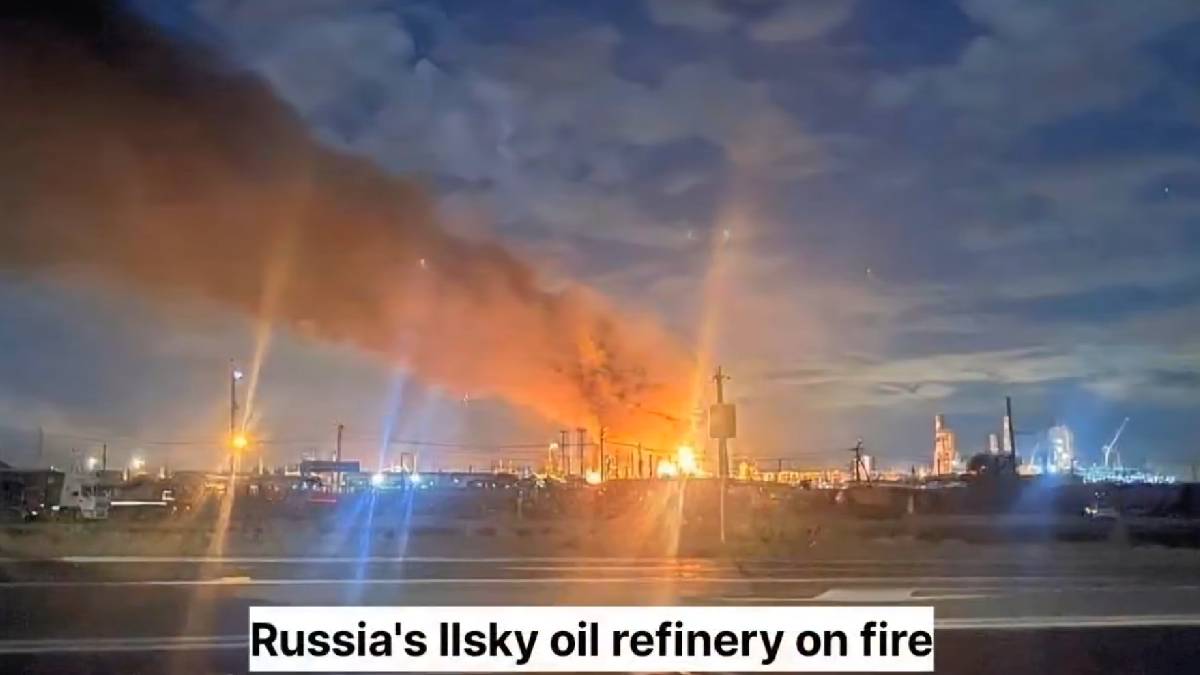
A fire was reported at the Ilsky Oil Refinery in Krasnodar Krai after a drone attack overnight. The incident was reported on September 26, and footage and local reports showed a fire at the refinery after the reported strike.
The latest attack is part of a bigger Ukrainian campaign to attack Russian oil and energy infrastructure. Kyiv has said the strikes are directed at destroying facilities that support Russia’s energy revenues and war effort. Reuters has also observed a continuous series of Ukrainian strikes on Russian energy sites in recent months.
At the same time, the Perm Oil Refinery, run by Lukoil-Permnefteorgsintez, has suspended operations after a Ukrainian drone strike on September 25.
According to two industry sources, the attack caused a fire and damaged pipelines, storage facilities and processing units, resulting in the shutdown of the refinery.

The Perm facility is Russia's seventh-largest oil refinery by processing volume. The refinery has an annual processing capacity of around 13 million tonnes of crude oil, according to the Institute for the Study of War, which cited Ukrainian and Russian reporting on the attack.
JUST IN:
— Current Report (@Currentreport1) September 26, 2026
Ukraine has struck another Russian oil refinery, the Ilsky Oil Refinery, with long-range drones. The refinery is on fire.
Meanwhile, Russia has suspended operations at the Perm Oil Refinery, the country's seventh-largest by processing volume, after a Ukrainian drone… pic.twitter.com/lZK9djJZRq
The Ukrainian General Staff reported that the Perm refinery was among the Russian energy facilities targeted during strikes on September 24 and overnight into September 25. Geolocated footage by ISW showed that a Ukrainian drone struck the refinery's AVT-5 processing unit, which accounts for roughly 34% of the facility's refining capability.
Russian authorities confirmed that an industrial facility in Perm Krai had been attacked by drones but did not initially identify the facility. Later reports identified the target as the Lukoil-Permnefteorgsintez refinery.
The attacks are in the midst of a more sustained campaign against Russia’s oil-processing infrastructure. Ukrainian forces have targeted refineries, storage facilities and other energy-related infrastructure at much longer distances from Ukraine’s border.
On the same night, Ukrainian forces also attacked the Novoshakhtinsk Oil Refinery in Rostov Oblast. Regional officials said after the attack that there was a halt to the operation. The Ukrainian General Staff said the refinery has an annual processing capacity of about 7.5 million tonnes.
The repeated attacks have raised concerns about the resilience of Russia's domestic fuel-processing network. Russian refineries have experienced fires, temporary shutdowns or reduced processing capacity after Ukrainian drone strikes in recent months.
The incident also comes after a strike on the Moscow Oil Refinery on September 20, which caused fires at major crude processing units and led to the suspension of crude processing there. Reuters reported that the AVT-6 unit, which accounts for 53% of the plant's capacity, was among the affected units.
The cumulative impact of refinery disruptions would depend on the duration of repairs, available refining capacity and Russia’s ability to redirect crude and petroleum products through other facilities.
For now, the developments at Ilsky and Perm underscore the growing attention on Russia's energy infrastructure in the context of the ongoing Russia-Ukraine conflict. The level of damage at Ilsky and the time to complete operations at Perm are still to be seen, but the reported strikes are the latest in a series of attacks on important Russian oil facilities.
Note: Details of damage and operational disruption in active conflict zones can change as authorities and independent sources release further information. The Ilsky fire and Perm shutdown reported above are based on available reports as of September 26, 2026.