A senior U.S. military commander has strongly warned American service personnel about the dangers of social media and how harmless online posts may reveal sensitive information that could be exploited by foes like Iran. And as smartphones and social media apps become part of everyday life, operational security (OPSEC) is also more important than ever.
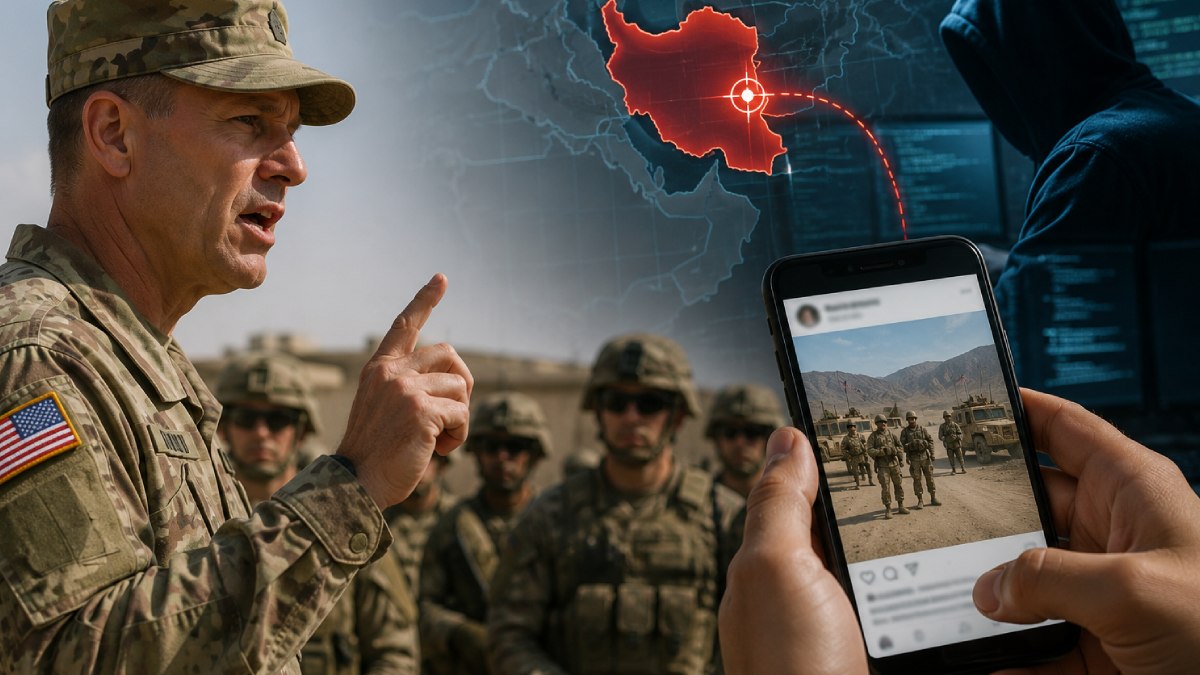
According to the commander, photographs, videos, location tags, comments, and even routine updates shared by military personnel can collectively provide valuable intelligence to hostile actors. A single post may seem insignificant, but many pieces of public information can be combined to reveal troop movements, deployment locations, military capabilities, operational schedules, or other sensitive details.
The warning comes as geopolitical tensions in the Middle East are deepening and intelligence gathering and cyber operations have become more sophisticated. Military officials have long warned foreign intelligence agencies and hostile groups actively monitor publicly available information on social media platforms to identify potential vulnerabilities.
Operational security (OPSEC) is a fundamental principle of military operations worldwide, and is the core of operations security. OPSEC is about preventing the information from being leaked to the media and can damage operational security, endanger people or give the adversary advantages. Today’s digital world extends OPSEC not only to military bases and classified communications but to anyone of us on our own online activities.
Military experts say today’s smartphones automatically collect metadata including timestamps and location information. Even though the users don’t intend to give away their locations, photos and videos can contain location or visual information which can reveal operational details in real-time. Background objects and military equipment, weather conditions, uniforms and vehicle markings, and landmarks can help intelligence analysts determine where and when content was created.
The commander said service members need to be extremely cautious before posting anything online, especially on a deployment or in a military mission. And they should not post photographs of military facilities, equipment, flight schedules, convoy movements, or other operations that could jeopardize security, he said.
We may be more likely to do so if we feel that personal smartphone use is too much of a concern in some operational environments. And though not officially banning personal phones has been announced, military leaders are still debating how to balance operational security and the communication needs of deployed personnel and their families.
Open-source intelligence (OSINT) has become an increasingly powerful instrument for governments and non-state actors in cybersecurity and military intelligence as well, as experts in cybersecurity and military intelligence explain.
Information from public social media accounts can be compared to satellite imagery, publicly available databases, commercial mapping services, and other digital resources to develop incredibly detailed intelligence assessments.
The issue is not unique to the United States. Armed forces around the world regularly educate personnel on responsible social media use and digital security practices. Many military forces have outlined very specific guidelines on how to disable geolocation, not talk about operational matters online, review the privacy settings, and not post anything that might reveal the deployment details by the service members.
Military analysts stress that protecting operational information is of utmost importance not only during combat but also in everyday training exercises and overseas missions. Even seemingly minor disclosures can lead to risks to personnel, equipment, and mission success.
The growing use of artificial intelligence and advanced data analytics has further fueled concerns about digital information security. Modern AI systems can quickly process large volumes of publicly available content, find patterns, and provide insights that have been previously only available in a very manual way. Accordingly, what was regarded as insignificant information can now have more intelligence value than ever before.
The commander’s message is a reminder that every service member plays an important role in safeguarding national security. But disciplined online behavior is a necessity for military discipline and will be a part of all physical and operational security.
As digital technology continues to change, military organizations are expected to enhance cybersecurity awareness and social media safety awareness and training for the security of the military and their personnel in the digital age, and the use of social media is likely to be strengthened with these technologies and training will be needed as well.
Security with regard to sensitive and private information has always been the primary concern for troops, and keeping them connected to family and friends is still the most important thing of all at the heart of the military.
This latest warning is indicative of the larger issue: National security is influenced not only by the latest state-of-the-art weapons and intelligence systems but also by everyday digital behavior. With proper management of online activities, we can ensure that valuable information doesn’t get stolen from us by those who would like to take advantage of it.