For decades, the “unspoken contract” of Wall Street was simple: six-figure salaries if you’d give up your soul, your social life and most important: your sleep. But a groundbreaking $5 million lawsuit currently heading to trial in a Manhattan federal court is on track to blow up an industry’s “all-nighter” heritage.
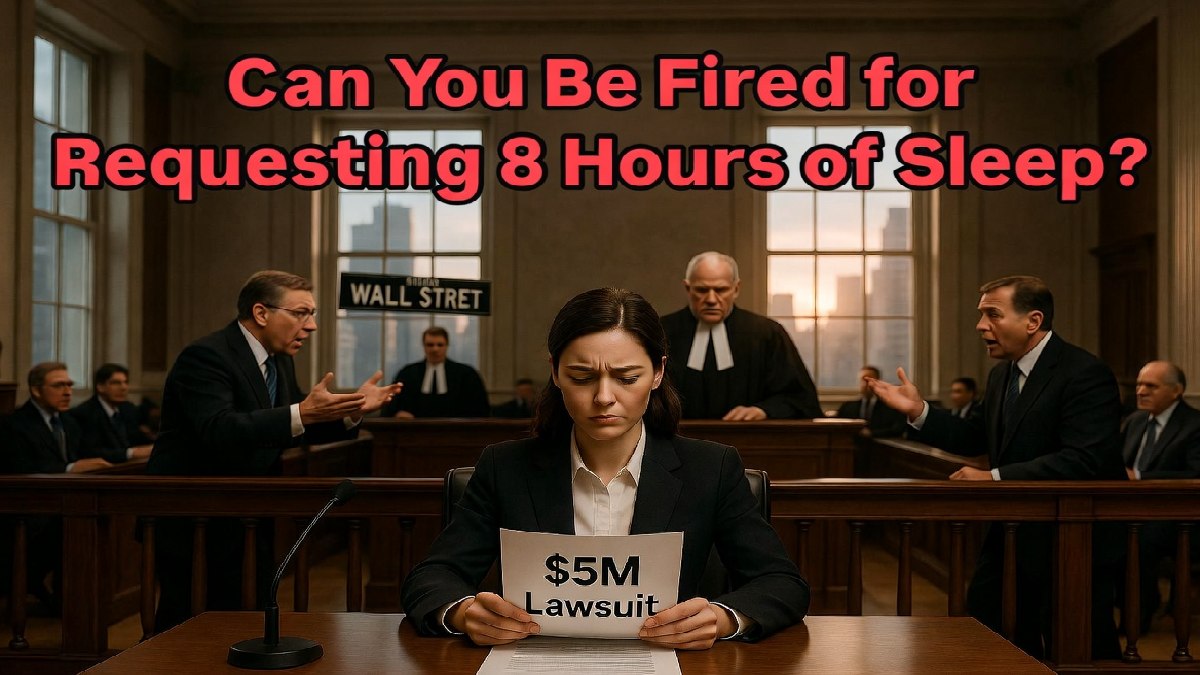
The case, Shiber v. Centerview Partners, involves former junior analyst Kathryn Shiber and one of the world’s most elite M&A boutiques. At its center lies a question that could redefine labor law forever: Is working without sleep a legal requirement of a job, or simply a toxic habit?
The Incident: A “Hard Stop” at Midnight
Kathryn Shiber, 21, joined Centerview Partners in 2020. Not long after she started, she reported to HR an ongoing mood and anxiety disorder that she needed 8 to 9 hours of regular sleep to cope with.
- The Deal: Centerview agreed to provide a "guardrail" accommodation Shiber would not work from midnight to 9:00 AM.
- Conflict: In the middle of a "live" deal (Project Dragon), Shiber signed off at midnight without telling senior bankers.
- The Result: Three weeks later, she was fired by video chat. The firm’s COO allegedly told her that not only was her need for rest unfit, but it made her “unsuited” for the rigors of investment banking.
The Legal Battle: Essential Function vs Hazing
Shiber is suing based on the Americans with Disabilities Act (ADA), alleging the bank didn’t make a “reasonable accommodation.” Centerview’s defense is pretty blunt: 24/7 availability is an “essential function” of being a junior analyst. But the case has been allowed to go to trial, as U.S. District Judge Edgardo Ramos calls it “a genuine dispute” concerning whether the type of unpredictable, extreme hours are actually required for the work financial modelling and research or just a well-entrenched cultural expectation.
“If an employee in this capacity needs at least 8 to 9 hours of regular sleep per night, then there is no reasonable accommodation,” Centerview submitted in court filings.
Why This Case Makes Everything Different
And if a jury decides in Shiber’s favor, it could set a massive legal precedent:
- Redefining “Reasonable”: Banks might end up losing the right to state “undue hardship” solely because a junior staffer is not on site at 3:00 a.m.
- Documented Policies: Centerview had no official written policy that said no sleep was a job requirement, the judge observed. That might demand that firms document their extreme expectations.
- The “Disability” Protection: It paves the way for other mental health conditions to seek “protected windows” of rest without fear of retaliation.
Wall Street vs. The Human Body
The trial is slated for late February 2026 at a time of intensified oversight for the finance industry. In the wake of a series of high-profile cases of banking burnout and health crises, the likes of JPMorgan and Goldman Sachs have experimented with “protected Saturdays,” but Shiber’s case is the very first to test these “protected hours” in a court of law.