Elon Musk's artificial intelligence company, xAI, has launched a legal challenge against the state of Minnesota to ban AI-powered “nudification” technology. The lawsuit filed in federal court just days before the legislation is set to take effect on August 1 is one of the most urgent legal battles over how governments should regulate artificial intelligence tools that can generate explicit images.
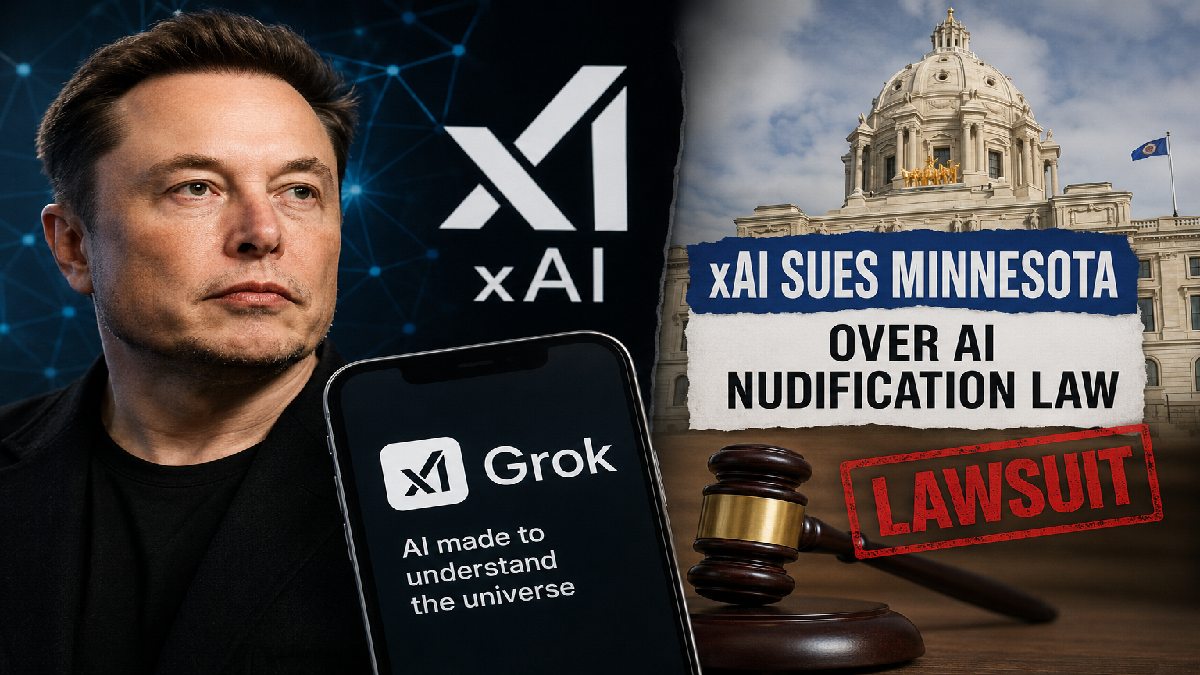
The Minnesota law, signed by state officials in May, is believed to be the first in the United States to target AI systems that can create fake nude images of real people. The legislation was passed in response to increasing concerns about the misuse of AI-generated imagery, particularly with women, children and public figures whose image has been manipulated without their consent. Supporters of such a law say it is necessary to protect people from harassment, exploitation and reputational harm caused by increasingly sophisticated AI image generation technologies.
In its 38-page complaint, xAI acknowledged the seriousness of non-consensual AI-generated explicit imagery, but argued that Minnesota’s approach goes beyond addressing harmful conduct. It’s written so broadly that it could prohibit constitutionally protected speech and expose AI developers to severe legal consequences even when they act responsibly, they say. Companies could face fines of up to $500,000 per violation, posing significant legal and financial risks for AI providers.
The lawsuit raises a major concern: the absence of a “safe harbour” provision. That is, they say, to protect technology companies that sincerely try to prevent misusing their platforms. xAI argues that without such protections, developers are still liable no matter how they try to prevent bad content from being uploaded, and their technology is not able to act.
The lawsuit also challenges the legal language of the law itself. xAI argues that such legislation might apply not only to non-consensual images but also to content created with the consent of the person depicted and even images created by individuals of themselves. And the company also says the law’s definition of “intimate part” is too broad and could cover body parts that are commonly visible in public spaces in order to have unintended implications.
Minnesota Attorney General Keith Ellison had the strongest pushback on the legislation and highlighted the harm AI-generated nude images can create. In a statement, Ellison called the creation of nude images without consent “appalling” and said such technology can cause emotional and even professional damage to victims. “While discussion on AI regulation should be pursued at the national level, protecting people from non-consensual digital exploitation should not be controversial,” he said.
What makes Minnesota’s law so unique is that it places responsibility not only on individuals who create or distribute explicit deepfakes but also on the companies that provide the AI tools. Such a law is different from many state and federal laws that focus on punishing bad actors rather than the technology platforms themselves.
xAI also mentioned that it has several protections in place for its AI ecosystem. The company said that its AI chatbot and image generation tool Grok would not allow people to share non-consensual nude or sexually explicit images. Users who violate these terms are suspended or banned. They also said it goes to authorities if people have seen child sexual abuse material.
But xAI's legal challenge also comes at the same time as previous controversies surrounding Grok. In late 2025, the company was criticised when AI images depicted minors in sexualized outfits, leading the company to apologise publicly. xAI changed its moderation policies and zero tolerance for child sexual exploitation, non-consensual nudity and unwanted sexual content. Also, in areas where such content is illegal, xAI is geo-blocking.
The lawsuit will be a closely watched one in the larger debate over AI regulation in the U.S. Now that lawmakers are increasingly concerned about the danger posed by AI-generated content, courts may be asked to decide what the line is between protecting people from harm and preserving constitutional protections for speech and technological innovation.
The outcome of the case could have an impact on AI developers, policymakers, and users of AI technology in general—who will shape future AI regulations across the country in the future.