Adani Ports and Special Economic Zone Ltd (APSEZ) has agreed to sell a 49% stake in its Vizhinjam International Seaport in Kerala to global shipping giant Mediterranean Shipping Company (MSC) for $1.4 billion (around ₹13,225 crore) in a deal valued at $1.4 billion.
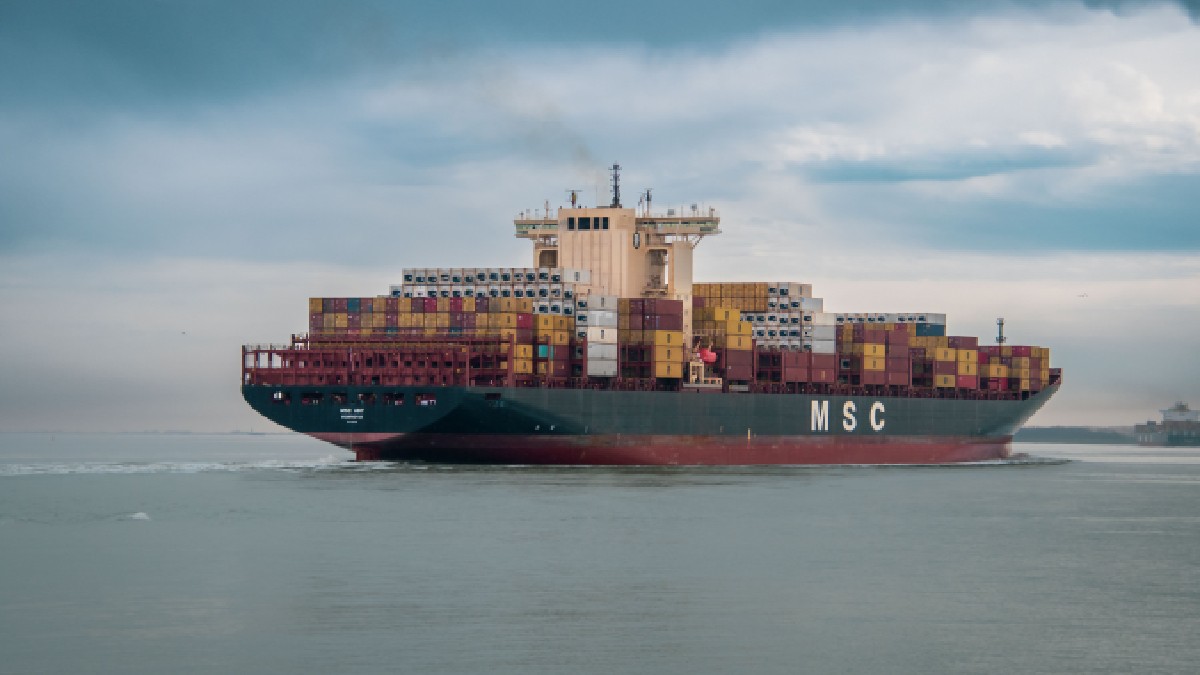
The investment will be made through Terminal Investment Ltd (TiL), MSC's port-operating arm. TiL will acquire a 49 percent stake in Adani Vizhinjam Port Pvt. Ltd. (AVPPL), a wholly owned subsidiary of Adani Ports, for $539 million. The company will also invest an additional $858 million by December 2028 toward the port's ongoing $1.75 billion capacity expansion project.
The partnership is one of the largest foreign investments in India's port infrastructure and will significantly strengthen Vizhinjam’s position as a global transshipment hub.
Growth by Capacity Expansion
Vizhinjam Port is currently capable of handling 1.6 million TEUs (Twenty-foot Equivalent Units) each year. With the expansion, it will be 4.1 million TEUs. Long-term, it will scale up to 5.7 million TEUs.
Adani Ports said it anticipated the MSC partnership to accelerate the port’s growth to deliver more cargo volumes and volume visibility and better long-term business.
The company also predicts Vizhinjam will get a greater share of transshipment cargo from Bangladesh, where it expects Vizhinjam to attract more cargo from Bangladesh for shipment, much of which currently passes through competing ports in Southeast Asia.
Strategic Importance for India
Close to one of the world's busiest international shipping lanes, Vizhinjam has a significant geographical advantage. Its deep natural draft will allow some of the world’s largest container vessels to dock without extensive dredging, making it India’s first truly globally competitive transshipment port.
Transshipment ports serve as major logistics hubs where containers are transferred between ships before reaching their final destinations, similar to how international airports like Dubai serve as connecting hubs for air passengers.
The leading transshipment ports worldwide are Singapore, Tanjung Pelepas in Malaysia, Busan in South Korea, Tanger Med in Morocco, and Shanghai in China. Singapore alone accounts for more than 40 million containers annually, and these ports are the heart of the global transshipment market that India is keen to capture.
Rapid Growth Since Launch
Vizhinjam Port has seen great growth since becoming commercial.
In its first year of operation, ending December 2025, the port handled 1.3 million containers across 615 vessels, becoming the fastest Indian port to cross the one million TEU mark.
Within 18 months, the port surpassed 2 million TEUs, and is the first Indian port to achieve the milestone in such a short period. Earlier this month, it welcomed its 1,000th vessel, indicating a rapid operational ramp-up.
In addition, APSEZ Whole-Time Director and CEO Ashwani Gupta said Vizhinjam has become a leading transshipment hub at an unprecedented rate.
He said expanding the company's long-standing partnership with MSC would enhance global supply chain efficiencies and India's connections with mature and emerging international markets.
Positive Market Response
At 3 p.m. in the Mumbai stock market, shares of Adani Ports rose around 1 percent to ₹1,794.45. The stock has gained nearly 20 percent since the beginning of the year on investor confidence in the company’s expansion and global reach.
The partnership with MSC will help Adani Ports to raise capital and further strengthen Vizhinjam’s global maritime trade position. As the capacity of the port increases and cargo volumes grow, the port is likely to become a global hub for shipping and is one of the key nodes of India’s bid to become a leading global logistics and transshipment center.