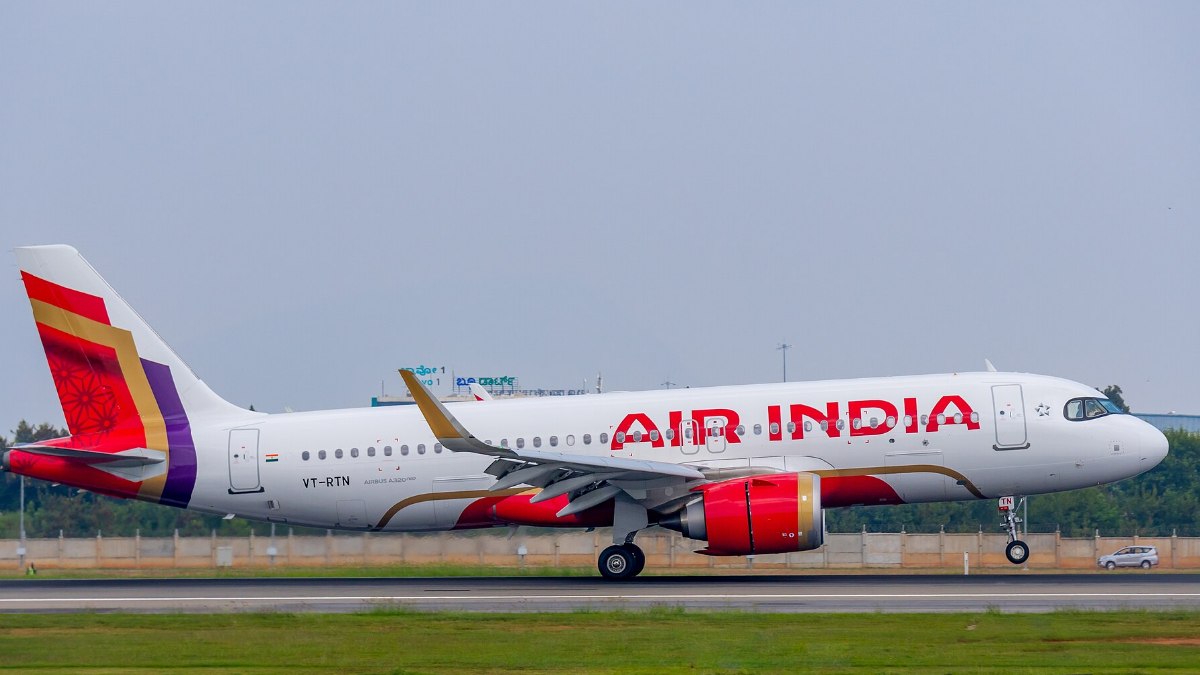
Air India has been ordered by the Court of Chief Commissioner for Persons with Disabilities to pay compensation to a disabled passenger after she was removed from a Delhi-Bhuj flight for not giving a “Fit-to-Fly” certificate.
The case involves Falguni Maheshwari, who has 80 per cent locomotor disability and is in a wheelchair. Maheshwari had traveled from Frankfurt to Delhi on an Air India flight on May 26, 2026, without facing any medical objection. She then took a connecting flight from Delhi to Bhuj and sat in her assigned seat.
The situation changed when cabin crew questioned her ability to travel independently and asked her to produce a “Fit-to-Fly” certificate. Maheshwari was then de-boarded from the aircraft. The passenger said she was not given written reasons for the decision and she was not examined by a medical officer before she was removed from the flight.
The complaint also referred to her powered wheelchair. Maheshwari alleged the wheelchair was returned to her in a damaged state after it was handed over for handling during the journey. She also said she had to make alternative travel arrangements and incurred additional expenses as a result of the incident.
Air India presented its side before the CCPD in which it said the decision was not based on the passenger’s disability but on her health and safety. The airline said its crew told them they were concerned about her health and safety when they observed she was extremely tired and had symptoms including cough and cold, and said that in such cases medical clearance was necessary before traveling.
Air India also said Maheshwari was accommodated on its next available flight without the added charge and said it would repair or compensate her for the damaged wheelchair.
CCPD Examines Fit-to-Fly Requirement
The CCPD assessed whether the airline had followed the required procedure before deciding to de-board the passenger. As indicated by the September 24 order, Maheshwari had not been examined by an Air India medical officer during the Delhi layover, according to the report. The airline also did not give details of a medical evaluation supporting the cabin crew’s decision to de-board, and it could not be made.
The Commissioner stressed that in cases when an airline has concerns about a passenger’s medical fitness, the relevant procedure requires appropriate medical assessment. What the case showed was that the decision to remove Maheshwari from the flight was not based on a proper medical evaluation but rather an assessment by cabin crew.
The CCPD also stressed the importance of treating assistive devices differently from ordinary baggage. A wheelchair is essential to the mobility and independence of a passenger with a disability. So the damage to Maheshwari’s powered wheelchair was seen as part of the wider hardship of the incident.
The September 24 order directed Air India to pay ₹5 lakh to Maheshwari for the mental agony, humiliation, distress and inconvenience she suffered after her journey was terminated after boarding. The compensation also takes into account consequential financial hardship associated with the incident.
Besides the compensation, the CCPD imposed a ₹50,000 fine on Air India. The commissioner also ordered the airline to conduct an internal investigation into the incident and to train and sensitise its employees on disability rights, reasonable accommodation, medical-clearance procedures and assistive devices. The airline was also asked to report on the action taken by the airline.
Air India’s Existing Disability Assistance Rules
The case has also drawn attention to Air India’s own published policies for passengers with disabilities. The airline says passengers who need wheelchair assistance can request it during booking or ticket issuance. Its disability assistance guidance also states that passengers who only require assistance at the airport or during boarding and disembarking do not require medical clearance.
Air India does state that medical clearance might be required in certain situations, such as when a passenger has a medical condition that could be aggravated during a flight or the condition could create a safety risk requiring medical attention or an unscheduled landing. The airline’s published guidance distinguishes such medical situations from passengers who simply require mobility assistance.
The CCPD case has then made it clear that airlines must follow the right procedures when assessing people with disabilities. But the issue wasn’t whether the airline could take passenger safety into account, but how to assess and communicate these concerns and how well to do so.
The ruling also puts wheelchairs and other mobility devices in focus. If passengers rely on powered wheelchairs, the effect of damage to such equipment is much more than the inconvenience of damaged baggage. It can directly impact mobility after arrival, and lead to travel alternatives that are more difficult to make.
And the Air India case is also significant for the bigger discussion around accessibility and disability rights in air travel. The CCPD’s directions cover both compensation for the passenger and measures to address the airline’s procedures and staff training.
For Maheshwari, the ₹5 lakh compensation addresses the hardship and distress identified in the proceedings. For Air India, the case adds some additional scrutiny to the procedures followed when concerns about a passenger’s medical fitness arise after boarding.
The incident also highlights the necessity for clear communication, medical assessment if needed and close monitoring of mobility equipment. Airlines still are serving passengers with distinct accessibility needs and so safety procedures and disability rights need to be addressed through established rules and appropriate assessments.