The southwest monsoon has gained momentum all over Karnataka with widespread rainfall in Malnad and coastal areas. Heavy rains over the Western Ghats and large catchment areas have been bringing more water to the state’s major reservoirs, with strong rainfall and thus much more storage of water for irrigation, drinking water, and hydropower.
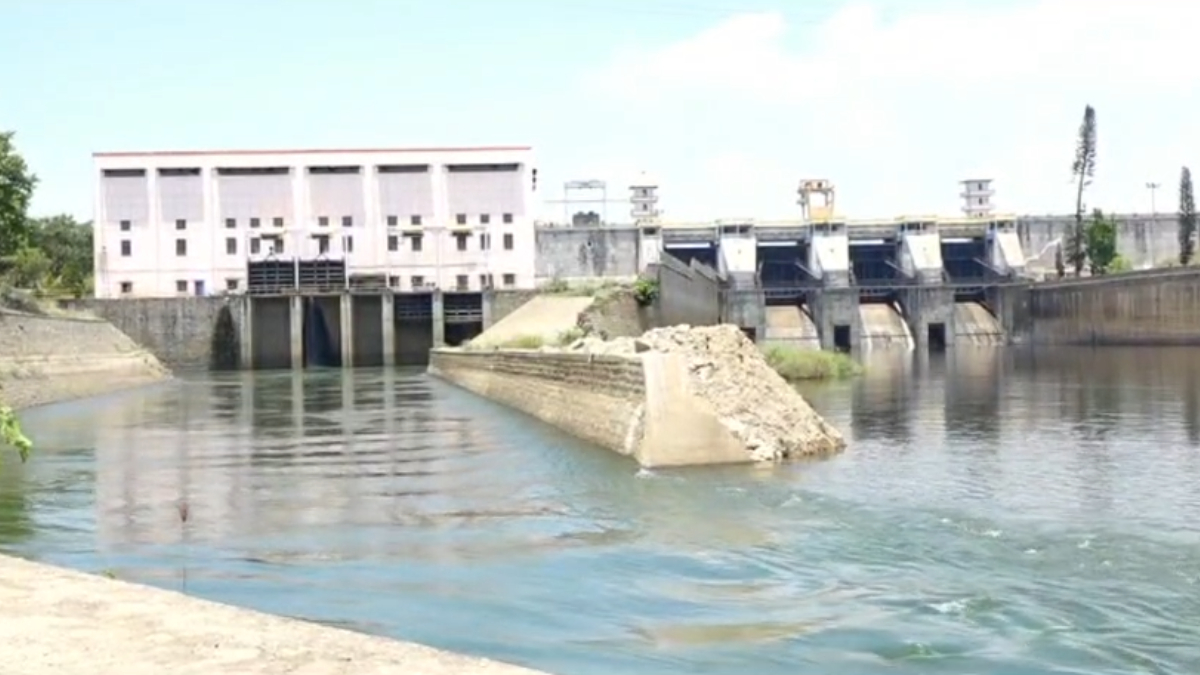
Almatti Dam (Lal Bahadur Shastri Reservoir) in Vijayapura district is a major landmark and has received a huge inflow of over 1.31 lakh cusecs from the Krishna River basin. The sudden rise in the inflow has caused the water level of the reservoir to increase rapidly, and North Karnataka in the next few months is hopeful for a good supply of water.
While a healthy reservoir level is welcomed by the farmers and water managers, heavy rain has also triggered flood-like conditions in parts of Belagavi district, where overflowing rivers have inundated hundreds of acres of agricultural land.
Almatti Dam near higher storage levels
The Almatti Dam is constructed on the Krishna River in Nidagundi taluk of Vijayapura district and is a lifeline for North Karnataka. The heavy rainfall in Maharashtra and the upper Krishna basin has caused an exceptionally high inflow of water into the reservoir.
As the inflows continue to increase each day, they are closely monitoring the water level. If heavy rainfall persists in the upstream catchment areas, further increases in storage and controlled water releases may take place in the coming days, and the reservoir will continue to increase its storage and controlled water releases.
Hemavathi Reservoir is still gaining water
The Hemavathi Reservoir at Gorur in Hassan district has also benefited from the ongoing monsoon.
- Maximum Level: 2,922 feet
- Current Water Level: 2,900.63 feet.
- Current Storage: 20.102 TMC.
- Inflow: 15,647 cusecs.
- Outflow: 300 cusecs
Even though water storage has improved considerably, it is still below last year's level, when the reservoir held more than 35 TMC during the same period.
The Linganamakki Reservoir receives a very strong flow
The Linganamakki Reservoir on the Sharavathi River, one of Karnataka's main hydroelectric reservoirs, continues to receive heavy inflows due to the continuous rainfall in the Western Ghats.
- Maximum Level: 1,819 feet
- Current Water Level: 1,760.85 feet.
- Current Storage: 28.58 TMC.
- Inflow: 36,867 cusecs
Authorities are closely monitoring the reservoir as more rainfall in the Sharavathi catchment could increase storage levels.
Bhadra Reservoir water level is rising
The Bhadra Reservoir in Shivamogga district has also seen a steady increase in inflow.
- Maximum Level: 186 feet
- Current Water Level: 144.7 feet.
- Current Storage: 30.142
- TMC. Inflow: 16,304 cusecs.
- Outflow: 216 cusecs
The reservoir will continue filling if rainfall remains consistent across the Malnad region.
Gajanur (Tunga) Dam reaches full capacity
One of the biggest developments of the monsoon season is the Gajanur (Tunga) Dam reaching its full storage capacity. With heavy rainfall over the last few days, the authorities opened all 22 crest gates and released approximately 30,000 cusecs of water into the Tunga River as a precautionary measure.
Officials noted that as much as 48,000 cusecs were released a day earlier due to extremely high inflows. Residents living on the Tunga River are advised to stay alert as water levels are still high.
Flood situation worsens in Belagavi
The reservoirs are filling, but the situation in Belagavi district is becoming increasingly challenging. Heavy rainfall in the Western Ghats of Maharashtra has caused the Dudhganga River, a tributary of the Krishna, to overflow beyond the danger mark.
Floodwaters have entered several villages in Chikkodi taluk, with Bedakihal village virtually becoming an island as water surrounded it from all sides. Floodwater has already poured down almost half a kilometre beyond the riverbanks and has severely affected normal life.
The agricultural sector has suffered heavy losses, as hundreds of acres of sugarcane, maize, groundnut, and soybean crops have remained submerged for nearly five days. Farmers fear that prolonged waterlogging will destroy their standing crops, resulting in substantial financial losses. Many have appealed to the state government for immediate compensation and relief measures.
A Positive Outlook with Continued Vigilance
The ongoing monsoon has rejuvenated Karnataka's reservoirs and has helped to improve water availability for irrigation, drinking, and power generation. The strong inflows into Almatti, Linganamakki, Hemavathi, and Bhadra reservoirs, along with the full capacity of the Gajanur Dam, reflect the healthy progress of the southwest monsoon.
However, authorities continue to maintain flood alerts in vulnerable districts like Belagavi, urging residents living along riverbanks to stay cautious. Disaster management teams and district administrations are closely monitoring reservoir operations and river levels to ensure public safety while maximizing water conservation during this crucial monsoon season.