Reliance Industries Director Anant Ambani visited Sri Venkateswara Temple in Tirumala, where he participated in traditional religious rituals by offering his hair as an act of devotion. During his visit, he also donated electric buses to Tirumala Tirupati Devasthanams (TTD), reinforcing efforts to improve environmentally friendly transportation for millions of devotees visiting the hill shrine each year.
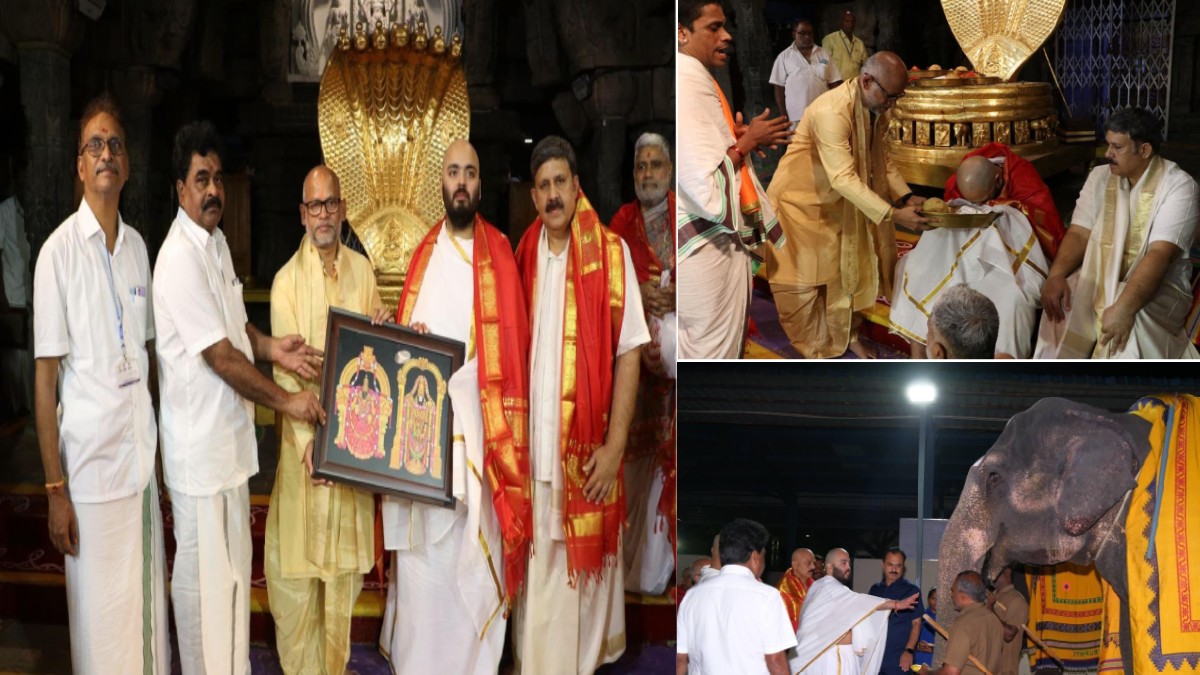
The visit was witnessed by devotees and the public, and Anant Ambani performed the traditional tonsuring ritual known as mokku, a gesture of humility and gratitude for Lord Venkateswara. At the Tirupati temple, hair offering is an ancient tradition, and millions of pilgrims shave their heads in order to satisfy their vows or to receive divine blessings.
Following the religious rituals, Anant Ambani took part in a formal ceremony during which electric buses were given to the temple administration for use. The buses are expected to further the present transportation system in Tirumala to make it easier for pilgrims to travel between various important locations in the temple town.
The donation is indicative of the growing emphasis on sustainable mobility at religious places where people come in huge numbers every day. Tirumala has tens of thousands of devotees every day, and those numbers are even higher on festivals and special occasions. Electric buses reduce vehicle emissions, lower noise pollution, and promote sustainable transport and passenger comfort.
The temple authorities welcomed the offer, pointing out that eco-friendly public transportation is in line with the ongoing efforts to protect the natural environment of the sacred Tirumala hills. Green technologies with a minimum impact on the environment and a high level of efficiency in services to pilgrims have been the focus of the administration.
Anant Ambani, who is deeply religious and goes to temples regularly in India, has often been seen at religious ceremonies before major personal and professional events. His Tirupati visit served to confirm that faith, philanthropy, and public service are closely linked.
The Ambani family has a long history of giving back with projects in healthcare, education, rural development, disaster relief, and religious institutions. Construction of infrastructure in institutions of worship is often regarded as part and parcel of the entire community benefit for devotees in a better way.
#WATCH | Tirupati, Andhra Pradesh: Reliance Industries Executive Director, Anant Ambani, visited Tirumala Sri Venkateswara Swami Temple for Suprabhata Seva and offered prayers. He also donated his hair to the temple. pic.twitter.com/uaibgvEFlI
— ANI (@ANI) June 28, 2026
The electric buses donated during this visit will be of great benefit to the pilgrim experience. More and more people are visiting Tirumala, and modern energy-efficient transport solutions are needed in order to reduce congestion and move through the temple complex.
Experts believe that moving to electric mobility in pilgrimage centers will reduce carbon emissions dramatically while lowering long-term operational costs. These initiatives also complement national efforts to reduce pollution and promote more sustainable urban development.
The devotees who were present during Anant Ambani's visit witnessed all the traditional temple rituals, like prayers and blessings from temple priests. Security measures were also ensured for pilgrims to move around during the high-profile visit without affecting their daily darshan schedule.
The combination of religious faith and public service has received positive responses from people who believe that the donation is a significant contribution to the facilities available to the millions of people who visit Tirupati every year. The tonsuring ceremony was indeed an intensely personal act of faith, but the electric bus donation was a tangible investment to improve public infrastructure in one of India’s most visited pilgrimage places.
As Tirumala continues to move towards greener and more sustainable operations, this would support the temple administration’s vision of providing efficient, environmentally responsible, and pilgrim-friendly services. Anant Ambani’s visit, thus, stood out not only for its religious significance but also for its focus on promoting sustainable development at one of the country’s major spiritual centers.