Andhra Pradesh has targeted to provide a great economic attraction of Rs 30,000 to Rs 40,000 to families for increasing all parents’ fertility and easing population growth worries. This is one factor in a scheme which seeks to motivate couples to reproduce as anxiety mounts about the demographic transition, the reports said.
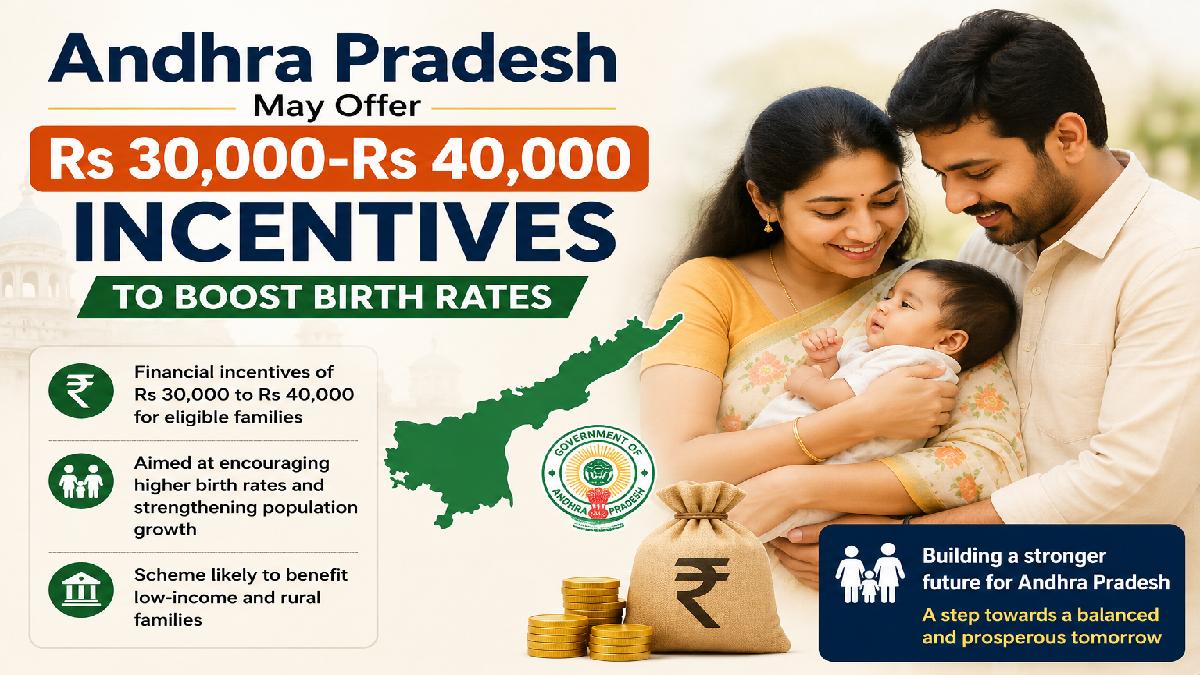
The action comes on the heels of efforts by a number of Indian states to talk through persistent issues such as ageing populations, labour shortages and decreasing fertility rates while they work to prepare to transition. Among the sources were those who said that the incentives could also be granted to eligible families as part of a bigger population support reform that’s now under discussion.
The anticipated benefits will target poorer areas and young couples, particularly those in rural and semi-urban regions, who are experiencing economic hardship. Officials are said to have considered a variety of models before concluding the scheme, including immediate cash transfers and gradual assistance linked to childbirth and child welfare.
The proposed measure has not yet been released formally to the public, but nationwide discourse had already begun to swirl about the Rs 30,000 to Rs 40,000 incentive amount reported. Andhra Pradesh leaders have never stopped proclaiming to the public that in the southern states, fertility rates could slide; this has made the debate on population growth more deliberate.
As India grapples with an increasingly large population structure and an ageing society, policy-makers are worried that low birth rates will only lead to long-term economic and social problems. Countries Japan, South Korea and many European countries, for starters, are already facing very serious demographic challenges that spring from a low birth rate and declining working-age populations, experts said.
In those states, the government has offered tax breaks, child-care subsidies and other financial incentives to families to have children. In addition to this, pro-Andhra Pradesh reportedly provided such interventions in order to ease future workforce participation and demographic stability.
Critics contend that, on the merits, monetary incentives alone aren’t likely to determine birth rates much, unless the larger issues like basic public healthcare, childcare delivery and women’s security and education costs are also dealt with or at least they will.
Social media users responded in large part with positive reactions, some congratulating the government’s efforts, others saying that the incentive should not be based on the population to allocate the public money. India, the demographic experts tell me, is in a particularly important era of transition now, and the citizens of various states are looking at extremely distinct issues.
While people in Andhra Pradesh debate the possibility of participation, is ongoing the Andhra Pradesh Government is expected to release the requirements of eligibility, the overall objective of the proposed incentive scheme, a move to jumpstart it and others. Looking at public sentiment and opinion, this would likely be one of the most talked about demographic policies to be implemented in India by a state Indian government in not a few years.