India’s expanding private space industry will celebrate another major milestone next week with Bengaluru-based space startup Astrobase Space Technologies unveiling “Everest,” an 800 kN-class Full-Flow Staged Combustion (FFSC) rocket engine.
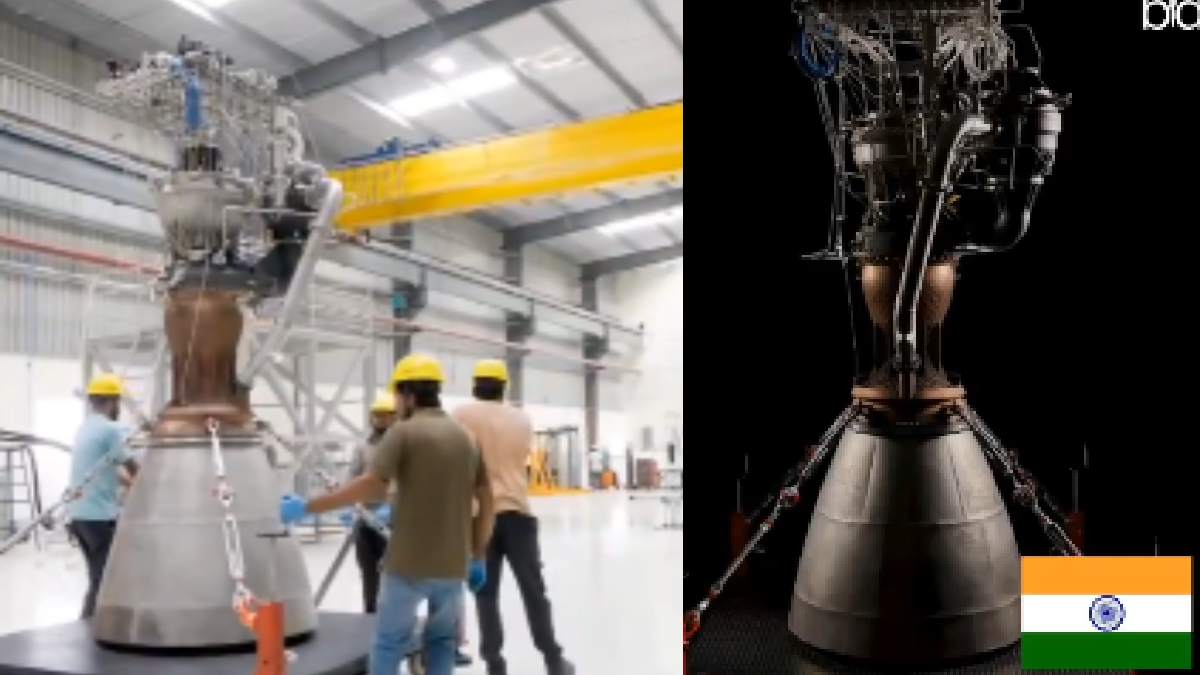
It is its first privately built engine that uses this advanced propulsion architecture and therefore a significant milestone to develop advanced launch technology in India.
The Everest engine is designed to use LOX and methane as propellants. Its FFSC design is among the most technically demanding liquid engine designs and is intended to improve propulsion efficiency and support the development of reusable launch vehicles.
Astrobase intends to use the technology as the basis for future medium and heavy lift launch vehicles.
This comes at the end of a long process in the development of the company. Astrobase has been in a process of developing its high-thrust propulsion programme with the support of the Indian National Space Promotion and Authorisation Centre (IN-SPACe) under its Technology Adoption Fund.
The programme will enable indigenous propulsion capability and less reliance on imported technologies.
Astrobase is also developing its infrastructure for large-scale engine development and testing. Its test facility in Anantapur, Andhra Pradesh is being developed for high-thrust propulsion testing, and the company has manufacturing and assembly in Bengaluru.
🇮🇳 India’s first ‘SpaceX-level’ rocket engine unveiled by Bengaluru startup
— Avinash K S🇮🇳 (@AvinashKS14) August 7, 2026
Bengaluru startup Astrobase Space has unveiled EVEREST, India’s first fully integrated 80-tonne (800 kN) full-flow staged combustion engine running on liquid oxygen and methane.
In this rare design,
+1 pic.twitter.com/ldcsD0S6lo
Previous development work has been done for sub-scale engine testing and turbopump trials.
The 800 kN thrust class places Everest in a category for much bigger launch vehicles than those currently emerging in India's private space sector. In the IN-SPACe material, Astrobase is developing a reusable orbital launch vehicle concept based on its own FFSC engines that could be used to carry large loads to low Earth orbit.
The company is targeting 2028 for its first orbital launch, which would take extensive engine testing, qualification, vehicle development and flight demonstrations before the system can enter regular operation in space.
The immediate focus needs to be to validate a full-scale propulsion system and train it for testing.
Everest’s importance goes beyond a single engine. A locally developed high-thrust reusable engine would enhance India’s private launch sector, open doors for commercial satellite missions and contribute to the nation’s overall goal of expanding a globally competitive space economy.
Astrobase’s announcement also underscores the increasing role of Indian startups in areas that have so far been largely left to government-led programmes.
With private companies developing rockets, propulsion systems, satellite technologies and launch infrastructure, India’s space industry is moving toward a more diverse commercial ecosystem.
If the development and testing programme moves on time, the 2028 target could be a significant milestone for India’s private space ambitions, and it may prove that advanced reusable propulsion technologies can be developed, manufactured and tested locally.