The newly opened Barapullah Phase-III flyover was supposed to make travel between East and South Delhi smoother. But the elevated corridor has been hit hard by traffic congestion since it was opened.
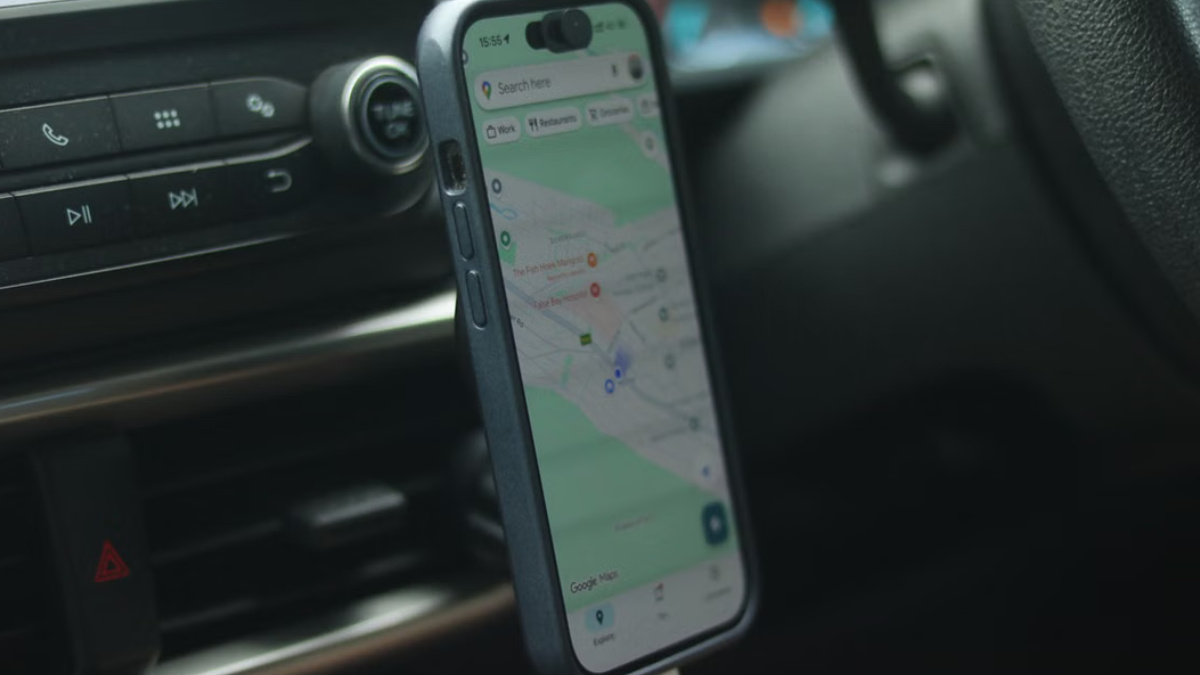
Now Delhi Traffic Police has flagged another factor making the situation worse: Google Maps fails to reflect the actual traffic conditions on the newly opened stretch.
As the navigation platform still points to the route as relatively clear, more motorists are being directed towards the already congested corridor. This further adds to the pressure at Barapullah Junction near Sarai Kale Khan, where several streams of traffic converge.
But Google Maps is just one part of the problem. There is also a big bottleneck due to the way multiple roads merge into the existing Barapullah flyover, officials say.
Why is Barapullah Phase-III experiencing traffic jams?
The Barapullah Phase-III corridor was inaugurated on 29 September and opened to commuters the following day. It connects Mayur Vihar Phase-I with Sarai Kale Khan and forms part of a larger signal-free route to central and South Delhi.
The project was supposed to reduce travel pressure on routes such as the DND Flyway and NH-24. But the new corridor has attracted a huge number of vehicles and there are long queues around its merging points.
A joint inspection by Delhi Traffic Police and Public Works Department officials on October 1 identified a major bottleneck near Sundial Park at Sarai Kale Khan.
The problem is essentially that the number of traffic entering the junction and the amount of road capacity available after the merger are not the same.
According to traffic police, traffic from the new Phase-III flyover, the Sarai Kale Khan loop and the DND side of the Barapullah has been directed towards a much narrower part of the Barapullah corridor. At one point in the day traffic flows from around eight to nine lanes converges into three lanes at a point, officials said.
This creates a bottleneck during busy periods. When the vehicles start to slow down at the merger, the queue can quickly extend backwards onto the new flyover and surrounding roads.
How is Google Maps making the situation worse?
The navigation problem adds another layer to an already difficult traffic situation.
Delhi Traffic Police said the congestion on Barapullah Phase-III was not reflected on Google Maps properly. So the application continued to show the route as relatively clear, encouraging motorists to take the corridor even if traffic was already moving slowly.
The traffic in a road network is especially important in navigation apps because navigation apps influence how traffic is spread across a road network.
When another route is marked as congested, drivers will take another road. But if a newly opened corridor still looks clear despite heavy traffic, more vehicles can be sent towards the same bottleneck.
So traffic police are working together with Google to make sure that the traffic situation on the corridor is better reflected.
Google has stated that newly opened roads may take some time before traffic and navigation information fully stabilises. Some changes may come after a couple of days, officials said, while navigation and search-related updates may take longer.
Traffic Police Divert Vehicles Towards NH-24, DND
With congestion still present, Delhi Traffic Police has advised drivers to avoid the affected section of the road during peak traffic and use NH-24 and the DND Flyway to avoid the area affected during heavy traffic.
The traffic coming from Phase-III has also been diverted to these routes in order to relieve pressure at Barapullah Junction. Traffic personnel are at the merging points for vehicle movement.
Other measures are being considered, such as traffic control at the merging points. A signal at a suitable location has been discussed as one possible way to regulate the volume of vehicles entering the bottleneck.
The authorities are also looking at the physical design of the merger. Traffic police have asked the PWD to review the sharp alignment near Sundial Park and to consider changes that could allow vehicles to merge more gradually.
Google Maps is not the only problem.
The navigation issue is temporary and can be resolved as the mapping data are updated, but the road design problem is still present.
Phase-III flyover was planned many years ago, but the traffic situation in Delhi has changed considerably during the long construction period. The project was planned years ago, and vehicle volumes and commuting patterns in East Delhi, Noida, Ghaziabad and South Delhi have been evolving.
This means that a road designed to improve connectivity may still face congestion if the junctions connecting it to the wider network cannot handle the additional traffic.
The Barapullah situation therefore involves two different problems: a traffic information gap that may be temporary and a physical bottleneck that needs a longer-term solution.
The immediate advice from the authorities is to avoid the busy stretch of road and use alternative routes through NH-24 or the DND Flyway.
On the other hand, Delhi Traffic Police and PWD are assessing the merger and traffic flow around Sarai Kale Khan. As long as navigation data is not completely corrected and a permanent solution is not found for the bottleneck, the much-anticipated Barapullah Phase-III corridor may still remain a difficult route for commuters during peak hours.