Bengaluru residents will soon have more localised information about the air they breathe with a new network of 277 neighbourhood-level air quality monitors. The new initiative will allow information about air pollution monitoring on a more granular, near-real-time level of detail across the city to be provided, including information on air pollution and pollution hotspots in the environment, as well as the potential local sources of emissions, to be distributed to residents in the city.
Open Air Quality (OAQ) initiative is being implemented through the Neighbourhoods of the Future (NOTF) programme with support from Socratus Foundation, Rainmatter Foundation, UnboxingBLR, B.PAC and CSTEP. The project will complement existing air quality monitoring systems by delivering information at a much more local level.
Why Bengaluru needs Neighbourhood-level Air Quality Data?
Traditional air quality monitoring stations are usually placed several kilometres apart. These stations can provide important information about the overall pollution levels of the air but the air quality in the vicinity can be very different from neighbourhood to neighbourhood.
Traffic congestion, construction activity, road dust, garbage burning and diesel generators can all affect pollution levels in individual areas. A neighbourhood next to a busy road, construction site and industrial activity can therefore face different conditions from a few kilometres away.
The OAQ project will address this gap through a grid-based monitoring network with around 1 km spacing. Residents and researchers might be able to see smaller pollution hotspots and how pollution changes in different parts of the city.
277 Monitors to Start With and Expansion Planned
The programme is starting with 277 monitors, yet organizers say approximately 400 monitors could eventually be needed to capture Bengaluru’s air quality across different areas and seasons.
Socratus Foundation Director Arvind Balasubramanian said the initial network will be tested and expanded over time. The organisers are also looking for participation from communities, organisations and groups to increase the monitoring network.
The monitors would be able to provide real-time data and alerts when PM2.5 levels rise. It will also provide indicators that may indicate the reasons for high pollution rates.
Residents can help track Pollution Sources
The initiative will have local communities involved as one of its biggest features.
Residents will be able to report incidents such as garbage burning or dust pollution, including photographs. Such community-generated information can then be considered alongside sensor readings to help understand why pollution levels rise in particular locations.
For instance, a monitor could keep detecting high pollution around a school during certain hours. Sensor data could help us find the pattern, and residents might explain why it corresponds with vehicle idling, school-bus queues or traffic congestion.
Hence, a combination of sensor data and neighbourhood observations is aimed at giving a finer picture of pollution sources in local areas.
East Bengaluru gets priority in first phase
The first phase of the programme will focus on communities in East Bengaluru. Residents' welfare associations, apartment communities, schools and other campuses can apply to host an air-quality monitor.
Sites must satisfy some basic technical requirements. These include a 220-volt power connection, a suitable pole or mounting point between 7 and 14 feet high, sufficient airflow, and a reliable 4G connection. The devices do not need Wi-Fi and are intended to consume relatively little electricity.
The first year of deployment is free of cost. The programme covers the hardware, installation, data, calibration, and maintenance during the first year.
Public Dashboard to Make Data Accessible
The initiative also aims to make air-quality information available to the public through a dashboard. It would allow residents and researchers to study pollution patterns in different parts of Bengaluru, rather than citywide averages.
Over time, the data could also be used to determine if local interventions have an impact on air quality. This could involve changes in traffic flow, road construction, paving work, or tree-planting projects.
We expect that more detailed historical data would help us see if pollution patterns are repeated and allow us to compare air quality for different times and locations.
What Bengaluru Residents Can Expect
The new monitoring network is not to replace existing official air-quality monitoring stations. It is, instead, meant to add a finer layer of neighbourhood-level information.
For residents, the biggest change could be greater visibility into how air quality varies in the city. Instead of having a single reading representing a large area, people can eventually access information closer to home within the community.
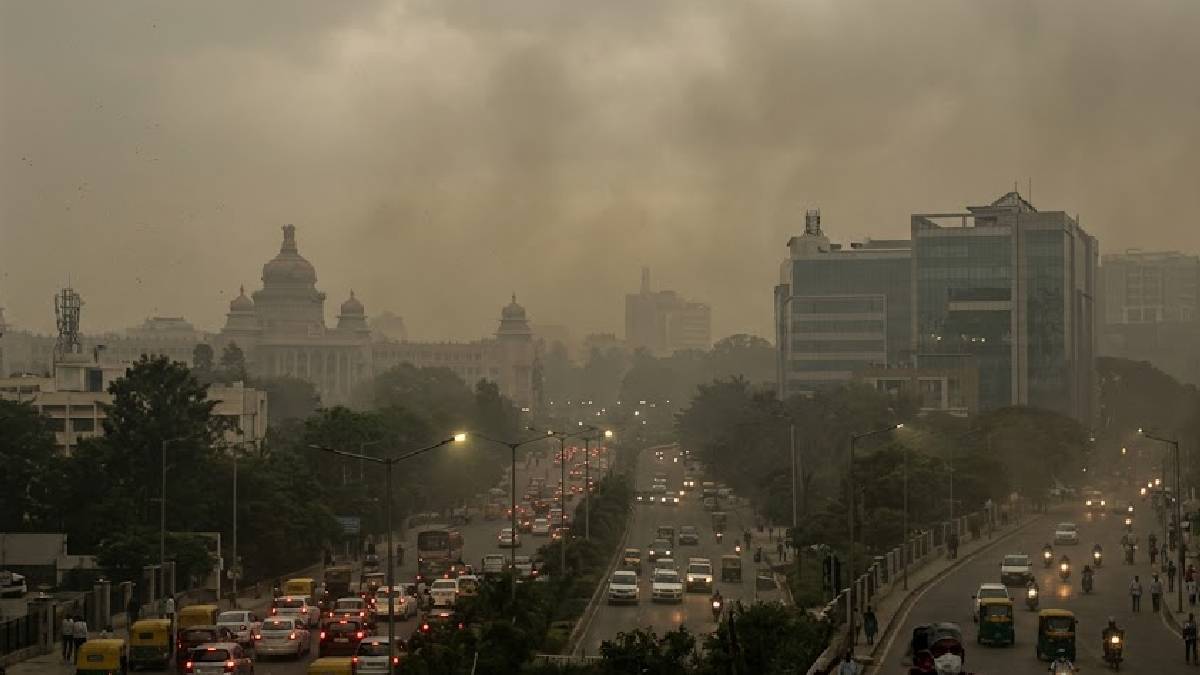
The initiative comes as Bengaluru continues to battle pollution from traffic, construction dust and waste burning. Current citywide air-quality readings can seem relatively favourable while individual locations may experience different conditions at different times of the day.
With 277 monitors being brought in to start and a potential increase to around 400, Bengaluru is moving towards a more detailed, community-supported approach to understanding its air quality.