Bengaluru’s persistent pothole problem has once again become a major political problem after an artificial intelligence road survey reportedly identified 5,964 potholes across 824 kilometres of roads in the Byatarayanapura Assembly constituency. Karnataka Assembly Opposition Leader R. Ashoka highlighted the figures in a social media post and questioned the state government’s claims about transforming Bengaluru into a model global city.
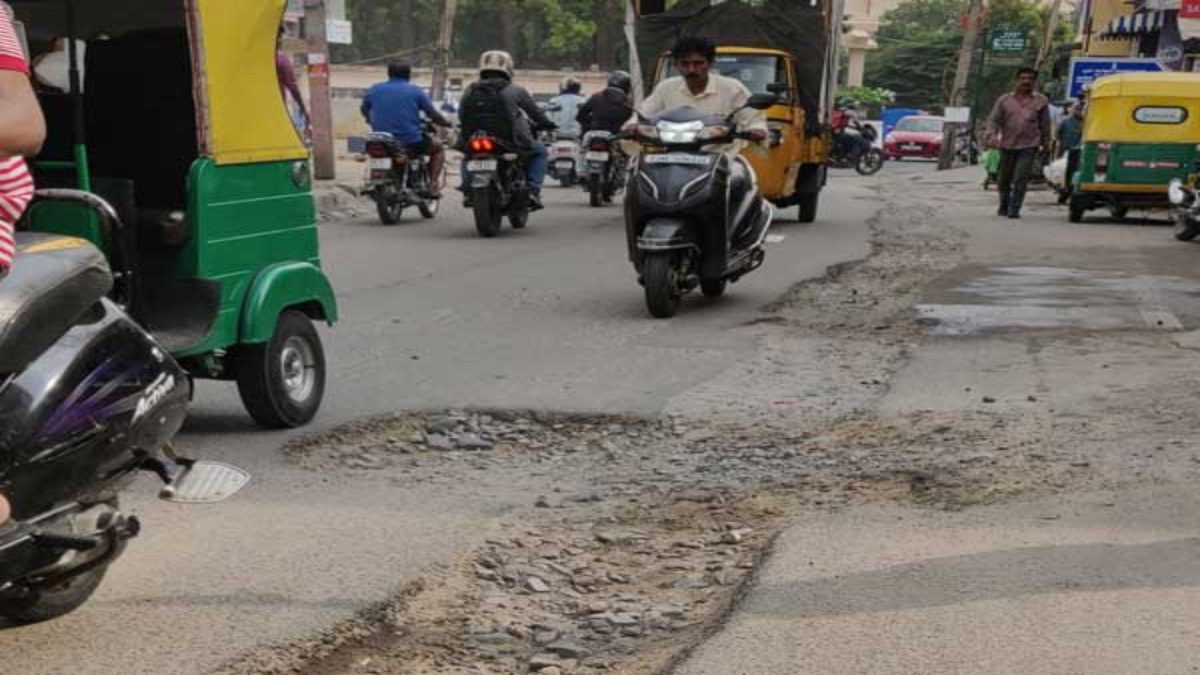
The AI-based survey was conducted on roads in the Byatarayanapura division and detected thousands of potholes, Ashoka told us. Yet he admitted that it was only one division of Bengaluru and suggested similar surveys in other parts of Bengaluru could reveal thousands of additional damaged road stretches and potholes. His comments have made us aware of the state of Bengaluru’s roads and the problems faced by drivers in the monsoon.
Ashoka challenged Minister Krishna Byre Gowda on the state of roads in his constituency. When he heard about the number of potholes, he asked whether this is what the government considers a model capital city. The criticism is coming at a time when we are still in a political battle between Bengaluru's infrastructure, road maintenance, traffic management and civic facilities.
The Opposition Leader also contrasted the government's claim that Bengaluru is a “world-class city” with the poor condition of roads in the capital. Residents are still experiencing potholes when they travel around Bengaluru, he said, creating problems for drivers and raising concerns regarding road safety.
The pothole problem is especially serious for two-wheeler riders who are at greater risk when they come across deep or poorly visible potholes. Auto-rickshaw drivers, cab drivers, delivery workers, daily wage workers and students also depend on Bengaluru's road network every day. Swerving to avoid potholes can present additional risk, especially when vehicles are moving extremely close to other vehicles.

Rain makes it even more complicated. When water pools up on damaged roads, the depth and shape of potholes can become harder to identify. A pothole that might seem shallow in dry weather can become quite dangerous if it is covered by rainwater. This means falling, vehicle damage and collision risk for two-wheeler riders, especially for people who travel after dark when the road is wet.
Ashoka also questioned the state government’s priorities in terms of parking charges and the publicity around encroachment removal while residents continue to demand better road infrastructure. Bengaluru residents need safe, pothole-free roads and effective civic management, he said, not just announcements and promotional campaigns.
The Opposition Leader asked who should be held responsible for thousands of potholes across Bengaluru. He also criticised the Chief Minister D.K. Shivakumar for the government’s “Brand Bengaluru” vision when road conditions continue to be a problem.
The findings from the AI survey also point to the potential of technology to help address the problems in infrastructure. Automated road surveys could aid civic agencies to identify damaged stretches more systematically and establish data-informed repair priorities. Finding potholes, however, is only the first step in this process. The effectiveness of such technology will ultimately depend on how quickly authorities verify the results, assign responsibility and carry out repairs.
Ashoka’s figures will now make the political debate around Bengaluru’s roads even more intense. The state government and civic agencies may have to clarify the survey methodology by identifying the claimed 5,964 potholes, verify the numbers and describe how they are planning to repair damaged roads in Byatarayanapura and other parts of the city.
But for Bengaluru residents, the problem is much more than politics. Potholes directly affect travel, vehicle maintenance and road safety. As the city expands, the maintenance of roads and safe movement remain critical challenges for the authorities responsible for Bengaluru's infrastructure.