Bengaluru's historic Lalbagh Botanical Garden got a high-tech upgrade with the introduction of AI-powered welcome gates. The new facility has been officially opened by Karnataka Minister for Mines and Geology, Horticulture and Davanagere district in-charge S.S. Mallikarjun during a special programme organised by the Department of Horticulture. The new digital infrastructure has been launched for public use and is another significant technological development for one of Bengaluru's most historic and popular green spaces.
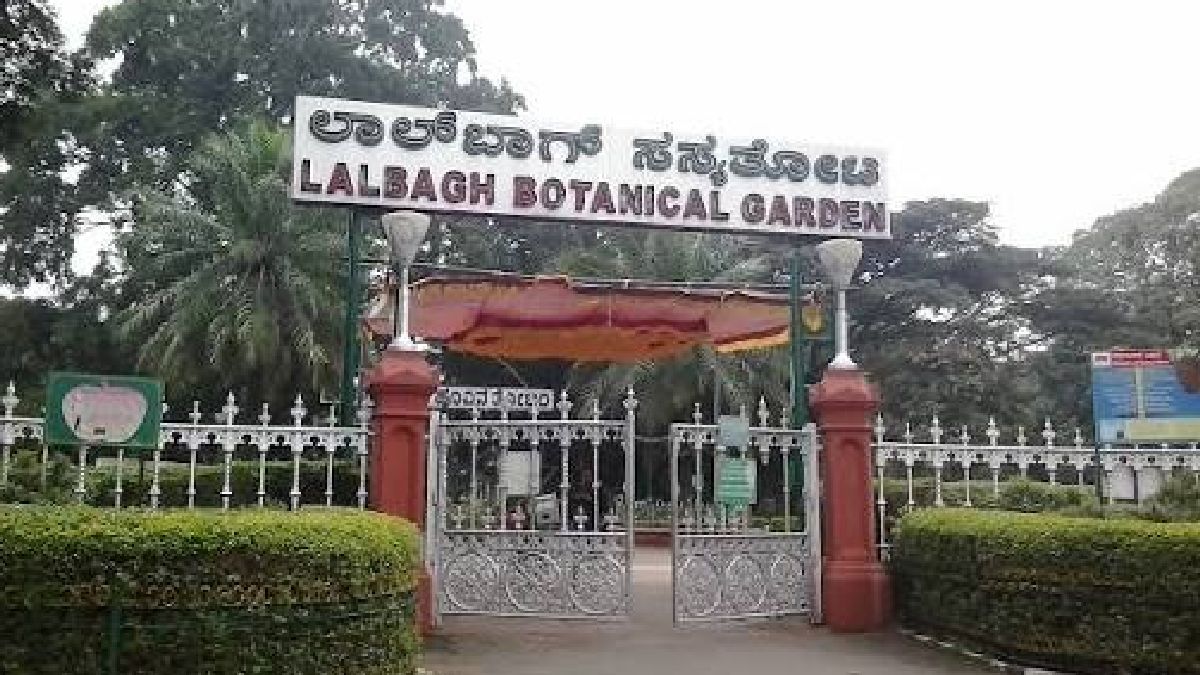
The AI-based welcome gates are designed to provide visitors and horticultural growers with a modern and international digital experience. This is one of the first steps in the integration of technology into horticulture and public garden management in India. And since Bengaluru is known as the Silicon City of India, the arrival of artificial intelligence at Lalbagh has brought a technology-driven aspect to management and visitor experience at the historic botanical garden.
Minister S.S. Mallikarjun chaired a high-level progress review meeting with senior officials of the Department of Horticulture. The minister told reporters in the meeting that horticultural growers ought to mix traditional farming methods with modern technology to increase productivity, efficiency and income. The government is investing lakhs of rupees in creating technological infrastructure, and horticultural farmers should harness the schemes and infrastructure being developed for them in Karnataka, he said.
Mallikarjun also instructed officials to ensure that government schemes do not remain in offices and paperwork but reach farmers at the grassroots level. He said officials should work with growers to make sure that those who are eligible receive the assistance, subsidies and technological support from the government.
Among the key recommendations made at the meeting was to improve infrastructure for horticultural growers in all Assembly constituencies in Karnataka. The minister urged officials to provide all the support and subsidies for the distribution of tractors, farm ponds and cold storage for fruits and vegetables. “These infrastructures can help farmers reduce post-harvest losses and help them store and market their produce,” he said.

A good encouragement of palm oil cultivation under the traditional agriculture development programme is also encouraged by the minister, he said. He also ordered officials to ensure that farmers of all horticultural crops are given the maximum possible subsidies. The task is to increase farmers’ economic status and also encourage the adoption of modern farming practices.
One of the proposals discussed in the meeting was a national organic expo at a major place in Karnataka. Mallikarjun told the officials to find the place and start preparing for the expo. The expo is going to have organic farming, horticultural products, modern cultivation methods and farmer-oriented technologies.
Research and innovation in horticulture, the minister said, is one of the key areas. Scientists and officials of horticulture universities should work towards developing new varieties of horticultural crops with longer shelf lives and higher yields, he said. Such varieties, he said, would be very helpful for the long-term economic security of farmers and would be commercially sustainable.
Coconuts were also brought to mind in particular to help them fight mite disease. Mallikarjun had instructed officials and scientists to work on a permanent solution and develop an effective treatment for the disease at the earliest time. He also asked for more subsidies for micro irrigation, including drip irrigation, as a way to make water-use efficient and to make farming sustainable.
The Minister also called on the Department of Horticulture to organise training programmes and workshops for growers in Karnataka through Farmer Producer Organisations (FPOs). The programmes should be oriented towards contemporary horticultural practices and focus on modern horticultural practices and will give farmers practical knowledge on new technologies, cultivation techniques, crop management and improved production techniques.
As a result, the launch of AI-powered welcome gates at Lalbagh is part of the Karnataka government’s overall drive to integrate technology into public horticultural infrastructure and farming practices in general. With digital facilities being introduced at Lalbagh and subsidies, cold storage, irrigation, research, farmer training and organic farming, the horticulture department intends to bring technology to traditional agricultural skills.
The programme and review meeting was attended by senior officials in the Horticulture Department and Mines and Geology Department, as well as horticultural growers. Lalbagh’s developments will contribute to the development of technology-enabled horticulture in Karnataka and will also give farmers access to modern infrastructure and government support.